


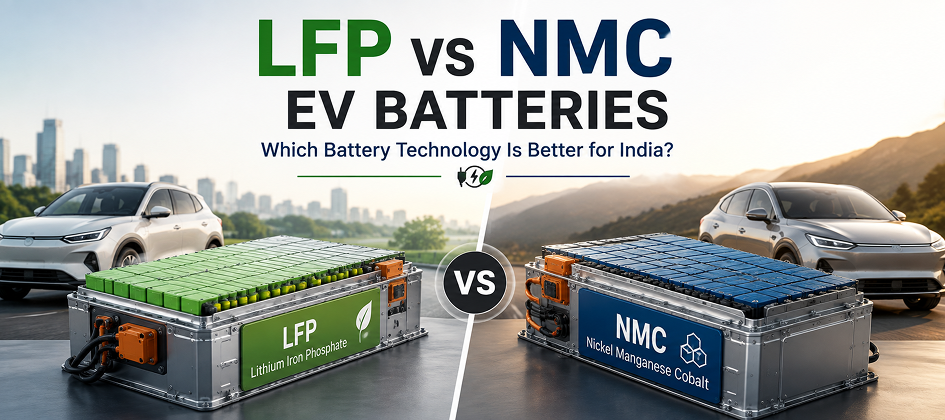
If you are planning to buy an electric vehicle in India, one of the most important technical specifications you will encounter is the underlying battery chemistry. The two primary lithium-ion battery technologies dominating the global and Indian electric vehicle (EV) markets are LFP (Lithium Iron Phosphate) and NMC (Nickel Manganese Cobalt).
Whether you are shopping for an electric car, a daily commuter scooter, a high-performance electric motorcycle, an e-rickshaw, or a commercial cargo truck, choosing between LFP and NMC can directly influence your vehicle's driving range, thermal performance, long-term battery life, charging habits, and total ownership costs.
There is no single "best" EV battery chemistry for every driver. Both LFP and NMC offer distinct engineering advantages:
LFP (Lithium Iron Phosphate) excels in thermal stability, long cycle life, resistance to high ambient temperatures, and cost-effectiveness.
NMC (nickel manganese cobalt) offers significantly higher energy density, providing more power and longer range within a smaller, lighter physical footprint.
LFP is generally ideal for:
Daily city commutes & high-cycle fleet usage
Maximum thermal safety & high ambient heat
Frequent 100% charging routines
Lower upfront vehicle purchase cost
NMC is generally ideal for:
Long-distance highway travel & maximum range
Weight-sensitive applications (performance bikes)
Compact vehicle packaging constraints
High power-to-weight ratio demands
Rather than asking which technology is universally superior, the real question is: which battery chemistry aligns best with your specific driving patterns, budget, local climate, and vehicle type?
LFP stands for Lithium Iron Phosphate ($LiFePO_4$). This battery chemistry uses iron and phosphate as cathode materials.
Characteristics: Highly stable chemical structure that resists thermal degradation even under heavy electrical loads or elevated ambient temperatures.
Energy Density: Moderate energy density (typically 120–160 Wh/kg at the cell level).
Thermal Stability: Exceptional resistance to thermal runaway.
Cycle Life: High cycle life, often supporting 2,000 to over 3,000 complete charge-discharge cycles before significant capacity degradation occurs.
Cost: Lower raw material costs because iron and phosphate are abundant and do not rely on expensive metals like cobalt or nickel.
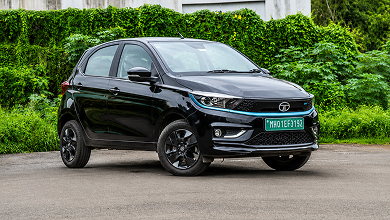
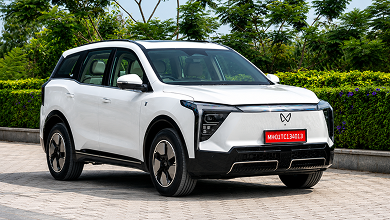
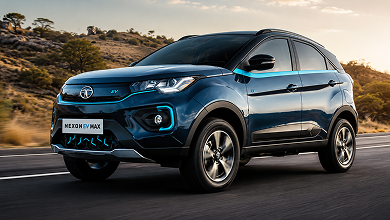
Common EV Applications: Widely used in popular Indian electric cars (such as the Tata Nexon EV and MG Windsor EV), electric scooters, urban commercial delivery vans, and e-rickshaws.
NMC stands for Nickel Manganese Cobalt ($LiNiMnCoO_2$). This chemistry uses a combination of nickel, manganese, and cobalt for the cathode.
Characteristics: Delivers high power output and high storage capacity relative to physical volume and mass.
Energy Density: High energy density (typically 180–250+ Wh/kg at the cell level).
Thermal Characteristics: Requires robust active liquid cooling systems to maintain optimal operating temperatures under fast charging or heavy loads.
Cycle Life: Good cycle life (typically 1,000 to 2,000 cycles), depending on temperature management and charging habits.
Cost: Higher raw material costs due to the use of nickel and cobalt.
Common EV Applications: Popular in premium long-range electric SUVs, high-performance electric motorcycles, and luxury electric vehicles.
| Feature | LFP (Lithium Iron Phosphate) | NMC (Nickel Manganese Cobalt) |
| Energy Density | Moderate (120–160 Wh/kg) | High (180–250+ Wh/kg) |
| Thermal Stability | Very High (Thermal runaway temp ~270°C+) | Moderate (Thermal runaway temp ~210°C) |
| Cycle Life | Generally 2,000–3,000+ cycles | Generally 1,000–2,000 cycles |
| Pack Weight | Heavier for a given kWh capacity | Lighter for a given kWh capacity |
| Raw Material Cost | Lower (Abundant Iron & Phosphate) | Higher (Contains Cobalt & Nickel) |
| Range Potential | Moderate per kg of battery mass | Higher per kg of battery mass |
| Charging Behavior | Tolerates regular 100% SoC charges well | Typically recommended 80% daily limit |
| Safety Characteristics | Excellent structural & thermal tolerance | Depends heavily on pack-level liquid cooling |
| Long-Term Durability | Exceptional for high-mileage daily use | Strong when managed within optimal thermal limits |
| Typical Indian EVs | Tata Nexon.ev, MG ZS EV / Windsor EV | Hyundai Ioniq 5, Premium Electric Bikes |
Energy density is the primary driver of range differences between battery chemistries. Because NMC packs store more energy per kilogram, automotive engineers can fit a larger kilowatt-hour (kWh) capacity into a restricted physical space without overweighting the chassis.
50 kWh NMC Pack: Lighter physical footprint (~300 - 350 kg)
50 kWh LFP Pack: Moderately heavier physical footprint (~380 - 450 kg)
However, battery chemistry alone does not determine real-world range. An EV's total range depends on several integrated systems:
Vehicle Aerodynamics & Body Style: Low drag coefficients improve highway efficiency.
Powertrain Efficiency: Motor design (PMSM vs. induction) and inverter efficiency.
Vehicle Weight: Frame materials, interior equipment, and payload.
Thermal Management: Power drawn by heating/air-conditioning and battery cooling loops.
Example: Two electric vehicles with identical 50 kWh battery capacities—one using LFP and the other NMC—may yield different real-world ranges if the LFP model weighs slightly more or has a less aerodynamic body shape. Range is an ecosystem metric, not a cell-chemistry metric alone.
Battery degradation occurs over time due to electrochemical ageing, operational heat, depth of discharge (DoD), and charging protocols.
Operating and storage ambient temperatures
Depth of Discharge (DoD) per cycle
Frequency of high-kW DC fast charging
BMS cell-balancing efficiency
Total time spent stored at 100% or 0% State of Charge
LFP Cycle Life: LFP chemistry generally tolerates high charge-discharge cycle counts exceptionally well. It exhibits low capacity loss even when cycled deeply on a daily basis.
NMC Cycle Life: NMC chemistry offers a strong service life when managed within recommended State of Charge (SoC) parameters (e.g., keeping daily charging capped at 80–85%).
There is no single guaranteed lifespan in years for either chemistry. A well-cooled NMC battery pack driven moderately in temperate conditions may outlast an uncooled LFP pack subjected to continuous extreme thermal abuse.
Safety is a top priority for EV buyers in India. It is essential to distinguish between cell-level thermal stability and overall vehicle safety.
Cell Chemistry: LFP cells have a higher thermal runaway threshold (around 270°C or higher) and release far less oxygen if overheated, making them intrinsically resistant to self-sustaining fires. NMC cells have a lower thermal runaway threshold (around 210°C) and require stricter thermal monitoring.
Overall Pack Safety: Modern EV safety depends primarily on battery pack engineering—including IP67/IP68 ingress protection, structural protection frames, flame-retardant barriers, and multi-sensor battery management systems (BMS). A well-engineered NMC pack with active liquid cooling meets rigorous crash and thermal safety standards.
India's climate presents unique operating challenges, with ambient summer temperatures routinely exceeding 40°C to 45°C in many regions.
High Ambient Heat: LFP's chemical structure handles high ambient temperatures with minimal degradation, making it well-suited for non-liquid-cooled two-wheelers or heavy commercial vehicles parked outdoors in summer.
Active Cooling Requirements: NMC battery packs perform reliably in hot Indian summers when paired with effective active liquid cooling loops that maintain internal cell temperatures within the ideal 20°C–35°C operational window.
Rather than declaring one chemistry perfect for all of India, buyers should look for EVs equipped with robust thermal management software and liquid-cooled battery enclosures.
Charging behaviour differs between the two battery chemistries:
Voltage Curves: LFP batteries exhibit a very flat discharge voltage curve. Because the voltage remains virtually constant from 80% down to 20%, the BMS relies on periodic full 100% charges to accurately calibrate the displayed state of charge.
Charging Limits: NMC batteries exhibit a clear voltage slope, allowing the BMS to read charge levels easily. However, to minimise chemical stress, manufacturers often recommend setting a daily AC home charging limit of 80% or 85%, reserving 100% full charges for long road trips.
Fast Charging (DC): Actual peak fast-charging speeds (kW rate) are determined by the charger power, vehicle onboard architecture (400V vs. 800V), thermal conditioning, and software curves—not by cell chemistry alone.
Battery technology influences both the initial purchase price and long-term operating economics of an electric vehicle.
Raw Material Supply: LFP avoids expensive, supply-constrained metals like cobalt and nickel, using iron and phosphate instead. This raw material advantage generally translates to lower cell manufacturing costs per kWh.
Vehicle Selling Price: While LFP cells are typically less expensive to produce, an EV's showroom price is influenced by motor size, infotainment tech, safety features, body structure, import tariffs, and brand positioning. An LFP-equipped EV is not automatically cheap, nor is an NMC vehicle automatically overpriced.
In the Indian electric car market, manufacturers select battery chemistry based on target vehicle usage:
LFP Electric Cars: Ideal for urban commuters and daily fleet drivers who charge frequently and prioritise low running costs, thermal headroom in extreme heat, and high cycle life.
NMC Electric Cars: Suited for buyers seeking long inter-city highway range, lightweight battery packaging, high acceleration, and performance-focused driving.
Two-wheeler packaging constraints make battery chemistry selection critical.
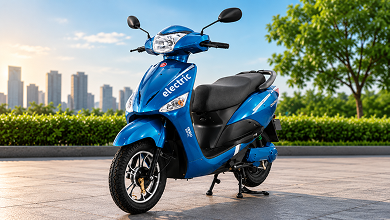
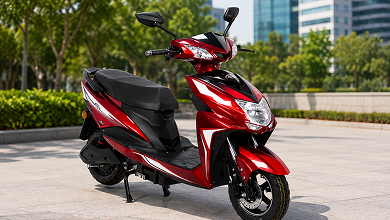
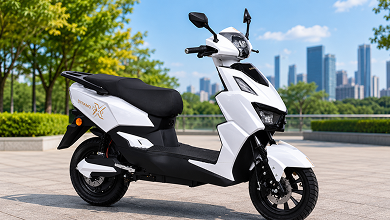
Electric Scooters: City scooters emphasise safety, daily charging, durability, and affordability. LFP is well suited for these applications, particularly in air-cooled battery compartments.
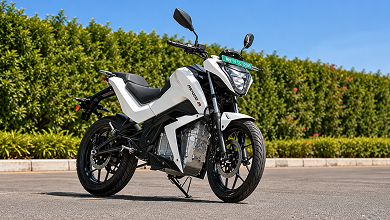
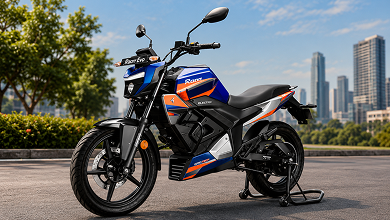
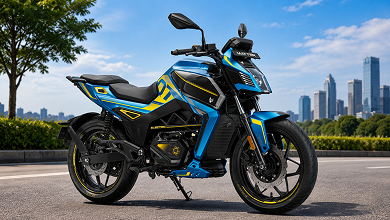
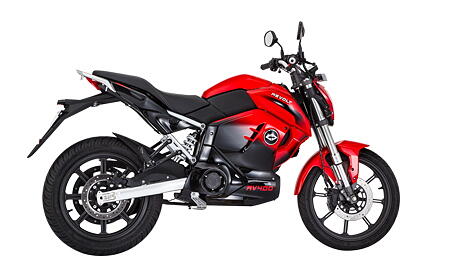
Electric Motorcycles: High-performance electric bikes have restricted frame space and benefit from NMC's superior energy density, delivering higher acceleration currents and longer range without making the bike overly heavy.
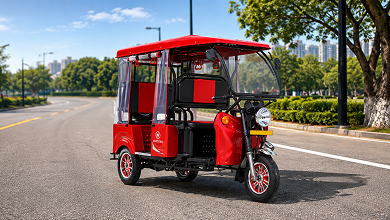
Commercial e-rickshaws and auto-rickshaws operate under demanding daily duty cycles:
Operating Profile: High daily mileage (100–180+ km), multiple passenger loads, and frequent top-up charges throughout the shift.
Why LFP Dominates: LFP's high cycle life (2,000+ cycles) allows commercial operators to run their vehicles for years without premature capacity loss. Lower battery replacement expenses directly reduce the operator's total cost of ownership (TCO).
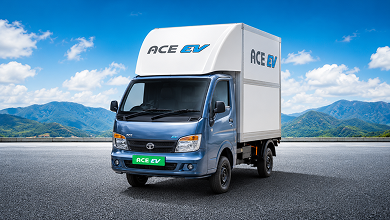
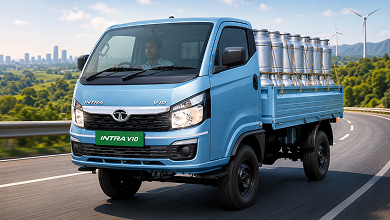
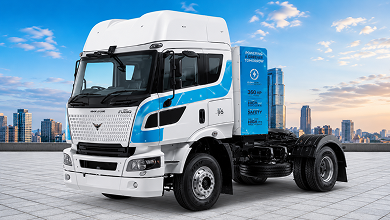
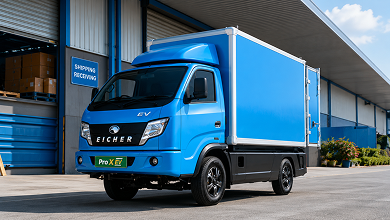
Commercial electric trucks, delivery vans, and heavy-duty cargo loaders prioritise return on investment (ROI):
Payload Considerations: NMC offers weight savings that can preserve overall vehicle payload capacity in long-haul commercial applications.
Fleet Economics: For urban last-mile delivery fleets covering fixed daily routes, LFP is often preferred due to its lower cell cost, thermal stability under heavy loads, and long cycle life.
Fleet operators should evaluate battery selection alongside payload requirements, daily route distance, available charging infrastructure, and warranty terms.
Characteristics: Short trips, stop-and-go traffic, frequent home or office charging, lower average speeds.
Best Fit: LFP chemistry performs exceptionally well in urban environments where heavy daily cycling and regular 100% charging routines match city driving habits.
Characteristics: Extended highway runs, variable road surfaces, sparse charging stations, varying ambient conditions.
Best Fit: NMC can provide an advantage for long-distance highway routes where maximising distance between charging stops is critical. However, long-range LFP battery packs (such as 45+ kWh options) are also widely used for highway travel.
Charging recommendations vary depending on battery chemistry and manufacturer guidelines:
LFP Charging Routine: LFP vehicles benefit from regular 100% charges to help the BMS accurately measure cell voltage levels and calibrate state of charge.
NMC Charging Routine: Setting a daily charge limit of 80% to 85% reduces voltage stress on NMC cells, extending overall battery service life. Reserve 100% charges for long trips.
Always consult your vehicle owner's manual for manufacturer-specific charging protocols.
| Advantages | Considerations |
| Exceptional Thermal Stability (High resistance to thermal runaway) | Lower Energy Density than equivalent NMC cells |
| Long Cycle Life (Often 2,000–3,000+ cycles) | Heavier Battery Pack for high-capacity applications |
| Tolerates Regular 100% Charges | A flat voltage curve requires periodic 100% charge for BMS accuracy |
| Lower Cell Production Cost | Cold Weather Performance can require active pre-heating |
| Advantages | Considerations |
| High Energy Density (180–250+ Wh/kg) | Requires Robust Thermal Management in hot climates |
| Lighter Pack Weight for given kWh capacity | Higher Raw Material Cost (Cobalt & Nickel) |
| Compact Physical Footprint | Best Kept at 80% SoC for daily urban use |
| High Power Output for quick acceleration | Slightly Lower Cycle Life compared to LFP |
You want high long-term cycle life for heavy daily driving.
You plan to keep the vehicle for many years and high mileage.
You prefer charging to 100% without managing daily charge limits.
Thermal stability in high ambient summer heat is a top priority.
You want a lower initial purchase price or total ownership cost.
You require maximum driving range in a lightweight chassis.
Compact battery packaging is necessary (such as in sports motorcycles).
You frequently travel long inter-city highway distances.
High power-to-weight ratio and quick acceleration are priorities.
When calculating your vehicle's overall financial impact, battery chemistry plays an important role:
Total Ownership Cost = Purchase Price + Charging Expenses + Maintenance - Resale Value
Purchase Price & Savings: Lower raw material costs for LFP cells can reduce upfront vehicle pricing or allow manufacturers to offer larger battery capacities at competitive price points.
Long-Term Value: LFP's high cycle life supports strong long-term value retention for high-mileage drivers. However, well-maintained NMC vehicles with active liquid cooling also retain good market value.
To calculate detailed running costs and break-even timelines against petrol vehicles, explore our in-depth guides:
EV Total Cost of Ownership in India (2026)
When Does an EV Become Cheaper Than Petrol? Break-Even & Savings Guide
If you are evaluating a pre-owned electric vehicle, inspecting the battery condition is essential regardless of chemistry:
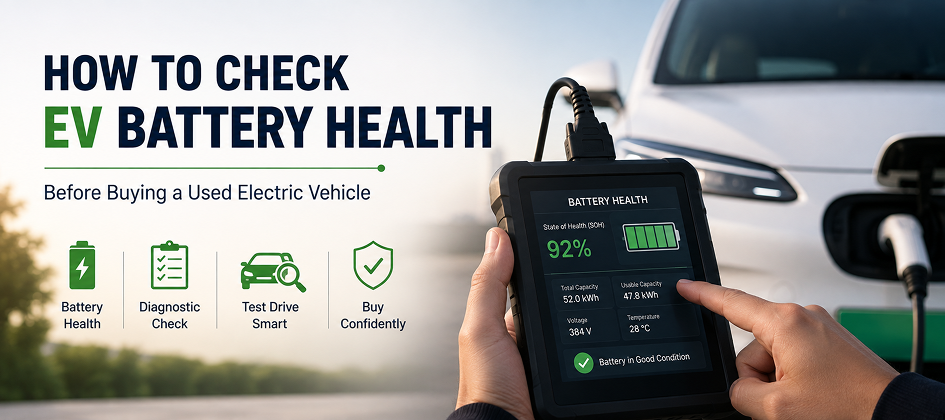
Request an official BMS State of Health (SoH) scan report
Perform a real-world range test drive
Verify active factory battery warranty balance
Review official dealership service & repair logs
Both LFP and NMC batteries can deliver excellent long-term reliability when properly maintained by previous owners. To learn how to evaluate pre-owned electric cars, scooters, or commercial vehicles, read our detailed guides:
How to Check EV Battery Health Before Buying a Used Electric Vehicle
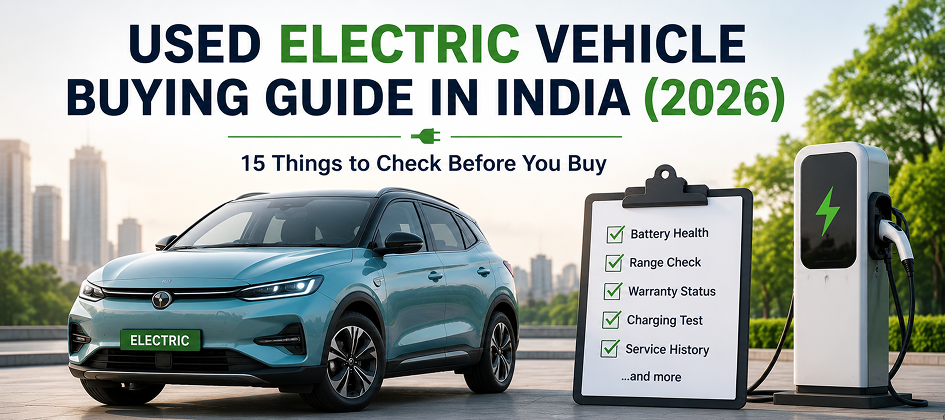
Used Electric Vehicle Buying Guide in India (2026): 15 Things to Check Before You Buy
Electric Vehicle Depreciation in India (2026): Resale Value After 3–5 Years Explained
LFP (Durability & Thermal Stability) vs. NMC (Energy Density & Highway Range)
Both LFP and NMC play important roles in India's electric mobility transition:
LFP is an excellent choice for daily city commuters, high-mileage fleets, commercial e-rickshaws, and buyers seeking maximum heat tolerance and long cycle life.
NMC remains a compelling choice for long-range electric SUVs, high-performance electric motorcycles, and applications where high energy density and low pack weight are critical.
When buying an electric vehicle, do not focus solely on cell chemistry. Evaluate the vehicle's overall battery pack design, thermal management system, real-world range, charging speed, manufacturer warranty terms, and local service support to select the right EV for your needs.

Manage reminders, payment status, and renewal dates from one simple app.


Trusted by policyholders to track every renewal.