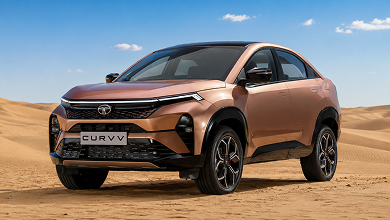
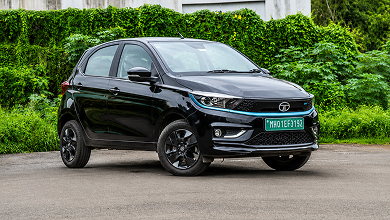
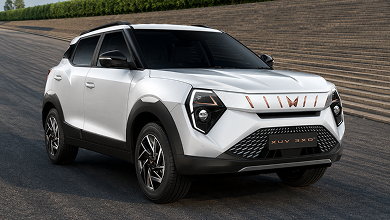
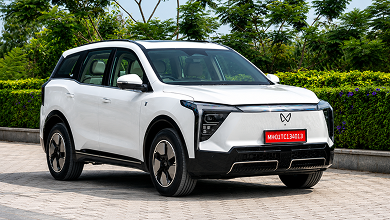
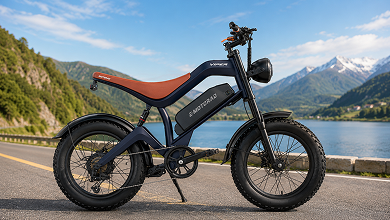
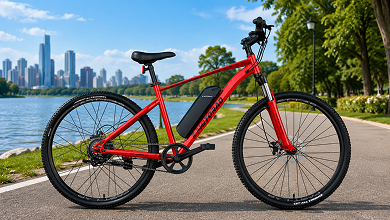
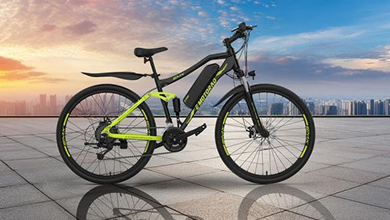
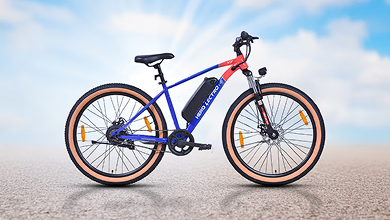
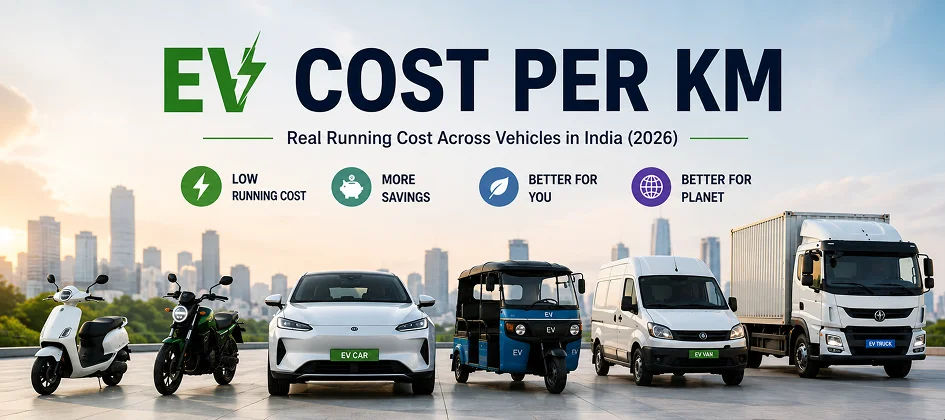
In India, running an electric vehicle typically costs between INR 0.25 and INR 3.50 per kilometre for energy, depending on the vehicle category, charging location, and driving conditions.
However, there is no single universally fixed number. An electric scooter charged at home on a low domestic tariff can cost as little as INR 0.20–0.30 per km, while a fully loaded electric truck fast-charging at a highway hub can cost INR 3.50–5.50 per km.
The exact electric vehicle cost per kilometre in India is influenced by multiple real-world factors:
Vehicle Efficiency: Energy consumed per km (Wh/km or km/kWh).
Battery Capacity & Usable Range: Total kWh usable versus real-world range delivered.
Electricity Tariff: Domestic slab rates (INR 4.50–9.50/unit) vs dedicated EV tariffs vs public DC fast-charging rates (INR 15–25/unit).
Charging Losses: Energy drawn from the wall outlet vs actual energy stored in the battery (typically 10–15% AC wall loss).
Operational Variables: Riding speed, passenger/cargo load, stop-and-go traffic, air conditioning usage, and terrain.
Understanding these variables across different segments—electric scooters, bikes, cars, rickshaws, cargo vans, and commercial trucks—allows for an accurate calculation of true daily, monthly, and annual running costs in 2026.
Before calculating numbers, it is vital to distinguish between two distinct metrics:
Energy / Running Cost Per KM: The direct cost of electricity required to propel the vehicle one kilometre. This is the focus of this guide.
Total Cost of Ownership (TCO) Per KM: The holistic figure that includes upfront purchase price, insurance, routine maintenance, tyre replacements, loan interest, battery degradation reserves, and depreciation divided by total lifetime distance.
While an electric car might cost INR 1.20/km in pure electricity, its TCO per km over 5 years could be INR 12.00/km when purchase financing and depreciation are factored in. For complete long-term financial planning, explore our detailed guide on [EV Total Cost of Ownership in India (2026)].
To find the true energy cost per kilometre, use the core formula:
EV Cost Per KM = Electricity Consumed Per KM (kWh) × Effective Electricity Tariff (INR/kWh)
Alternatively, if tracking full charge cycles:
Cost Per KM = Total Cost to Charge Battery (INR) ÷ Real-World Range Delivered (km)
When plugging an EV into a home socket, the onboard charger, AC-to-DC conversion, and battery thermal management dissipate energy as heat. A standard AC wall charger exhibits 10% to 15% charging loss.
Illustrative Calculation (Compact Electric Car):
Battery Size: 40 kWh pack.
Real-World Range: 280 km.
Domestic Tariff Rate: INR 8.00 per unit (kWh).
AC Charging Loss: 12%.
Total Energy Drawn from Wall: 40 kWh ÷ (1 - 0.12) = 45.45 kWh.
Total Cost to Charge: 45.45 units × INR 8.00 = INR 363.60.
Calculated Cost Per KM: INR 363.60 ÷ 280 km = INR 1.30/km.
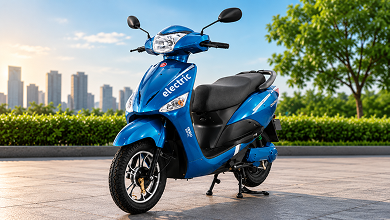
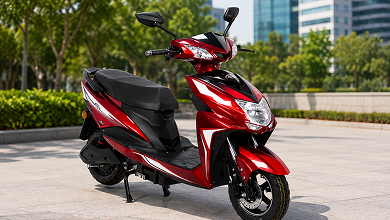
Electric scooters dominate India's urban commuter transition due to exceptional energy efficiency.
Typical Efficiency: 25–35 Wh/km (30–40 km per kWh).
Battery Size: 2.5 kWh to 4.0 kWh.
Real-World Factors: City traffic, rider weight, riding mode (Eco vs Sport), and frequent stop-and-go acceleration.
Illustrative Example (City Commuter Scooter):
Battery: 3.0 kWh pack | Real-World Range: 90 km.
Domestic Electricity Tariff: INR 7.50 / unit.
Wall Charging Loss: 10% (3.33 units consumed).
Full Charge Cost: 3.33 × INR 7.50 = INR 25.00.
Cost Per KM: INR 25.00 ÷ 90 km = INR 0.28 per km.
Note: Models operating aggressively in Sport mode with a pillion rider will consume more power, raising the cost toward INR 0.45–0.55 per km. Check out top-rated commuter options in our [Electric Scooters] section.
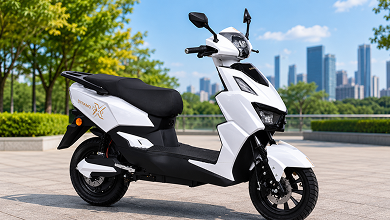
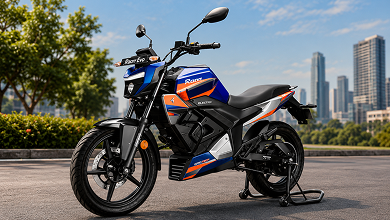
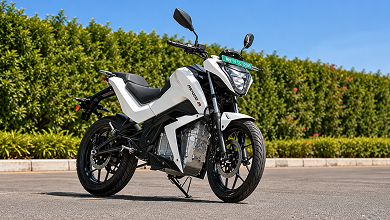
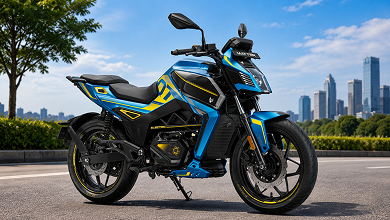
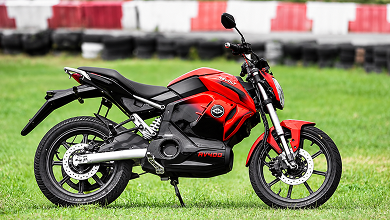
Performance electric motorcycles consume slightly more energy than lightweight commuter scooters due to larger motor wattage, aggressive gearing, and higher top speeds.
Typical Efficiency: 35–50 Wh/km (20–28 km per kWh).
Battery Size: 4.0 kWh to 5.0 kWh.
Impact Factors: Highway cruising speeds (>70 km/h severely increases aerodynamic drag), rider posture, and aggressive throttle input.
Illustrative Example (Performance Electric Motorcycle):
Battery: 4.0 kWh pack | Real-World Range: 110 km.
Electricity Tariff: INR 8.00 / unit.
Wall Charging Loss: 12% (4.54 units consumed).
Full Charge Cost: 4.54 × INR 8.00 = INR 36.32.
Cost Per KM: INR 36.32 ÷ 110 km = INR 0.33 per km.
Explore sporty 2-wheeler choices in our [Electric Bikes] buyer directory.
Electric cars cover a broad efficiency spectrum—from ultra-compact city cars to mid-size SUVs.
Typical Efficiency: 120–170 Wh/km (6.0–8.3 km per kWh).
Battery Size: 17.3 kWh (city hatchback) to 60+ kWh (long-range SUV).
Efficiency Variables: Vehicle curb weight, frontal area (aerodynamics), cabin air conditioning, and highway cruising vs city traffic.
Illustrative Example (Mid-Size Electric SUV - Home Charging):
Battery: 45 kWh pack | Real-World Range: 300 km.
Electricity Tariff: INR 8.00 / unit (domestic).
Wall Charging Loss: 12% (51.13 units drawn).
Full Charge Cost: 51.13 × INR 8.00 = INR 409.04.
Cost Per KM: INR 409.04 ÷ 300 km = INR 1.36 per km.
For detailed car specifications, pricing, and variant comparisons, visit our [Electric Cars] hub.
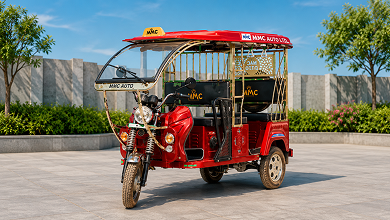
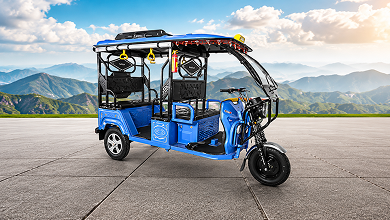
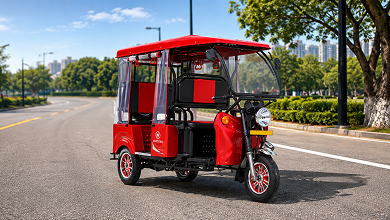
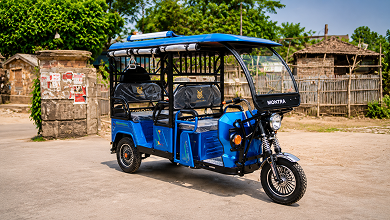
Passenger e-rickshaws (L35 / L5 categories) operate as high-utilisation commercial transport in Indian Tier-1, Tier-2, and rural markets.
Typical Efficiency: 50–70 Wh/km (14–20 km per kWh).
Battery Size: 3.8 kWh to 5.1 kWh (LFP or Swappable).
Commercial Impact: Passenger load (4–6 adults), heavy urban stop-and-go conditions, and continuous full-day duty cycles.
Illustrative Example (Commercial Passenger E-Rickshaw):
Battery: 4.2 kWh pack | Real-World Range: 80 km (with 4 passengers).
Commercial / Dedicated EV Tariff Rate: INR 6.50 / unit.
Wall Charging Loss: 10% (4.66 units drawn).
Full Charge Cost: 4.66 × INR 6.50 = INR 30.29.
Cost Per KM: INR 30.29 ÷ 80 km = INR 0.38 per km.
See current market options under our [Electric Rickshaws] section.
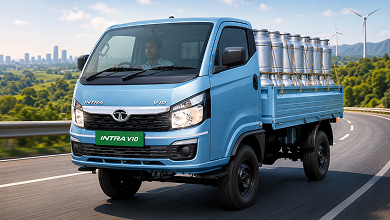
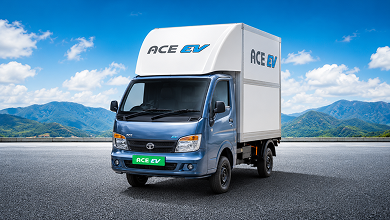
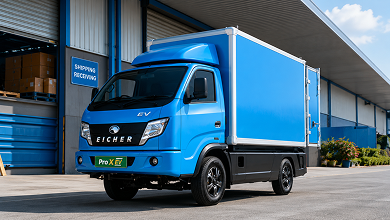
Electric 3-wheeler cargo loaders and 4-wheeler small commercial vehicles (SCVs / light commercial vans) are rapidly transforming last-mile delivery.
Typical Efficiency: 100–180 Wh/km (5.5–10 km per kWh).
Battery Size: 8.0 kWh (3W Loader) to 21 kWh (4W Van).
Load Sensitivity: Unloaded vs fully loaded weight drastically alters energy consumption per km.
Illustrative Example (4-Wheel SCV / Delivery Van - Half Payload):
Battery: 20 kWh pack | Real-World Range: 140 km.
Commercial EV Tariff: INR 7.00 / unit.
Charging Loss: 12% (22.72 units drawn).
Full Charge Cost: 22.72 × INR 7.00 = INR 159.04.
Cost Per KM: INR 159.04 ÷ 140 km = INR 1.14 per km.
Browse commercial fleet options in our [Electric Cargo Vehicles] guide.
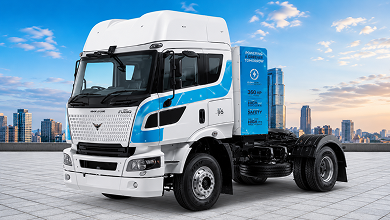
Heavy commercial electric trucks (MHCVs / Heavy Haulers) utilise massive battery packs designed for localised freight corridors or mining/industrial operations.
Typical Efficiency: 800–1,400 Wh/km (0.7–1.25 km per kWh).
Battery Size: 150 kWh to 300+ kWh.
Operating Profile: Gross Vehicle Weight (GVW), gradient/incline routes, and mandatory reliance on high-capacity DC fast chargers.
Illustrative Example (Medium-Duty 12-Tonne Electric Truck - 70% Loaded):
Battery: 180 kWh pack | Real-World Range: 180 km (Efficiency: 1.0 km/kWh).
Commercial HT / Fast Charger Tariff: INR 12.00 / unit.
Charging Loss: 8% (DC fast charging efficiency ~92%).
Full Charge Cost: (180 ÷ 0.92) × INR 12.00 = INR 2,347.82.
Cost Per KM: INR 2,347.82 ÷ 180 km = INR 13.04 per km.
To learn more about heavy commercial decarbonisation, visit [Electric Trucks].
The following comparison illustrates average running costs across categories in India under standard conditions:
| Vehicle Type | Representative Battery Size | Real-World Range | Baseline Tariff Assumption | Charging Loss Factor | Estimated Cost / KM (INR) |
| Electric Scooter | 3.0 kWh | 90 km | Domestic (INR 7.50/unit) | 10% | INR 0.25 – 0.35 |
| Electric Bike | 4.0 kWh | 110 km | Domestic (INR 7.50/unit) | 12% | INR 0.30 – 0.45 |
| Electric Car | 40 kWh | 280 km | Domestic (INR 8.00/unit) | 12% | INR 1.15 – 1.50 |
| Electric Rickshaw | 4.2 kWh | 80 km | Commercial (INR 6.50/unit) | 10% | INR 0.35 – 0.50 |
| Electric Cargo SCV | 20 kWh | 140 km | Commercial (INR 7.00/unit) | 12% | INR 1.10 – 1.40 |
| Electric Truck (12T) | 180 kWh | 180 km | Commercial/Fast (INR 12.00/unit) | 8% | INR 12.00 – 14.50 |
Disclaimer: Figures are illustrative calculations based on stated 2026 tariff assumptions and real-world efficiency averages. Actual costs vary by local DISCOM rates, ambient temperature, and driving habits.
Comparing operational energy costs requires evaluating equivalent vehicle segments under identical usages:
| Parameter | Electric Scooter | Petrol Scooter |
| Real-World Efficiency | 30 km / kWh | 45 km / Litre |
| Energy / Fuel Price | INR 7.50 / kWh | INR 102.00 / Litre |
| Total Units / Litres Used | 3.33 kWh (inc. loss) | 2.22 Litres |
| Total Cost for 100 km | INR 25.00 | INR 226.44 |
| Running Cost Per KM | INR 0.25 / km | INR 2.26 / km |
| Parameter | Electric SUV | Petrol SUV |
| Real-World Efficiency | 6.8 km / kWh | 13 km / Litre |
| Energy / Fuel Price | INR 8.00 / kWh | INR 102.00 / Litre |
| Total Units / Litres Used | 16.7 kWh (inc. loss) | 7.69 Litres |
| Total Cost for 100 km | INR 133.60 | INR 784.38 |
| Running Cost Per KM | INR 1.34 / km | INR 7.84 / km |
An electric car yields roughly 75% to 82% operational fuel savings per kilometre compared to a petrol car. For a complete TCO analysis comparing upfront purchase premiums, consult our [EV vs Petrol Cost Per KM] guide.
CNG is widely recognised for economical urban running, but EV home charging maintains a distinct edge in per-kilometre fuel expenses.
CNG Compact Car Efficiency: ~19–21 km/kg in city traffic.
Average CNG Price: ~INR 83.50 / kg (Delhi/NCR baseline).
CNG Cost Per KM: INR 83.50 ÷ 20 km = INR 4.18 per km.
EV Compact Car Cost Per KM: INR 1.25 per km (home charged).
While CNG offers fast 5-minute refuelling, an electric vehicle charged at home operates at nearly one-third the per-kilometre energy cost of CNG. For broader trade-offs, including trunk space and maintenance, visit [Electric Car vs CNG Car].
Commercial fleets evaluating light cargo vans and trucks must compare electric power directly against diesel fuel.
Diesel Light Commercial Vehicle (SCV): 12 km/L @ INR 90.00/L Diesel = INR 7.50 per km.
Electric SCV (Equivalent Payload): 7 km/kWh @ INR 7.00/kWh (Commercial Tariff) = INR 1.12 per km.
For commercial logistics, fuel savings compound rapidly over high annual distances. Read more detailed fleet sector breakdowns in [Electric Van vs Diesel Van] and [Electric Truck vs Diesel Truck].
Real-world efficiency deviates from factory-claimed range due to dynamic external and operational inputs:
Speed: Power consumption increases exponentially at higher speeds. Driving an electric car at 110 km/h on a motorway consumes up to 35–40% more Wh/km than driving at 65 km/h.
Traffic & Regenerative Braking: While internal combustion engines waste fuel in bumper-to-bumper traffic, EVs use regenerative braking to feed kinetic energy back into the battery, maintaining high city efficiency.
Air Conditioning & Climate Control: Running cabin cooling in hot Indian summers (40°C+) can increase energy consumption by 12–20%, raising the cost per km.
Vehicle Load & Passengers: Carrying full passenger capacity or heavy cargo forces the traction motor to draw higher current under acceleration.
Tyre Pressure: Under-inflated tyres increase rolling resistance, dropping vehicle efficiency by 5–8%.
Battery Temperature & Age: Extreme heat reduces chemical efficiency, while older batteries experience higher internal resistance, slightly increasing energy drawn during charging.
Charging Losses: Fast DC chargers deliver higher current directly to the battery, minimising conversion losses (~5–8% loss), whereas slow AC wall chargers experience higher conversion losses (~10–15%).
Unlike petrol and diesel vehicles—which achieve better mileage on highways due to constant gear ratios—EVs are generally more efficient in the city than on the highway.
City Driving: Lower average speeds (30–50 km/h), minimal aerodynamic drag, and frequent regenerative braking optimise efficiency. A compact EV car can achieve 110–120 Wh/km in urban traffic (Cost: ~INR 1.00/km).
Highway Driving: Higher sustained speeds (80–100 km/h) create significant aerodynamic resistance without braking opportunities for energy recovery. Efficiency drops to 160–190 Wh/km (Cost: ~INR 1.50–1.80/km on home power).
Where you charge your EV drastically impacts your running expenses.
| Location / Charger Type | Avg Tariff Rate (INR/kWh) | Effective Cost Per KM |
| Home Domestic Tariff | INR 6.50 – 9.00 / unit | INR 1.15 – 1.50 / km |
| Public AC Slow Charger | INR 12.00 – 16.00 / unit | INR 2.10 – 2.80 / km |
| Public DC Fast Charger | INR 18.00 – 25.00 / unit | INR 3.10 – 4.40 / km |
Public fast chargers incur operator overheads, network fees, and 5% GST. While DC fast charging on highway road trips is convenient, relying exclusively on public fast chargers doubles or triples your per-kilometre cost compared to home charging. For setup instructions, see our [EV Charging Guide].
To visualise real-world financial impact, let's examine an electric car owner charging at home (assumed cost: INR 1.30 / km) versus a petrol car owner (assumed cost: INR 7.50 / km):
| Daily Distance | Monthly Distance | Monthly EV Cost | Monthly Petrol Cost | Annual EV Savings |
| 30 km / day | 900 km | INR 1,170 | INR 6,750 | INR 66,960 / year |
| 60 km / day | 1,800 km | INR 2,340 | INR 13,500 | INR 13,500 / year |
| 100 km / day | 3,000 km | INR 3,900 | INR 22,500 | INR 223,200 / year |
For commercial users operating 150+ km daily, fuel cost savings alone can offset monthly vehicle EMI payments.
From a pure energy standpoint, lightweight electric 2-wheelers and e-rickshaws exhibit the lowest running cost per kilometre in India, averaging INR 0.20 to INR 0.35 per km.
Lowest Commuter Segment: Ultra-lightweight electric scooters (INR 0.20–0.28/km).
Lowest Passenger Car Segment: Sub-compact urban hatchbacks (INR 0.90–1.10/km).
Lowest Commercial Segment: E-rickshaws using domestic or subsidised EV tariffs (INR 0.30–0.40/km).
However, lowest running cost does not mean lowest total ownership cost if the initial purchase premium is exceptionally high for low annual usage.
Focusing strictly on cost per kilometre can be misleading if ignoring capital expenditures:
An electric car may save INR 6.00 per km in fuel compared to a petrol car.
If the EV variant costs INR 300,000 more upfront, you must drive approximately 50,000 km to break even on the initial price difference.
For comprehensive breakdown details on insurance, financing, and maintenance, read our dedicated guide on [EV Total Cost of Ownership].
Follow these simple steps to calculate your exact running costs:
Determine Real-World Range: Take your EV's usable battery capacity (e.g., 30 kWh) and divide it by your actual real-world range on a full charge (e.g., 200 km).
Real Energy Efficiency = 30 kWh ÷ 200 km = 0.15 kWh/km (150 Wh/km).
Check Your Electricity Rate: Look at your latest home DISCOM electricity bill and identify your highest tariff slab rate (e.g., INR 7.50 / kWh).
Include Charging Loss: Multiply your energy usage by 1.12 to account for 12% AC charging loss.
Adjusted Usage = 0.15 × 1.12 = 0.168 kWh/km drawn from wall.
Multiply: 0.168 kWh/km × INR 7.50 = INR 1.26 per km.
There is no single EV cost per kilometre in India. The actual number depends on your vehicle category, driving habits, real-world efficiency, and whether you plug in at home or at a public charger.
To determine your precise running costs, calculate usage using your vehicle's real-world range and local DISCOM tariff rather than relying solely on manufacturer-claimed range figures. When charged at home, electric power provides unprecedented per-kilometre operational economy across every vehicle segment in 2026.


Manage reminders, payment status, and renewal dates from one simple app.


Trusted by policyholders to track every renewal.