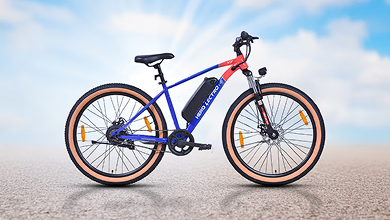
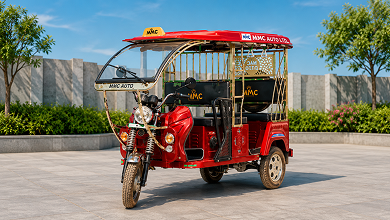
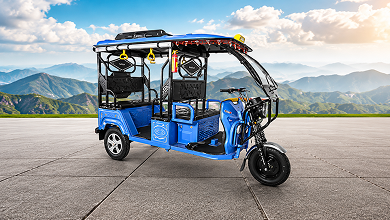
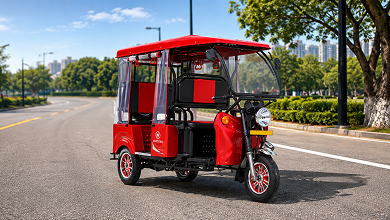
Electric three-wheelers have quietly taken over last-mile transit across Indian metros, tier-2 towns, and rural hubs. High petrol and CNG prices mean daily drivers lose a substantial chunk of their earnings at the fuel pump. Battery-powered rickshaws flip this equation by slashing daily running costs to a fraction of traditional fuels. Understanding your realistic electric rickshaw profit per month requires analysing gross passenger fares alongside battery degradation, charging tariffs, maintenance, and loan EMIs.
In India, an owner-operated battery e-rickshaw yields a net electric rickshaw profit per month between INR 22,000 and INR 38,000 after deducting charging, basic maintenance, and vehicle loan EMIs. Daily gross earnings range from INR 1,000 to INR 1,800, while direct electricity costs stay under INR 60 per day. Most operators break even on their initial investment within 6 to 10 months.
The commercial EV revolution in India gained momentum because three-wheelers hit parity on upfront cost faster than any other vehicle segment. Short, predictable routes connecting metro stations, bus terminals, and local markets are ideal for battery power.
A standard passenger e-rickshaw costs between INR 1.20 lakh and INR 1.85 lakh on-road, depending on whether it uses lead-acid batteries or a lithium-ion (LFP) pack. Because electricity costs roughly INR 0.30 to INR 0.50 per kilometre (compared to INR 2.50 to INR 3.50 per kilometre for CNG or petrol), operators retain far more of every rupee collected from fares.
Revenue depends on geographic location, total daily operating hours, and route choices. High-density feeder routes such as short 2 km to 4 km shuttle runs from railway or metro stations yield the most consistent earnings.
Per-Passenger Fare: INR 10 to 30 per head for standard shared routes.
Full Special Booking: INR 80 to 200 for dedicated single-party trips.
Daily Passengers Served: 60 to 110 passengers across an 8 to 10-hour shift.
Daily Gross Revenue: INR 1,000 to 1,800 on weekdays; up to INR 2,200 on weekends or festival periods.
Assuming 26 working days per month (allowing 4 rest or maintenance days), gross monthly revenue sits between INR 26,000 and INR 46,800.
While revenue looks attractive, managing operational expenditure (OpEx) separates profitable drivers from those struggling with debt.
A typical 48V, 100Ah battery setup takes around 4 to 6 kWh (units) of electricity for a full charge. At commercial or domestic EV tariffs averaging INR 7 to INR 10 per unit, a complete charge costs INR 35 to INR 60. This yields a real-world range of 80 km to 110 km per charge depending on load and terrain.
Electric drivetrains do not require engine oil, spark plugs, clutch plates, or complex gearboxes. Maintenance primarily covers:
Brake shoe replacements every 3 to 4 months.
Tyre rotation and pressure checks.
Suspension grease and chassis alignment.
Expect to spend INR 600 to INR 1,200 per month on routine upkeep.
Battery replacement is the single largest recurring expense.
Lead-Acid Packs: Cost INR 28,000 to 40,000 and last 12 to 15 months. Setting aside INR 2,200 per month covers your next set.
Lithium-Ion (LFP) Packs: Cost INR 60,000 to 90,000 but last 4 to 5 years. Amortised over their lifespan, the effective monthly cost drops to INR 1,200 to 1,600.
To evaluate an e-rickshaw purchase accurately, follow this quick calculation method:
1. Determine Daily Trips and Fares:
Multiply your average fare per ride by the estimated number of rides daily. For example, 15 trips carrying 4 passengers each at INR 15 per seat = 60 passengers × ₹15 = INR 900 per day in standard shared rides, plus INR 300 in special bookings = INR 1,200 gross daily income.
2. Calculate Monthly Gross Revenue:
Multiply daily gross income by working days. INR 1,200 × 26 days = INR 31,200 gross monthly revenue.
3. Deduct Daily Charging Costs:
Multiply daily charging expense by working days. INR 50 per day × 26 days = INR 1,300 monthly charging cost.
4. Subtract Maintenance and Sinking Fund:
Subtract INR 800 for routine monthly maintenance and set aside INR 2,000 into a separate savings account for battery replacement. Total operational deduction = INR 2,800.
5. Deduct Monthly Loan EMI:
If you financed INR 1.2 lakh over 3 years at 12% interest, your monthly EMI will be approximately INR 3,980.
6. Final Net Profit Calculation:
Subtract all costs from gross revenue: INR 31,200 - INR 1,300 (Charging) - INR 2,800 (Maintenance & Battery Reserve) - INR 3,980 (EMI) = INR 23,120 net take-home profit.
Low Capital Barrier: You can start an e-rickshaw business with an upfront down payment as low as INR 20,000 to INR 35,000 under state EV promotion schemes and Mudra loans.
Immediate Cash Flow: Unlike B2B services, passenger transport generates daily liquid cash, helping operators meet household expenses without waiting for monthly billing cycles.
Zero Fuel Station Queues: Overnight home charging eliminates long waits at CNG stations, saving 1.5 to 2 hours of productive earning time every single day.
Low Noise and Physical Strain: Gearless automatic operation significantly reduces driver fatigue compared to manual pedal rickshaws or heavy-clutch diesel autos.
When choosing a vehicle, specific technical parameters directly govern your electric rickshaw profit per month.
Lithium-ion models charge in 3 to 4 hours compared to 8 to 10 hours for lead-acid. Fast charging allows drivers to top up during afternoon lunch breaks, adding 30 km to 40 km of extra range for evening peak hours.
A 1,000W to 1,200W BLDC motor paired with a high-efficiency vector controller handles steep flyovers and heavy passenger loads without overheating or draining the battery prematurely.
A heavy-duty tubular steel chassis with telescopic front forks reduce component breakage on uneven roads, keeping repair costs low and vehicle uptime high.
Vehicle Type: Lithium-ion E-Rickshaw (Self-owned, fully paid)
Daily Route: Metro Station to Residential Societies (3 km loop)
Working Hours: 7:00 AM – 11:00 AM & 5:00 PM – 9:00 PM (8 Hours)
Daily Revenue: INR 1,550
Monthly Gross (27 days): INR 41,850
Monthly Costs: INR 1,350 (Charging) + INR 900 (Maintenance) + INR 1,500 (Battery Reserve)
Net Monthly Profit: INR 38,100
Vehicle Type: Lead-Acid E-Rickshaw (Financed over 24 months)
Daily Route: Main Market to Railway Station
Working Hours: 8:00 AM – 6:00 PM (10 Hours)
Daily Revenue: INR 1,100
Monthly Gross (25 days): INR 27,500
Monthly Costs: INR 1,250 (Charging) + INR 800 (Maintenance) + INR 2,200 (Battery Reserve) + INR 4,800 (Loan EMI)
Net Monthly Profit: INR 18,450 (Note: Net profit increases to INR 23,250 once the loan is paid off in year 2).
Comparing operational metrics demonstrates why battery three-wheelers continue replacing traditional combustion engines in urban transit:
| Cost Parameter | Electric Rickshaw | CNG Auto Rickshaw | Petrol Auto Rickshaw |
| Initial Purchase Price | INR 1.20L – 1.80L | INR 2.30L – 2.90L | INR 2.10L – 2.60L |
| Fuel / Energy Cost per km | INR 0.30 – 0.50 | INR 2.30 – 2.80 | INR 3.20 – 3.80 |
| Daily Running Cost (100 km) | INR 35 – 50 | INR 230 – 280 | INR 320 – 380 |
| Monthly Fuel Expense | INR 1,000 – 1,500 | INR 6,000 – 7,500 | INR 8,300 – 10,000 |
| Monthly Service Cost | INR 600 – 1,000 | INR 1,800 – 2,500 | INR 2,000 – 2,800 |
| Net Monthly Earnings | INR 25,000 – 38,000 | INR 18,000 – 26,000 | INR 14,000 – 21,000 |
Data reflects typical urban operating conditions across India.
Target Peak Commuter Windows: Work during office rush hours (8:00 AM to 11:00 AM) and evening return times (5:00 PM to 9:00 PM) when passengers prioritise quick departures over fare negotiation.
Maintain Correct Tyre Pressure: Running tyres 3 to 5 PSI below recommended pressure increases rolling resistance and reduces range by up to 12% per charge.
Avoid Deep Battery Discharges: Recharging your battery when it reaches 20% rather than draining it to 0% extends total battery cycle life by up to 30%.
Partner with Local Businesses: Secure fixed monthly contracts to deliver school children in the morning or transport goods for local grocers during non-peak afternoon hours.
Carrying 6 to 8 passengers on a vehicle built for 4 puts excessive strain on the motor controller and severely damages battery health. The slight increase in immediate fare is quickly wiped out by premature motor failure or battery degradation.
Operating unregistered e-rickshaws on restricted arterial roads leads to heavy traffic fines, vehicle impoundment, and lost daily income. Always ensure proper RTO approval and commercial insurance.
Extremely cheap local e-rickshaws assembled with uncertified components often lack thermal management and spare part availability. Investing in ICAT or ARAI-certified vehicles ensures long-term reliability and resale value.
If you are an investor building a fleet rather than driving yourself, you can lease e-rickshaws to local drivers on a daily rental basis.
Standard Daily Rent: INR 300 to INR 450 per day collected from the driver.
Monthly Rental Revenue per Vehicle: INR 7,800 to INR 11,700 (based on 26 days).
Fleet Expenses (Owner side): Insurance, major battery maintenance, and structural repairs.
Net Yield: A fleet of 5 e-rickshaws generates a passive net income of INR 32,000 to INR 48,000 per month after setting aside maintenance reserves.


Manage reminders, payment status, and renewal dates from one simple app.


Trusted by policyholders to track every renewal.