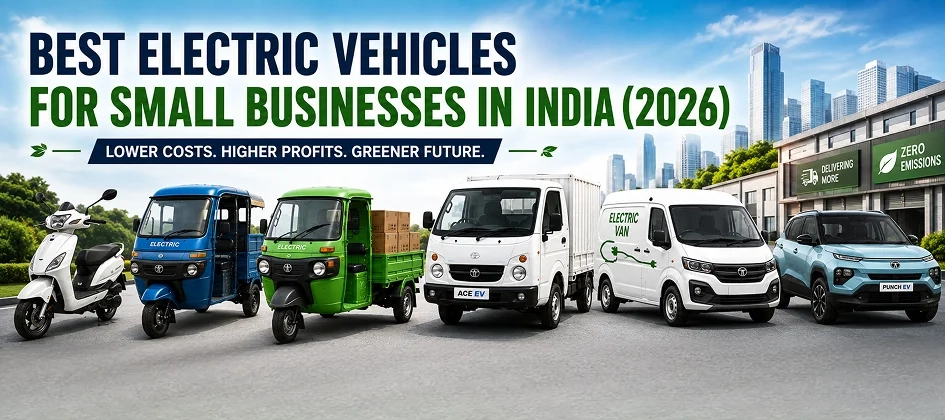
The commercial transportation landscape in India is undergoing a massive transformation. For small business owners, whether running a local grocery delivery service, courier agency, pharmacy chain, food startup, or logistics company, vehicle running costs directly impact the bottom line. Petrol and diesel prices remain unpredictable, standard maintenance costs are steadily climbing, and daily operational overhead can quickly eat away at profit margins.
Electric Vehicles (EVs) have shifted from an experimental alternative to an essential operational asset. Transitioning to commercial EVs allows Indian businesses to lower cost-per-kilometre expenses, reduce servicing downtime, utilise state subsidies, and present a modern, sustainable brand image to clients.
For any enterprise covering 50 to 150 km per day within city limits, conventional Internal Combustion Engine (ICE) vehicles present high ongoing costs. Commercial electric vehicles address these financial challenges directly:
Drastic Reduction in Fuel Overhead: Electricity costs per kilometre are a fraction of petrol or diesel expenses.
Minimal Maintenance Requirements: EVs lack complex internal components like multi-gear transmissions, fuel injectors, spark plugs, and engine oil systems, leading to lower servicing costs.
City-Friendly Operation: Zero tailpipe emissions and silent operation make EVs ideal for dense urban areas, night deliveries, and low-emission commercial zones.
State & Central Policy Benefits: RTO tax waivers, reduced registration fees, and state-level EV incentives significantly reduce upfront capital expenditure.
Higher ROI Over Time: While initial purchase prices can be slightly higher, the Total Cost of Ownership (TCO) shifts heavily in favour of EVs within 12 to 18 months of active commercial use.
Selecting the right EV requires matching vehicle capability, payload capacity, and daily driving range with your specific operational requirements.
| Business Type | Recommended EV Category | Primary Commercial Benefit |
| Food Delivery & Pharmacies | Electric Scooters / Two-Wheelers | Agile city navigation, low running cost, easy home charging |
| Hyperlocal Grocery & Retail | Electric Cargo Three-Wheelers | High urban payload capacity, low daily overhead |
| E-Commerce & Couriers | Electric Vans & Light Commercial EVs | Weatherproof storage, safe transit for high-value parcels |
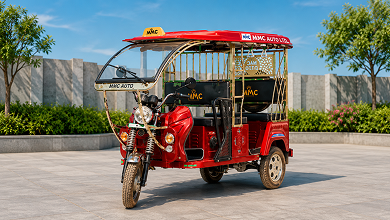
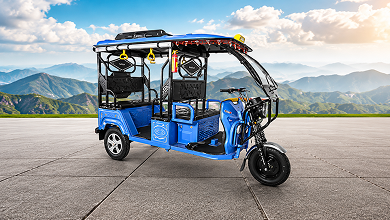
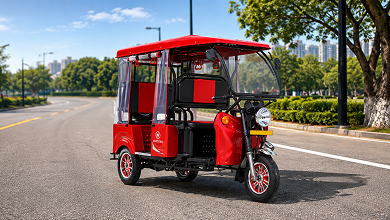
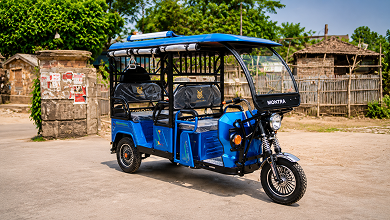
| Local Passenger Transit | Electric Rickshaws & Auto-Rickshaws | Low acquisition cost, high passenger turnaround |
| Urban Freight & Industrial | Electric Light Commercial Trucks | High tonnage capacity, quiet intra-city movement |
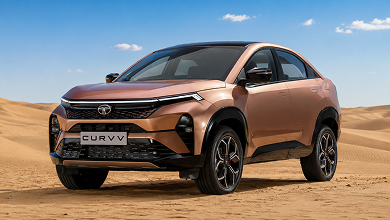
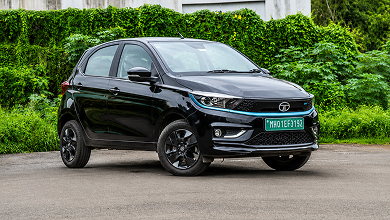
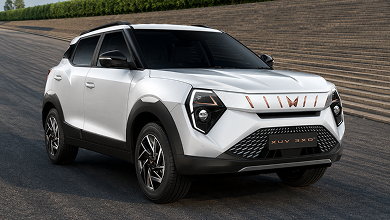
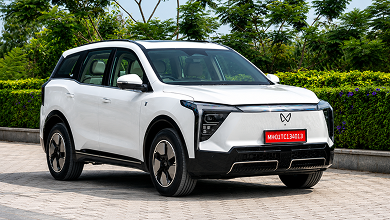
| Executive & Sales Teams | Commercial Electric Cars & Compact SUVs | Professional brand image, long-range client travel |
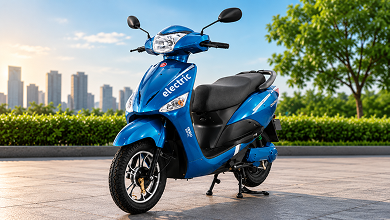
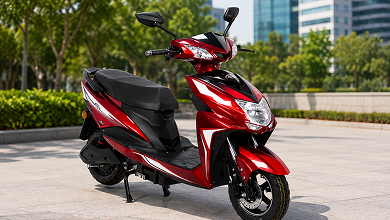
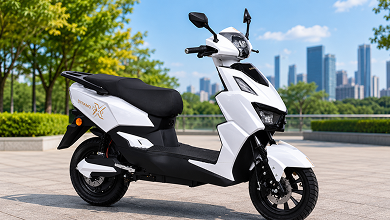
Electric scooters represent the most accessible entry point for small businesses requiring agile, short-range delivery solutions.
Food delivery platforms
Local pharmacy distribution
Document and small courier dispatch
Hyperlocal dairy and bakery drop-offs
Ola S1 Pro / Commercial Fleet Variants: Known for long battery range, fast acceleration, and integrated GPS tracking for fleet operators.
TVS iQube: Built with reliable construction, excellent real-world range accuracy, and widespread service network support.
Ather Rizta: Features extra-large seating and broad floorboard space, making it exceptionally well-suited for carrying commercial cargo bags.
Bajaj Chetak: Features a durable metal body designed to handle tough daily road conditions with minimal cosmetic wear.
Hero Vida Series: Offers removable battery options that allow businesses to swap batteries and minimise charging downtime.
Cargo three-wheelers are the backbone of last-mile logistics in Indian cities, offering a strong balance between load capacity and narrow-lane manoeuvrability.
Wholesale market distribution
Retail chain store replenishment
E-commerce parcel transport
Heavy grocery and beverage delivery
Mahindra Treo Zor: Features a high-grade modular cargo tray, strong torque delivery for steep inclines, and low operating costs per kilometre.
Piaggio Ape E-Xtra: Offers robust build quality, heavy payload tolerance, and access to Piaggio’s extensive nationwide service infrastructure.
Euler HiLoad EV: Engineered for high load capacity, featuring advanced liquid-cooled battery technology suited for hot Indian summers.
Altigreen neEV: Purpose-built for tough road conditions, featuring high ground clearance and optimised power delivery under maximum payload.
When businesses require weather protection for high-value cargo or efficient passenger transit, electric vans and modern e-rickshaws provide practical solutions.
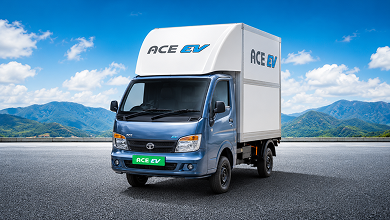
Tata Ace EV: Built on the proven Ace platform, featuring high battery reliability and advanced fleet telematics to track driver performance and battery health.
Switch IEV Series: Designed specifically for urban freight, offering efficient payload management, comfortable driver cabins, and fast-charging capability.
Mahindra Treo Passenger: Offers wide seating, stable suspension, and high battery efficiency for daily city routes.
YC Electric & Udaan E-Rickshaws: Affordable, highly accessible options widely used for first- and last-mile connectivity around transit hubs.
Evaluating total operational expenses highlights the clear financial advantages of commercial EVs over a standard 3-year usage period:
| Operational Parameter | Electric Commercial Vehicle | Petrol / Diesel Commercial Vehicle |
| Fuel / Energy Cost per km | INR 0.20 – INR 0.80 (varies by vehicle class) | INR 2.50 – INR 6.00+ |
| Engine Servicing & Oil Changes | Zero engine oil, filters, or spark plugs | Mandatory regular oil, filter, and belt replacements |
| Brake System Wear | Lower (due to regenerative braking) | Higher (continuous mechanical friction) |
| Noise & Vibration | Zero engine noise, smooth drive | High engine noise, higher driver fatigue |
| Tailpipe Emissions | Zero local emissions | High carbon output, subject to strict city bans |
To maximise return on investment, evaluate these five critical factors before committing capital:
Calculate your maximum required daily distance. Ensure the vehicle’s realistic, full-load battery range comfortably covers your daily route with a 15–20% safety buffer.
Do not compromise on load limits. Overloading an EV reduces real-world range faster than in an ICE vehicle. Choose a model rated specifically for your average cargo weight.
Assess your overnight charging setup. Most small fleets rely on standard slow AC chargers at their primary warehouse or store overnight, supplemented by public DC fast chargers when needed.
Modern commercial EVs include connected technology to track live location, monitor battery performance, evaluate driver behaviour, and prevent unauthorised usage.
Verify the manufacturer's warranty on the traction battery (typically 3 to 5 years for commercial models) and ensure local service centres carry ready stocks of spare parts.
The Indian government, alongside various state-level policies, offers direct financial incentives to lower the initial purchase cost of commercial EVs:
State-Specific EV Subsidies: States like Maharashtra, Delhi, Gujarat, and Karnataka offer direct purchase incentives or road tax exemptions for commercial EV registrations.
Income Tax Benefits: Business owners can claim accelerated depreciation benefits under commercial asset accounting rules for electric fleets.
Lower GST Rates: EVs attract a lower GST rate of 5% compared to up to 28% plus cess on conventional commercial ICE vehicles.
For lightweight parcel drop-offs and fast-food delivery: Invest in a fleet of durable electric scooters with removable or fast-charging batteries.
For intra-city goods transport (up to 700 kg): Choose an electric cargo three-wheeler like the Mahindra Treo Zor or Euler HiLoad EV.
For large-volume, weatherproof deliveries: Upgrade to an electric light commercial vehicle such as the Tata Ace EV.
For client travel and executive mobility: Select a compact electric passenger SUV/car like the Tata Punch EV or Nexon EV.
Switching to electric transportation is a practical strategy to control operational costs, build financial resilience, and future-proof your business against rising fuel prices. Analysing your daily logistics requirements and selecting the right commercial EV category will help reduce monthly overhead and protect your long-term profit margins.


Manage reminders, payment status, and renewal dates from one simple app.


Trusted by policyholders to track every renewal.