
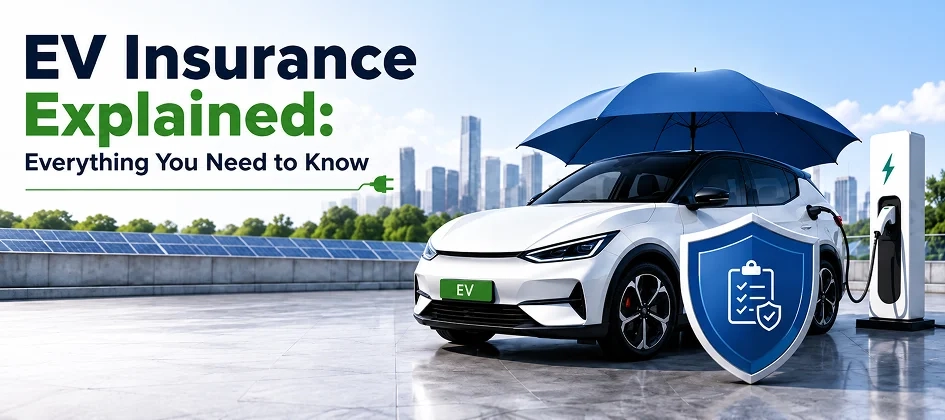
Most explanations of EV insurance stop at one line: "Electric vehicles get a 15% discount on the third-party premium. "That's true, and it's also the least useful thing you'll read before buying a policy, because it hides the part that actually affects your wallet.
Here's what usually doesn't get said clearly: that 15% discount only applies to the third-party portion of your premium. The own-damage portion, the part that actually makes up most of your bill, often runs 20-40% higher than an equivalent petrol car. The reason comes down to one component: the battery pack, which can account for 40-60% of your EV's total value. Damage it, and you're not looking at a small claim.
This guide walks through EV insurance, explaining properly what it actually costs, which add-ons genuinely matter, and where insurers quietly leave gaps that catch owners off guard, particularly around water damage and battery degradation.
EV insurance in India covers third-party liability and own damage, similar to petrol car insurance, but with EV-specific add-ons like battery protection cover and zero depreciation being far more important. Third-party premiums are 15% cheaper by IRDAI mandate, but own-damage premiums run 20-40% higher than petrol equivalents due to expensive battery replacement costs.
Electric vehicle insurance is a motor insurance policy built to protect EVs against third-party liability and their own damage, with the same basic structure as petrol or diesel car insurance. What changes is what's inside that structure.
A standard petrol car policy is built around an internal combustion engine, mechanical parts, and fuel systems. An EV policy needs to account for a completely different risk profile: a high-voltage battery pack, electric motor, charging equipment, and battery management electronics components that don't exist in a petrol car's policy wording at all.
That difference matters most in one place: battery coverage. Standard comprehensive policies cover battery damage from accidents or fire, but typically exclude water ingress, electrical surge damage, and post-warranty manufacturing defects. Given that EV batteries sit low in the chassis, even shallow standing water during monsoon season can affect the battery management system, a scenario standard policies often don't cover unless you've added specific riders.
This is the part most guides gloss over, so it's worth breaking down properly.
The third-party discount is real but limited. IRDAI mandates a 15% discount on third-party premiums for private electric vehicles, applied automatically by every registered insurer. This is a genuine, government-backed incentive to encourage EV adoption.
The own-damage premium tells a different story. Because the battery pack often makes up 40-60% of an EV's total value, the Insured Declared Value (IDV) used to calculate the own-damage premium ends up much higher than for an equivalent petrol car even when the two cars look similar and cost about the same to buy. A more powerful electric motor can also push premiums up compared to a petrol variant of the same model.
Repair costs run higher too. Fewer garages currently have certified EV technicians, genuine EV parts often have longer lead times, and battery diagnostics require specialised equipment that not every workshop has invested in yet. All of this feeds into higher own-damage premiums industry-wide.
Net effect: the 15% third-party discount rarely offsets the higher own-damage premium, so total comprehensive premiums for EVs are often higher than for a comparable petrol car, not lower, despite what the "EVs are cheaper to insure" headlines suggest.
Standard comprehensive cover is rarely enough on its own for an EV. These add-ons matter more for electric vehicles than they typically do for petrol cars.
Zero Depreciation (Nil-Dep) Cover Without this, depreciation gets deducted from every claim – roughly 50% on plastic body panels, 30% on metal parts, and, importantly, similar depreciation rates apply to battery claims. On a vehicle where the battery alone can cost several lakh rupees to replace, that depreciation adds up fast. This is close to essential for any EV more than a couple of years old.
Battery Protection Cover It covers consequential battery damage that standard policies exclude, such as water ingress during flooding, electrical surge from charging, and, in some policies, degradation-related issues. Typically costs a modest annual add-on premium relative to the protection it provides.
Return to Invoice (RTI) Cover If your EV is stolen or declared a total loss, standard claims pay the depreciated value, not what you paid. RTI ensures you receive the full original purchase price, including registration and taxes, which is particularly relevant for EVs, where technology and resale value can shift quickly.
The Charging Equipment Cover covers damage to your home charger or portable charging cable, which standard "personal belongings" coverage often doesn't include if it's stored in the car and stolen without the vehicle itself.
Roadside Assistance (EV-Specific) Look specifically for EV-relevant roadside assistance flatbed towing since EVs generally shouldn't be towed the conventional way and mobile charging support for those stranded with a depleted battery.
Real premiums vary by vehicle, city, driver age, and claims history, but here's the general shape of what to expect for a comprehensive policy on a mass-market electric car:
Tier-2 cities generally see premiums running 8-12% cheaper than metro cities like Mumbai or Delhi, largely reflecting differences in claims frequency and repair costs by region.
A Delhi-based EV owner filed a claim after monsoon flooding affected their vehicle's battery management system, only to discover their standard comprehensive policy excluded water ingress damage. A battery protection add-on, had it been purchased, would have covered this specific scenario.
A Bengaluru-based Nexon EV owner compared quotes across five insurers using an aggregator and found premium differences of over INR 8,000 annually for the same coverage, largely explained by differing depreciation treatment on the battery component between insurers.
| Factor | Electric Vehicle | Petrol Vehicle |
|---|---|---|
| Third-Party Premium | 15% cheaper (IRDAI mandate) | Standard rate |
| Own Damage Premium | 20-40% higher (typical) | Standard rate |
| Key Expensive Component | Battery pack (40-60% of value) | Engine (typically 5-8% of value) |
| Water Damage Coverage | Often excluded without add-on | Standard engine protection covers most cases |
| Repair Cost | 30-50% higher (specialised parts, fewer certified garages) | Standard, wider garage network |
| Essential Add-Ons | Battery Protection, Zero Dep, RTI | Zero Dep, Engine Protect (optional) |
Figures are general industry patterns as of 2026 and vary by insurer, vehicle model, and city. Always confirm exact terms in your specific policy document.
EV insurance explained simply comes down to this: you get a modest, government-mandated discount on the third-party portion of your premium, but you'll likely pay more overall once you account for the own-damage premium tied to your EV's expensive battery pack. That's not a reason to under-insure; it's exactly why add-ons like Battery Protection, Zero Depreciation, and Return to Invoice matter more for EV owners than they do for petrol car owners. Read your policy wording carefully, specifically around water damage and battery exclusions, and compare quotes across multiple insurers before you buy or renew. The right EV policy isn't necessarily the cheapest one; it's the one that actually covers the single most expensive part of your vehicle.
1. Is EV insurance cheaper than petrol car insurance in India?
Only partially. Third-party premiums are 15% cheaper for EVs under the IRDAI mandate, but own-damage premiums typically run 20-40% higher due to expensive battery replacement costs, often making total comprehensive premiums higher overall.
2. Does EV insurance cover battery damage? Standard comprehensive policies cover battery damage from accidents or fire but usually exclude water ingress, electrical surge, and post-warranty manufacturing defects unless you add a specific battery protection cover.
3. What is zero depreciation cover, and do I need it for an EV?
Zero Depreciation ensures the insurer pays the full replacement cost of damaged parts, including the battery, without deducting for age-based depreciation. It's strongly recommended for EVs since battery depreciation can otherwise mean a significant out-of-pocket cost during a claim.
4. Why is EV insurance's own-damage premium higher than petrol cars?
Because the battery pack often makes up 40-60% of an EV's total value, pushing up the Insured Declared Value used to calculate the own-damage premium. Higher repair costs due to specialised parts and fewer certified EV garages also contribute.
5. What add-ons should every EV owner buy?
Battery Protection Cover, Zero Depreciation, and Return to Invoice are considered close to essential for EV owners, along with EV-specific roadside assistance that includes flatbed towing and mobile charging support.
6. Does EV insurance cover water damage during monsoon? Not by default in most standard comprehensive policies. Water ingress damage to the battery management system typically requires a specific Battery Protection or Engine Protect the add-on that explicitly includes EV battery water damage. Always verify the exact wording.
7. How is the IDV calculated for an electric vehicle?
IDV is generally the vehicle's current market value minus standard depreciation, but because battery cost forms a large share of an EV's value, IDV calculations for EVs tend to be significantly higher than for a similarly priced petrol car.
8. Can I buy EV insurance online without going through a dealer?
Yes, and it's generally recommended. Renewing or buying directly through an insurer or a comparison aggregator often avoids the inflated commission that dealer-routed policies can carry.
9. Does the no-claim bonus apply the same way for EVs as for petrol cars?
Mostly, yes, but some insurers exclude battery-related claims from NCB eligibility specifically. Check this detail in your policy document, since it affects your long-term discount trajectory.
10. Will EV insurance get cheaper as the market matures?
Likely, over time. As repair costs stabilise, more garages get EV-certified, and insurers gather more claims data specific to electric vehicles, premiums are expected to become more competitive. A more standardised, EV-specific insurance product line from regulators is also anticipated, which could simplify comparison across insurers.


Manage reminders, payment status, and renewal dates from one simple app.


Trusted by policyholders to track every renewal.