One of the biggest hesitations people face before taking the plunge into electric mobility is a looming financial question: "What happens if my battery pack fails out of warranty?"
Because the high-voltage battery pack is the single most expensive component inside an electric vehicle (EV), buyers often worry that an out-of-pocket replacement will completely wipe out their fuel savings. While replacing a full battery pack is a significant investment, modern EV architectures are engineered to last a decade or more. Furthermore, highly comprehensive manufacturer warranties mean the vast majority of original owners will never pay a single rupee for a replacement.
In this data-backed guide, we will break down the actual market costs of EV battery replacements in India across cars, scooters, and bikes and explain why this financial concern is far less common than it seems.
The financial layout for an out-of-warranty EV battery replacement in India is determined directly by the vehicle segment and its overall pack capacity (measured in kWh).
| Vehicle Segment | Estimated Battery Replacement Cost |
| Electric Scooters | INR 30,000 – INR 95,000 (Entry-level 2 kWh vs. Premium 4+ kWh) |
| Electric Bikes | INR 50,000 – INR 120,000+ (Performance models vary) |
| Electric Passenger Cars | INR 300,000 – INR 750,000+ (variant specific) |
The Reality Check: With standard factory battery coverage spanning 3 to 8 years, plus the option for extended warranty packages, an out-of-pocket replacement is an exceptionally rare event during normal vehicle ownership cycles.
Unlike mechanical internal combustion engines that wear down through friction, pistons, and oil degradation, an EV battery experiences gradual chemical degradation.
Over thousands of days and repetitive charge cycles, the lithium-ion cells naturally lose a tiny fraction of their ability to hold an electrical charge. This reduction in performance is slow, highly linear, and predictable:
Brand New Pack: 100% State of Health (SoH) → Full factory range.
3 to 5 Years of Commuting: ~90% to 95% SoH→ Barely noticeable range changes.
8 to 10 Years of Active Service: ~80% to 85% SoH → Perfectly operational, though total driving range per charge drops slightly.
A battery pack does not simply "die" or stop running when it ages; it merely offers a shorter maximum driving range. Replacement is typically only considered if a cell pack drops below 70% state of health or encounters an internal component failure.
Modern automotive battery cells are manufactured to outlast standard chassis components under proper care baselines:
Electric Cars: 8 to 15 Years | 200,000 to 300,000+ km
Electric Scooters & Bikes: 5 to 10 Years | 70,000 to 120,000+ km
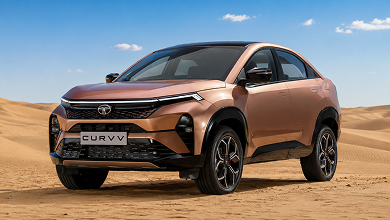
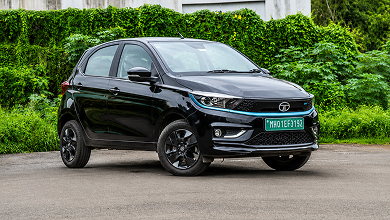
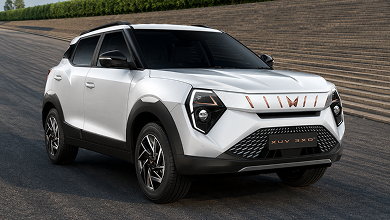
Because electric cars utilize substantial high-capacity traction batteries to deliver long driving ranges, they carry the highest replacement costs.
Average Cost Window: INR 300,000 to INR 750,000+
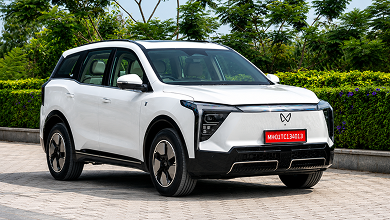
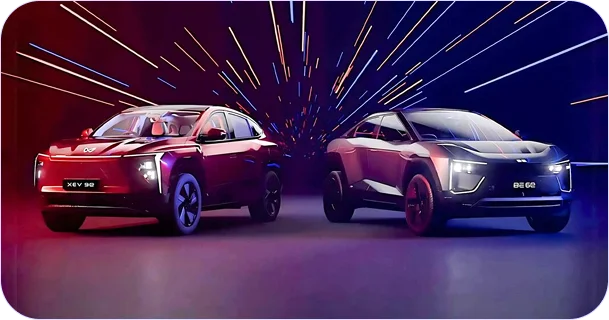
Market Context: For highly popular options like the Tata Nexon EV, Tata Punch EV, or MG Windsor EV, the battery cost typically represents roughly 35% to 45% of the vehicle's initial ex-showroom cost. For older or smaller battery variants (medium-range models), costs hover on the lower end, while long-range and premium variants sit higher.
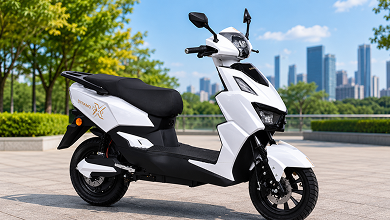
With the earliest waves of high-volume electric scooters hitting post-warranty territory, real-world workshop replacement data highlights a clear link between cost and battery capacity ($kWh$).
Average Cost Window: INR 30,000 to INR 95,000
Model Specific Breakdowns:
Entry-Level Packs (e.g., Ola S1 X 2 kWh, TVS iQube base): INR 30,000 to INR 45,000.
Mid-to-High Range Packs (e.g., Ather 450X, Bajaj Chetak Premium, Hero Vida V1 Pro): INR 65,000 to INR 80,000.
Premium/Large Packs (e.g., Ola S1 Pro Gen 2, TVS iQube ST): INR 85,000 to INR 95,000+.
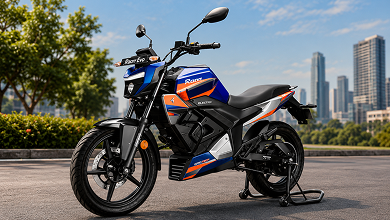
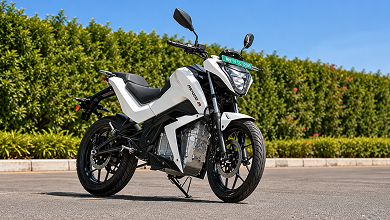
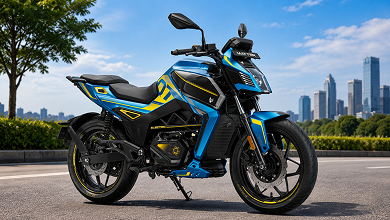
Electric motorcycles require distinct structural form factors and robust cell outputs to match performance expectations, positioning them right between scooters and cars.
Average Cost Window: INR 50,000 to INR 120,000
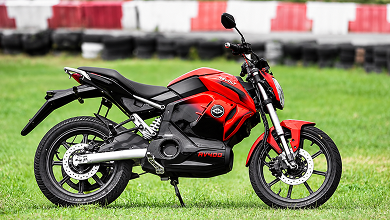
Examples: Models like the Revolt RV400 sit on the accessible side of the spectrum, while high-performance long-range machines like the Oben Rorr or Ultraviolette F77 carry a higher premium due to advanced thermal management design.
Yes, absolutely. This is one of the most significant shifts in modern EV maintenance.
An EV battery pack is not one single solid block; it is an organized network composed of individual battery modules, which in turn house hundreds of individual cells. It is all governed by a computer board called the Battery Management System (BMS).
If your vehicle experiences a sudden range drop or error code, it is highly likely that a single module or the BMS board itself has faulted, while 90% of the remaining cells are perfectly healthy. Authorized service centers can execute module-level repairs:
Cost Comparison Example: Instead of paying INR 75,000 for a completely new scooter battery pack, replacing a single faulted module or a malfunctioning BMS board typically costs between INR 8,000 and INR 20,000, fully restoring the pack's operational capability.
To give consumers complete peace of mind, Indian auto manufacturers back their powertrains with aggressive long-term factory warranties. If your battery drops below a specified threshold (typically 70% to 80% SoH) or suffers a manufacturing defect during this window, the manufacturer replaces it free of cost.
Electric Cars: Standard 8 years or 160,000 km (whichever comes first).
Electric Scooters & Bikes: Standard 3 to 5 Years, with most major OEMs (such as Ola, Ather, and TVS) offering optional official 8-year extended battery warranty plans for a nominal premium (typically INR 3,000 to INR 15,000).
To keep your original battery pack performing like new well past its warranty date, implement these core practices into your daily routine:
Maintain the 20-80% Safety Loop: For standard daily city commuting, try to keep your state of charge between 20% and 80%. Avoid leaving your vehicle sitting idle at a 100% charge or completely drained to 0% for days at a time.
Prioritize Slow AC Charging: Use your home AC charger as your primary fueling source. Reserve high-output public DC fast chargers strictly for highway trips or emergency top-ups to minimize high-current thermal stress.
Cool Down Before You Plug: After climbing steep inclines or completing a long highway stretch in peak summer heat, let your vehicle rest in the shade for 15 minutes to drop its internal thermal baseline before plugging it in to charge.
Traction batteries require specialized, high-grade raw materials (including lithium, cobalt, and nickel) alongside advanced electronic management systems. While local assembly infrastructure inside India is scaling rapidly to drive costs down, cell manufacturing remains a highly sophisticated, capital-intensive technology.
Yes, without hesitation. Paying a small upfront premium for an extended 8-year battery warranty is highly practical insurance that entirely insulates you from the risk of a major out-of-pocket expense down the road.
They are highly valuable. When a battery drops below automotive standards, it enters a "second-life" cycle where it is repurposed for stationary energy storage (like solar grids or home inverters). Eventually, specialized recycling plants shred the pack to recover up to 95% of the precious metals for use in brand-new cells.
At eVehicals, we cut past speculative internet rumors to provide practical, data-tested realities of the Indian EV landscape. Our analytical guides are compiled directly from localized workshop invoices, actual fleet telemetry, and official OEM warranty terms. We are dedicated to providing clear, transparent information so you can navigate the electric transition with absolute confidence.
While out-of-warranty EV battery replacement costs can sound intimidating on paper, they should not deter you from making the switch to electric mobility.
Thanks to highly advanced battery management software, highly protective 8-year manufacturer warranties, and the rapidly growing viability of module-level repairs, actual out-of-pocket battery replacements are incredibly rare. For the vast majority of car and two-wheeler buyers in India, the battery pack will comfortably outlast your entire period of ownership, making replacement an expense you likely will never have to face.


Manage reminders, payment status, and renewal dates from one simple app.


Trusted by policyholders to track every renewal.