
Operating commercial vehicles in India's competitive logistics and delivery landscape requires strict cost control. With rising fuel prices, toll rates, and driver wages, commercial fleet owners constantly search for ways to protect their margins. For last-mile transport, urban logistics, and intracity goods distribution, the choice between traditional diesel cargo vehicles and emerging electric cargo vehicles has become a critical business decision.
While diesel mini-trucks and cargo three-wheelers have long served as the backbone of Indian commercial transport, high daily operational costs continue to squeeze profits. Conversely, electric cargo vehicles offer promisingly low running costs per kilometre, but they require a higher initial purchase price.
Evaluating a commercial vehicle solely on its showroom sticker price is a major financial mistake. A comprehensive Total Cost of Ownership (TCO) evaluation measuring the complete costs incurred over five years of operation reveals the true financial reality. This detailed comparison breaks down initial investment, energy consumption, maintenance expenses, financing, insurance, downtime, and resale value to help Indian businesses choose the right cargo vehicle.
To conduct a fair financial comparison, we must compare vehicles designed for the exact same commercial use cases, routes, and payload capabilities.
Powered by high-density lithium-ion (LFP or NMC) battery packs and electric motors, electric cargo vehicles produce zero tailpipe emissions. In India, commercial EVs fall into three main categories:
Electric Cargo Three-Wheelers (L5N category): Popular for last-mile micro-deliveries, grocery transport, and parcel distribution (e.g., Mahindra Zor Grand, Piaggio Ape E-Xtra FX).
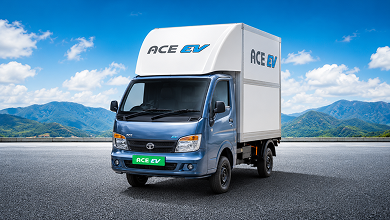
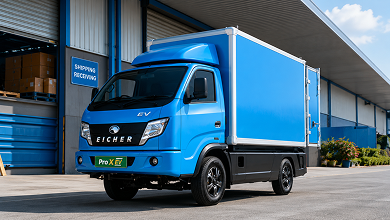
Electric Light Commercial Vehicles (eLCVs) / Mini-Trucks: Suitable for intra-city logistics, FMCG distribution, and medium payloads ranging from 600 kg to 1,500 kg (e.g., Tata Ace EV, Mahindra Veero EV).
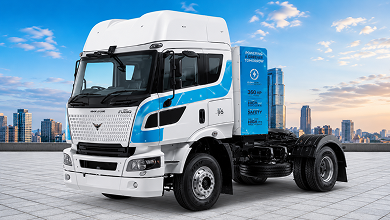
Intermediate & Heavy Commercial EV Trucks: Emerging options designed for dedicated corporate corridors and intra-hub transfers (e.g., Switch IeV series, Eicher Pro 2055 EV).
Powered by internal combustion engines (ICE) compliant with BS6 Phase 2 emissions standards, diesel cargo vehicles remain common across Indian roads.
Diesel Cargo Three-Wheelers & Small Mini-Trucks: Traditional workhorses (e.g., Bajaj Maxima C, Piaggio Ape Xtra LDX).
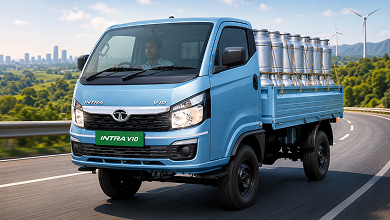
Diesel Mini-Trucks & LCVs: High-payload commercial trucks designed for urban and intercity routes (e.g., Tata Ace Gold Diesel, Mahindra Jeeto Diesel, Ashok Leyland BADA DOST).
Commercial comparison requires evaluating vehicles within the same payload bracket. For example, comparing an electric 600 kg mini-truck against a 1.5-tonne diesel truck distorts both operational utility and financial outcomes.
The most visible difference between electric and diesel cargo vehicles lies in their initial acquisition cost. Electric vehicles carry higher showroom prices primarily due to the cost of high-voltage lithium-ion battery packs.
Ex-Showroom & On-Road Price: Electric cargo vehicles carry a 20% to 50% price premium over comparable diesel models. However, several Indian states offer zero or reduced road tax and registration fee waivers for commercial electric vehicles, narrowing the on-road price gap.
Goods and Services Tax (GST): Commercial EVs attract a lower GST rate of 5%, whereas diesel commercial vehicles are taxed at a higher rate of 28%.
Initial Charging Setup: Operating an electric cargo fleet requires dedicated charging infrastructure. A standard 15A slow AC socket costs minimal amounts (INR 2,000–INR 5,000 per bay), whereas installing a 3.3 kW to 7.2 kW AC wall-box charger or a DC fast charger at a commercial depot ranges from INR 25,000 to INR 1,500,000 depending on power capacity.
Financing and Interest: Commercial vehicle loans in India typically require a 15% to 25% down payment. Interest rates for commercial EVs generally range from 10.5% to 14.5%, whereas established diesel models secure slightly lower rates (9.5% to 12.5%) due to long-standing secondary market valuation data.
| Cost Factor | Electric Cargo Mini-Truck (Illustrative LCV) | Diesel Cargo Mini-Truck (Comparable BS6 LCV) |
| Ex-Showroom Price | INR 920,000 | INR 650,000 |
| GST Rate | 5% (Included) | 28% (Included) |
| Registration & Road Tax | INR 5,000 (State EV Policy Waiver) | INR 45,000 |
| First-Year Commercial Insurance | INR 38,000 | INR 32,000 |
| Depot Charging Setup | INR 25,000 (AC Wall-Box) | INR 0 |
| Total Initial On-Road Cost | INR 988,000 | INR 732,000 |
| Down Payment (20%) | INR 197,600 | INR 146,400 |
| Financed Loan Amount | INR 790,400 | INR 585,600 |
| 5-Year Loan Interest (at 12% EV / 11% Diesel) | INR 263,600 | INR 178,000 |
| Total Net Purchase & Financing Cost | INR 1,251,600 | INR 910,000 |
Energy costs represent the largest recurring variable expense for commercial transport businesses.
Electric LCVs consume between 0.10 kWh/km (cargo 3-wheelers) and 0.20 kWh/km (1-tonne mini-trucks). Accounting for standard grid-to-battery charging efficiency losses (~10%), a commercial electric mini-truck draws approximately 0.18 kWh to 0.22 kWh from the power grid per kilometre.
Commercial electricity tariffs for depot charging in major industrial states (such as Gujarat, Maharashtra, Karnataka, and Delhi-NCR) average INR 7.00 to INR 9.50 per kWh.
Electricity Cost per km Formula: Electricity Consumed per km (including charging losses) × Tariff Rate (INR per kWh)
Calculation: 0.20 kWh/km × INR 8.50/kWh = INR 1.70 per km
A BS6-compliant diesel mini-truck carrying a standard 750 kg to 1,000 kg load delivers real-world fuel economy between 14 km/l and 18 km/l in mixed urban delivery conditions. With commercial diesel prices averaging INR 90.00 per litre, fuel expenses accumulate rapidly.
Diesel Cost per km Formula: Diesel Price per Litre (INR) ÷ Fuel Mileage (km/l)
Calculation: INR 90.00 ÷ 15 km/l = INR 6.00 per km
The difference is substantial: INR 1.70 per km for electric versus INR 6.00 per km for diesel, creating a direct operational savings margin of INR 4.30 per kilometre in favour of electric transport.
To demonstrate how energy costs accumulate over time, let us evaluate a commercial mini-truck operating 100 kilometres per day, 300 working days per year (30,000 km annually), totalling 150,000 kilometres over 5 years.
| Cost Metric | Electric Cargo Vehicle | Diesel Cargo Vehicle |
| Assumed Daily Distance | 100 km | 100 km |
| Annual Working Days | 300 days | 300 days |
| Annual Distance | 30,000 km | 30,000 km |
| 5-Year Cumulative Distance | 150,000 km | 150,000 km |
| Real-World Consumption Rate | 0.20 kWh / km | 15 km/litre |
| Assumed Energy/Fuel Price | INR 8.50 / kWh | INR 90.00 / litre |
| Energy Cost per Kilometre | INR 1.70 / km | INR 6.00 / km |
| Annual Energy / Fuel Cost | INR 51,000 | INR 180,000 |
| 5-Year Total Energy / Fuel Cost | INR 255,000 | INR 900,000 |
By running on grid electricity rather than commercial diesel, a fleet operator saves INR 645,000 in fuel expenses alone over a 150,000 km lifecycle.
Drivetrain complexity directly impacts recurring maintenance bills and workshop visits.
Diesel Drivetrain: Engine, Transmission, Clutch, Turbos, Fuel Injectors, Radiator, Exhaust Systems, DPF/SCR Filters (over 2,000 moving parts).
Electric Drivetrain: Battery Pack, Inverter, Electric Motor, Reduction Gear (fewer than 20 moving mechanical parts).
A BS6 diesel engine contains over 2,000 moving mechanical parts. Regular scheduled servicing is required every 10,000 km to 15,000 km, including:
Engine oil and oil filter changes
Fuel filter replacements and injector cleaning
Air filter replacements
Clutch plate wear and transmission fluid top-ups
DPF (Diesel Particulate Filter) cleaning and AdBlue (DEF) fluid top-ups
Belts, hoses, coolant flush, and brake pad replacements
Average 5-year routine maintenance costs for a commercial diesel mini-truck range from INR 0.80 to INR 1.20 per km (totalling INR 120,000 to INR 180,000 over 150,000 km).
Electric motors feature fewer than 20 moving parts, eliminating engine oil, spark plugs, fuel filters, clutch assemblies, and exhaust systems. Maintenance consists primarily of:
Periodic brake pad inspection and fluid checks
Reduction gearbox oil changes (every 40,000–50,000 km)
Suspension alignment, tyre rotation, and cabin air filter checks
Coolant top-ups for liquid-cooled battery thermal systems
Because regenerative braking handles a significant portion of deceleration, brake pad wear is reduced by up to 40%. Average 5-year routine maintenance costs for an electric mini-truck range between INR 0.30 and INR 0.50 per km (totalling INR 45,000 to INR 75,000 over 150,000 km).
Commercial transport profitability depends on vehicle availability. Unplanned downtime directly reduces daily revenue.
Diesel Refuelling: Takes 5 minutes at any commercial fuel station, offering unrestricted route flexibility and immediate turnaround.
Depot AC Overnight Charging: Takes 6 to 8 hours using a 3.3 kW or 7.2 kW AC wall-box charger. When scheduled during off-duty hours (10:00 PM to 6:00 AM), charging causes zero operational downtime.
DC Fast Charging: Takes 45 to 60 minutes (10% to 80% charge) at commercial fast chargers, suitable for midday route extensions.
If an electric cargo vehicle covers 80–120 km on a single charge and completes its daily route within that envelope, overnight depot charging eliminates downtime.
However, if an EV driver must stop for 60 minutes at a commercial fast charger during peak dispatch hours to complete a delivery window, that lost time carries an opportunity cost. Fleet managers must carefully match battery range against daily delivery requirements before purchasing.
While direct central subsidies (such as FAME-II) have evolved into targeted incentive schemes like PM E-DRIVE, commercial electric cargo vehicles continue to benefit from state-level EV policies:
Complete exemption from road tax and permit fees in major states (e.g., Delhi, Maharashtra, Gujarat, Tamil Nadu, Karnataka).
Preferred entry access and unrestricted delivery hours in zero-emission municipal zones in congested metro centres.
Modern commercial EVs utilise LFP (Lithium Iron Phosphate) cell chemistry, offering high thermal stability and long cycle life (2,500+ charge cycles). Major Indian automakers provide 3-year/1,00,000-km to 5-year/1,50,000-km warranties on high-voltage battery packs, ensuring the battery retains at least 70% to 75% of its initial capacity over the 5-year evaluation window.
Diesel Cargo Vehicles: Resale markets for BS6 diesel trucks are well-established across India. After 5 years and 150,000 km, a well-maintained diesel mini-truck retains approximately 35% to 40% of its original ex-showroom value.
Electric Cargo Vehicles: Secondary markets for commercial EVs are still developing. Given battery capacity degradation (~20% over 5 years), an electric mini-truck retains an estimated 25% to 30% of its initial price after 5 years, unless backed by manufacturer buyback programs.
Combining all initial, operational, financial, and resale variables into a single TCO framework illustrates the overall economic performance of both vehicle options.
Five-Year TCO Formula:
| TCO Component | Electric Cargo Vehicle | Diesel Cargo Vehicle |
| Initial On-Road Purchase Cost | INR 9,88,000 | INR 7,32,000 |
| 5-Year Loan Interest Costs | INR 2,63,600 | INR 1,78,000 |
| 5-Year Energy / Fuel Costs (150,000 km) | INR 2,55,000 | INR 9,00,000 |
| 5-Year Scheduled Maintenance & Repairs | INR 60,000 | INR 1,50,000 |
| 5-Year Insurance Premiums (Cumulative) | INR 1,60,000 | INR 1,40,000 |
| Depot Charger Installation | INR 25,000 | INR 0 |
| Subtotal (Gross Ownership Expense) | INR 17,51,600 | INR 21,00,000 |
| Less: Estimated Resale Value (Year 5) | (-) INR 2,30,000 | (-) INR 2,60,000 |
| Net 5-Year Total Cost of Ownership (TCO) | INR 15,21,600 | INR 18,40,000 |
| Net Effective Cost per Kilometre | INR 10.14 / km | INR 12.26 / km |
Over 5 years and 150,000 km, the electric cargo vehicle delivers a net total savings of INR 3,18,400.
Despite paying INR 2,56,000 more upfront and incurring higher interest costs, the EV completely recovers its price premium through fuel savings within approximately 28 to 32 months of operation.
While the numbers favor electric cargo transport overall, financial feasibility varies depending on specific operational models.
Last-mile e-commerce & parcel delivery: Amazon, Flipkart, Delhivery dispatch hubs.
City FMCG & grocery distribution: Blinkit, Zepto, D-Mart local supply routes.
Fixed urban routes (<120 km/day): Operations with reliable overnight depot charging access.
Municipal waste management & local wholesale transport: Short, predictable city routes.
Intercity long-haul transport (>250 km/day): Routes lacking highway fast-charging infrastructure.
Rural distribution routes: Locations with unstable electrical grids or severe road conditions.
Low-mileage unpredictable spot-hire operations (<30 km/day): Fleets with low utilization rates.
Heavy-duty off-road industrial material transport: High overload requirements in remote sites.
Vehicle utilization (daily distance driven) is the single most critical variable determining EV payback speed.
Electric Fuel Cost: INR 61,200 | Diesel Fuel Cost: INR 3,60,000 | Fuel Savings: INR 2,98,800
Outcome: The EV fails to recover its higher upfront purchase and financing gap (INR 3,41,600). Diesel remains more cost-effective for low-distance applications.
Electric Fuel Cost: INR 2,55,000 | Diesel Fuel Cost: INR 9,00,000 | Fuel Savings: INR 6,45,000
Outcome: The EV achieves break-even at ~30 months and delivers INR 3.18 Lakh in net profit savings over 5 years.
Electric Fuel Cost: INR 4,59,000 | Diesel Fuel Cost: INR 16,20,000 | Fuel Savings: INR 11,61,000
Outcome: The EV reaches financial break-even within 16 months and yields massive net savings of over INR 7.50 Lakh, provided mid-day fast charging is available.
Advantages:
Significantly lower energy cost per kilometer (INR 1.50–INR 2.00/km vs INR 5.50–INR 7.00/km for diesel).
Reduced maintenance costs due to fewer mechanical moving parts.
Smooth, gearless, noise-free drive reducing driver fatigue in city traffic.
Insulation from volatile international crude oil price spikes.
Exemption from municipal entry restrictions and road taxes in key states.
Limitations:
Higher initial purchase price and loan down payment requirements.
Limited real-world single-charge range (typically 90–140 km for LCVs).
Dependence on reliable depot or workplace charging infrastructure.
Long recharge times compared to 5-minute diesel refueling.
Secondary resale market valuations remain developing.
Advantages:
Lower upfront purchase price and easier initial financing approval.
Unrestricted driving range with widespread fuel station networks across India.
High resale liquidity in secondhand commercial vehicle markets.
Capability to carry severe overloads on steep rural terrain.
Limitations:
High operating costs per kilometer exposed to rising fuel prices.
Complex BS6 emission systems (DPF/AdBlue) requiring strict maintenance.
Higher routine servicing bills for engine oil, filters, and clutch wear.
Greater tailpipe emissions subject to municipal green bans in metro centers.
Follow this 10-step checklist before making a fleet purchase decision:
Log Daily Distance: Record the exact daily mileage of your delivery routes over two weeks.
Confirm Weight Requirements: Determine your average and peak cargo payload requirements.
Inspect Electrical Capacity: Verify whether your parking depot can support a 15A socket or 7.2 kW AC charger.
Calculate Energy vs Fuel Rates: Compare your local commercial electricity tariff against current diesel prices.
Evaluate Single-Charge Envelope: Ensure the EV's real-world range covers your daily route with at least a 20% battery buffer.
Obtain On-Road Quotations: Request formal quotes incorporating local state EV policy waivers.
Verify Battery Warranty Terms: Check manufacturer degradation thresholds (e.g., minimum 70% capacity retained over 5 years).
Assess Service Network Proximity: Confirm that an authorized EV service center operates along your delivery corridor.
Calculate 5-Year TCO: Use the formula provided in this guide with your specific route numbers.
Plan Driver Orientation: Ensure drivers are trained in smooth throttle modulation and regenerative braking to maximise real-world range.
The 5-year financial comparison between electric and diesel cargo vehicles demonstrates a clear shift in commercial transport economics. While diesel vehicles retain a lower initial purchase price and unrestricted refueling convenience, their high operating cost of INR 6.00 per kilometer places a heavy ongoing burden on business profitability.
For Indian logistics businesses, e-commerce fleets, and FMCG distributors operating predictable urban routes over 70 km daily, electric cargo vehicles deliver lower Total Cost of Ownership. The lower cost per kilometer (INR 1.70/km) and reduced maintenance expenses allow commercial EVs to offset their initial purchase premium within 2.5 years, unlocking higher profit margins over their operational lifetime.
Before making a fleet decision, business owners should analyse their specific daily delivery mileage, payload needs, and depot electrical setup.
Explore detailed commercial EV specifications, compare models, and review fleet buying guides on eVehicals.com.


Manage reminders, payment status, and renewal dates from one simple app.


Trusted by policyholders to track every renewal.