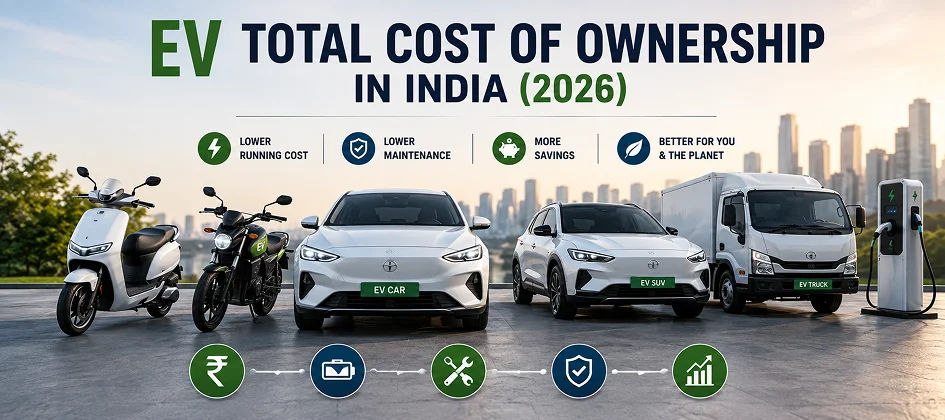
Is an electric vehicle (EV) actually cheaper to own than a petrol, diesel, or CNG vehicle over several years?
The short answer is yes, but only under specific driving conditions. An EV is not automatically cheaper for everyone. While electric vehicles offer significantly lower per-kilometre running and routine maintenance costs, they usually carry a higher upfront purchase price. Whether an EV saves you money overall depends on your annual driving distance, electricity tariffs, local fuel prices, insurance premiums, financing terms, and long-term resale value.
When evaluation shifts from the showroom price tag to the Total Cost of Ownership (TCO), the real financial picture emerges.
Total Cost of Ownership (TCO) represents the complete cumulative expenditure of owning and operating a vehicle throughout its lifespan, rather than just the initial price paid at the dealership.
TCO = (Purchase Price + Financing Interest) + Energy/Fuel Costs + Maintenance + Insurance & Taxes + Consumables/Battery Costs - Resale Value
If Buyer A spends INR 10 Lakh on a petrol car, pays INR 6 Lakh for petrol over 5 years, and spends INR 1 Lakh on service, their expenditure is INR 17 Lakh. If they sell it for INR 4 lakh, the 5-year TCO is INR 13 lakh.
If Buyer B spends INR 12 lakh on an EV, pays INR 1 lakh for electricity over 5 years, and spends INR 40,000 on service, their expenditure is INR 13.4 lakh. If they sell it for INR 4.5 lakh, the 5-year TCO is INR 8.9 lakh. Despite the higher sticker price, Buyer B saves INR 4.1 lakh over five years.
| Cost Component | Electric Vehicle (EV) | Petrol / Diesel Vehicle | CNG Vehicle |
| Purchase Price | Premium upfront cost due to battery tech | Standard baseline pricing | Slight premium over petrol |
| Financing | Higher EMI if buying price is higher | Standard EMIs | Standard EMIs |
| Energy / Fuel | INR 0.80 – INR 2.50 / km | INR 5.50 – INR 9.00 / km | INR 2.50 – INR 4.00 / km |
| Maintenance | Low (no oil, fewer moving parts) | High (frequent fluids, filters, tuning) | Moderate (spark plugs, kit checks) |
| Insurance | Slightly higher IDV premium | Standard premium | Standard + kit add-on |
| Tyres & Wear | Slightly higher tyre wear (heavier) | Standard wear | Standard wear |
| Battery / Repairs | Covered under 8-year warranty | N/A (Engine/Gearbox repairs) | Cylinder re-testing every 3 years |
| Resale Value | Evolving market; tied to battery health | High, predictable market | Good city resale market |
EVs in India generally carry a 15% to 35% price premium over equivalent internal combustion engine (ICE) models.
Vehicle Price & Variant: Battery packs account for a substantial portion of the manufacturing cost, placing entry-level EV cars between INR 8 Lakh and INR 15 Lakh, whereas entry-level petrol cars start lower.
Government Incentives & Road Tax: Many Indian states (such as Delhi, Maharashtra, and Karnataka) offer reduced or zero road tax and registration fees for EVs, partially offsetting the higher ex-showroom price.
Financing: Because the initial loan amount is usually higher for an EV, total loan interest paid over 3 to 5 years will be proportionately higher unless offset by special green-loan interest rate discounts.
Fuel expenses drive the largest operational savings for EV owners in India.
EV Charging Cost: kWh consumed x Electricity Tariff (INR/kWh)
ICE Fuel Cost: Litres (or kg) consumed x Fuel Price (INR/L or INR/kg)
Energy Cost Per KM: Total Fuel/Electricity Expenditure / Total Kilometres Travelled
Assumptions: Petrol at INR 102/litre (14 km/L economy) vs. EV consuming 15 kWh per 100 km at a domestic home rate of INR 7.50/unit.
Petrol Cost per KM: INR 102 / 14 = INR 7.28 per km
EV Home Charging Cost per KM: (15 kWh x INR 7.50) / 100 km = INR 1.12 per km
Real-world efficiency varies based on vehicle weight, driving habits, climate control usage, and charging medium (home AC vs public fast DC chargers). (Figures based on August 2026 average domestic rates of INR 6–INR 8/unit vs public DC rates of INR 18–INR 24/unit).
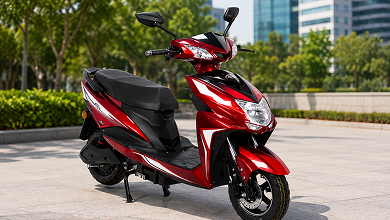
Electric Scooter: INR 0.25 - INR 0.50 / km (Home Charging)
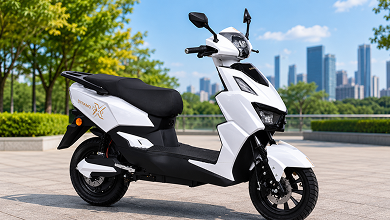
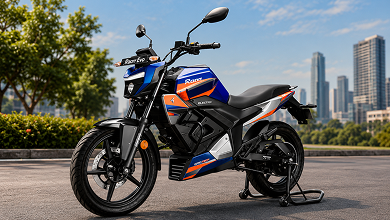
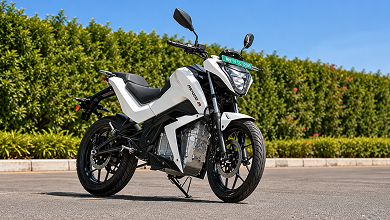
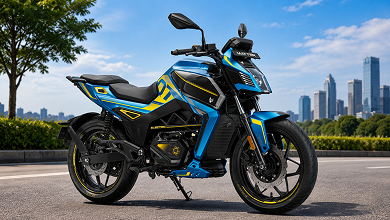
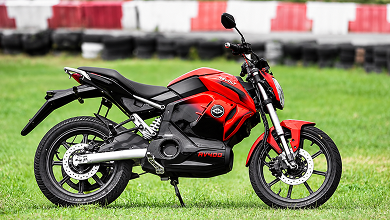
Electric Bike: INR 0.35 - INR 0.65 / km (Home Charging)
Electric Car: INR 1.00 - INR 1.50 / km (Home) | INR 2.50 - INR 3.80 / km (Public DC)
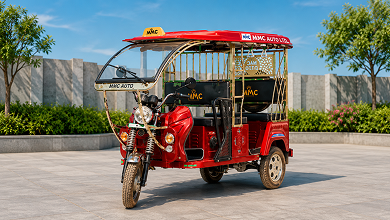
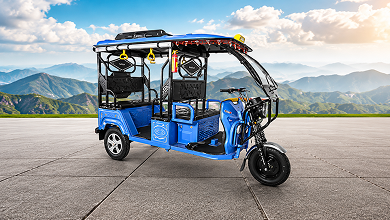
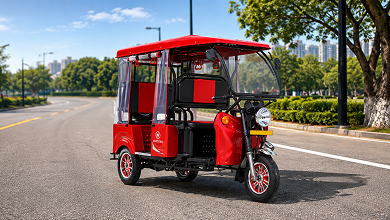
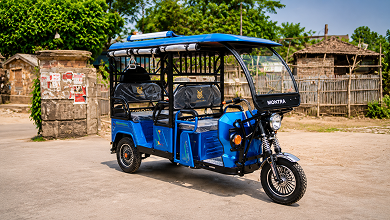
Electric Rickshaw: INR 0.40 - INR 0.75 / km (Home Charging)
Electric Commercial Vehicle: INR 1.20 - INR 2.20 / km (Home Charging)
EVs do not have internal combustion engines, multi-gear transmissions, spark plugs, timing belts, fuel injectors, or exhaust systems.
Routine EV Maintenance: Periodic replacement of cabin air filters, brake fluid, coolant top-ups, tyre rotation, and wiper blades.
ICE Maintenance Requirements: Regular engine oil changes, oil filter/air filter replacements, spark plug renewals, clutch adjustments, and exhaust repairs.
Regenerative Braking Advantage: Regenerative braking reduces wear on mechanical brake pads, extending pad life compared to conventional cars.
Important Caveat: Lower routine service does not equal zero maintenance costs. Wheel alignment, suspension repairs, coolant flushes, and electronics diagnostics remain standard routine expenses.
The battery is the single most critical factor in long-term EV ownership.
Warranties: Most EV manufacturers in India provide 8-year or 160,000 km battery warranties that guarantee at least 70–80% State of Health (SoH).
Degradation: Modern LFP (Lithium Iron Phosphate) battery chemistry used heavily in Indian EVs handles high ambient temperatures and daily charging cycles effectively, typically losing less than 1.5–2% capacity annually.
Replacement Risks: Complete battery replacement out of warranty can be expensive. However, individual module repairs and declining battery cell prices make full out-of-pocket battery replacements unlikely for most first-hand buyers during a standard 5 to 8-year ownership cycle.
Registration: Several state EV policies grant 100% exemption on road tax and registration charges for electric vehicles, creating upfront savings during vehicle registration.
Insurance Premiums: Comprehensive insurance premiums for EVs can be 10–15% higher than equivalent petrol cars due to higher insured declared values (IDV) and expensive high-voltage replacement parts. Third-party insurance rates for electric vehicles are regulated by IRDAI and generally offered at discounted rates compared to large-capacity ICE engines.
Resale value depends directly on battery health reports, remaining factory warranty, brand reputation, and local charging infrastructure expansion. Early-generation EVs faced faster depreciation due to tech obsolescence, but current models with long-range batteries hold competitive residual values after 3 to 5 years of ownership.
(Illustrative calculation comparing a mid-sized Electric Car vs a Petrol Car covering 15,000 km/year)
Key Assumptions:
Electric Car: Ex-showroom + On-road = INR 14.5 Lakh | Efficiency = INR 1.2 / km
Petrol Car: Ex-showroom + On-road = INR 11.0 Lakh | Fuel Efficiency = INR 7.0 / km
Annual Mileage: 15,000 km
| Cost Component | 3-Year Petrol Car | 3-Year Electric Car | 5-Year Petrol Car | 5-Year Electric Car |
| Initial Purchase Price | INR 1,100,000 | INR 1,450,000 | INR 1,100,000 | INR 1,450,000 |
| Energy / Fuel Cost | INR 315,000 | INR 54,000 | INR 525,000 | INR 90,000 |
| Maintenance Cost | INR 24,000 | INR 12,000 | INR 45,000 | INR 22,000 |
| Insurance (Cumulative) | INR 90,000 | INR 105,000 | INR 135,000 | INR 155,000 |
| Total Spent | INR 1,529,000 | INR 1,621,000 | INR 1,805,000 | INR 1,717,000 |
| Less: Estimated Resale | (-INR 600,000) | (-INR 750,000) | (-INR 420,000) | (-INR 550,000) |
| Net TCO | INR 9,29,000 | INR 871,000 | INR 1,385,000 | INR 1,167,000 |
Break-Even Kilometres = EV Upfront Price Premium (INR) / Net Operating Savings per KM (INR)
Low Usage (< 500 km/month): Break-even takes 6 to 8 years. A petrol car is often financially simpler.
Medium Usage (1,000–1,500 km/month): Break-even achieved in 2.5 to 3.5 years.
High Usage (> 2,500 km/month or Commercial): Break-even is achieved in under 1.5 to 2 years.
Best For: Daily city commutes (20–50 km/day).
TCO Insight: Low upfront premium over 125cc petrol scooters; break-even is achieved within 12–18 months.
Best For: Performance commuters and daily city-highway routes.
TCO Insight: Higher purchase cost than 150 cc motorcycles but delivers significant fuel savings for urban riders covering over 40 km daily.
Best For: Urban families and mixed intercity commuters.
TCO Insight: Higher initial outlay, but generates long-term savings for drivers covering 12,000+ km annually.
Best For: Last-mile passenger transport and urban commercial logistics.
TCO Insight: Lowest operational cost per passenger km, delivering rapid return on investment for commercial drivers.
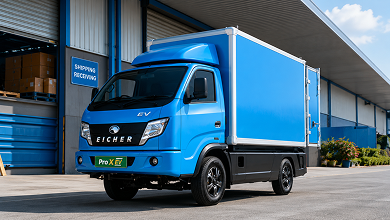
Best For: Intra-city logistics and e-commerce deliveries.
TCO Insight: Commercial fleet operators benefit from lower per-tonne-km operational costs and reduced downtime.
Daily Usage < 20 km / day: Petrol or hybrid is often the better financial choice due to a lower initial purchase price.
Daily Usage 30 - 60 km / day: An EV charged at home hits the optimal financial break-even point within 3 years.
Daily Usage > 80 km / day: An EV, CNG, or diesel vehicle provides maximum operational fuel savings.
Purchase Price: CNG vehicles cost significantly less upfront than EVs.
Running Cost: CNG costs roughly INR 2.50–INR 3.50/km, while home-charged EVs cost INR 1.00–INR 1.50/km.
Boot Space & Convenience: CNG cylinders consume trunk space and require queueing at filling stations. EVs retain boot space and offer home charging convenience, though CNG remains practical for long-distance highway trips with limited fast-charging infrastructure.
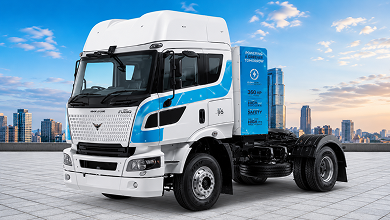
Operational Cost: Commercial EVs offer a lower cost per km than diesel cargo vans for intra-city routes.
Payload & Range: Diesel trucks retain higher payload capacities and unlimited range for long-haul national transport, while electric commercial vehicles excel in fixed daily urban delivery runs.
Home Charger Installation: Dedicated 7.4 kW wall box chargers and heavy-duty wiring setups typically cost INR 15,000–INR 35,000 if not bundled by the carmaker.
Public Charging Surcharges: Fast DC chargers incur commercial electricity rates, operational margins, and GST, raising running costs to INR 2.50–INR 3.80/km.
Tyre Wear Premium: Higher instant torque and battery weight can lead to 15–20% faster tyre wear if unmonitored.
Insurance IDV: Higher initial vehicle value translates to slightly higher annual comprehensive insurance premiums.
Follow these steps to evaluate your potential savings:
Calculate Annual Distance: Daily KM x 365
Calculate Annual EV Energy Cost: (Annual KM / Real-World Range) x Battery Capacity (kWh) x Electricity Rate (INR)
Calculate Annual ICE Fuel Cost: (Annual KM / Real-World Mileage) x Fuel Price (INR)
Estimate Maintenance Differential: Subtract INR 3,000–INR 6,000 annually for EV savings on oils, filters, and mechanical service.
Factor In Financing & Insurance: Add annual EMI differences and insurance costs.
Determine Net Annual Savings: Subtract total annual EV costs from total annual ICE costs.
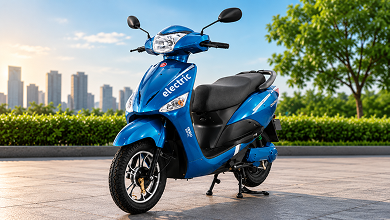
Best Low-Cost Commuter Scooter: TVS iQube / Ather Rizta (balanced real-world range, durable battery management, low maintenance).
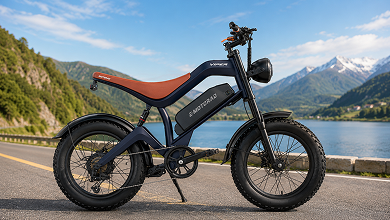
Best Daily Commuter Electric Bike: Revolt RV400 / Matter AERA (low energy consumption for urban riding).
Best Family Electric Car: Tata Punch EV / MG Windsor EV / Tata Nexon EV (strong real-world range, wide service networks, competitive pricing).
Best Commercial Electric 3-Wheeler: Mahindra Treo / Piaggio Ape E-City (proven track record for last-mile passenger transport).
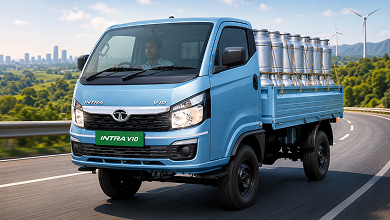
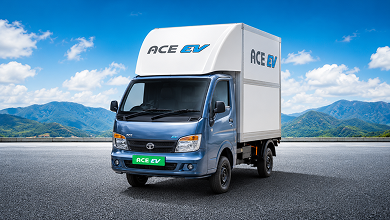
Best Commercial Cargo EV: Tata Ace EV (reliable urban delivery payload with low per-km costs).
An electric vehicle is financially cheaper to own in India if your usage profile aligns with its strengths.
If you drive more than 1,000 km per month and have access to dedicated home or office AC charging, the substantial fuel savings and reduced maintenance costs will offset the initial purchase premium, lowering your overall TCO over 3 to 5 years. Conversely, if your monthly driving is under 400 km or you rely entirely on commercial public fast chargers, a petrol, hybrid, or CNG vehicle may remain the more economical choice.
Before making a final purchase, calculate your personalised TCO based on your local electricity tariff, daily commute distance, and available charging setup.


Manage reminders, payment status, and renewal dates from one simple app.


Trusted by policyholders to track every renewal.