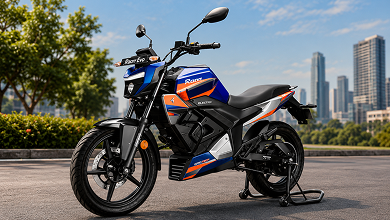
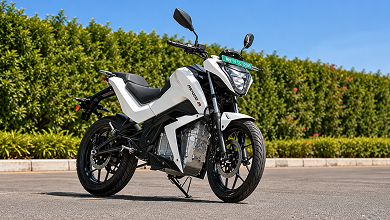
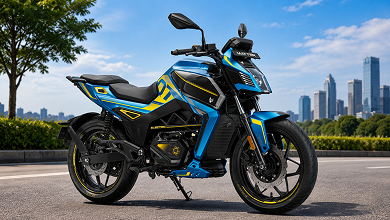
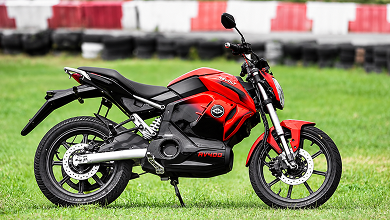
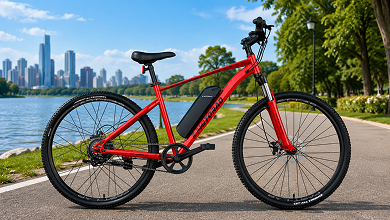
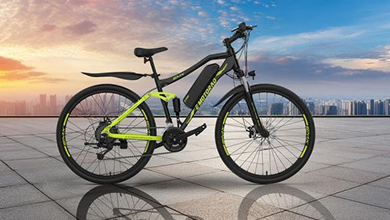
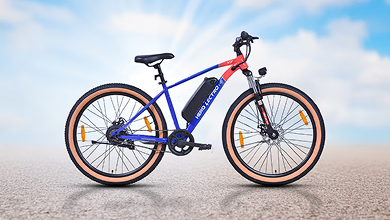
Petrol prices climbing, traffic getting worse, and gym memberships nobody actually uses – those are roughly the pitches behind India's growing electric cycle market, and they're landing with a specific kind of buyer. Not someone chasing a two-wheeler upgrade, but someone who wants their morning commute to double as light exercise without turning into a sweaty ordeal by the time they reach the office.
That's the real appeal of an electric cycle over a regular bicycle or a full electric scooter. You still pedal, you still get the fitness benefit, but a small motor takes the edge off hills, headwinds, and those last few tired kilometres. And unlike an electric scooter, most e-cycles in India need no registration, no licence, and no insurance, provided they stay under the 250W motor and 25 km/h speed limit that classifies them as a standard bicycle rather than a motor vehicle.
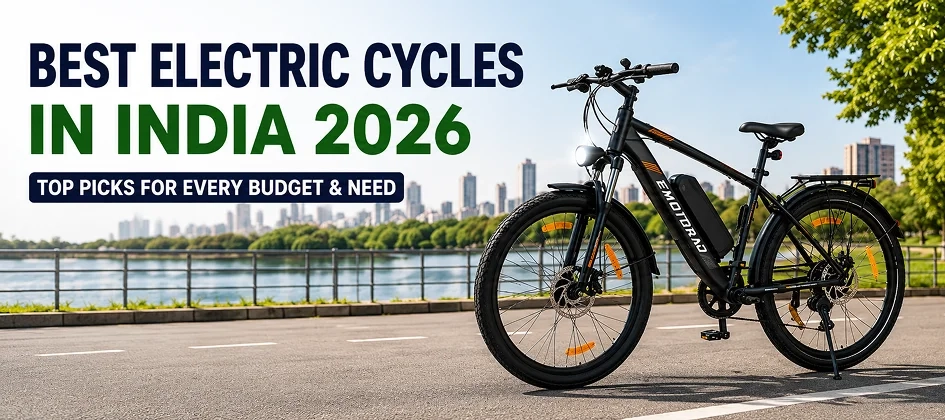
This guide covers the best electric cycles in India for 2026, organised by what you're actually trying to do: commute, get fit, or just replace short car and bike trips around the city.
The best electric cycles in India for 2026 include the EMotorad Viper (INR 66,999, 70-85 km range) for premium commuting; the Motovolt Urbn e-Bike (INR 49,999, 105 km range) for long-range daily use; and the Voltebyk Eco Lit (under INR 28,000) as the best budget option for short urban commutes under 20 km.
Why Electric Cycles Are Gaining Ground in India
Three things have converged to make 2026 a genuinely good year to buy an electric cycle.
The price has come down. A capable electric cycle with disc brakes and a real 40+ km range can now be had for INR 25,000-40,000, a bracket that didn't really exist with decent quality a few years ago.
No registration or licence needed. Electric cycles powered by a motor up to 250W and capped at 25 km/h are legally classified as bicycles in India, not motor vehicles; no RTO registration, no driving licence, and no number plate are required.
Running costs are close to nothing. A full charge costs roughly INR 5-10 and typically delivers 30-80 km of range depending on the model, working out to about INR 0.15 per km, against roughly INR 2.50 per km for a petrol scooter.
Best Electric Cycles by Budget
Under INR 30,000: Best Budget Electric Cycles
Essel Energy GET A, priced from INR 26,499, sits among the most affordable entries in India's e-cycle market, suited to short daily commutes.
The Voltebyk Eco Lit is under INR 28,000, offering a 35-40 km range, disc brakes, and a detachable 7.8 Ah battery. A strong pick for urban commutes of 15-20 km a day, particularly for students and first-time buyers.
INR 30,000-50,000: Best Mid-Range Electric Cycles
The Motovolt Urbn e-bike is priced at INR 49,999. This offers a genuinely long 105 km range, making it one of the better options for buyers with longer daily commutes who don't want to charge frequently.
Voltebyk Hashtag 21 (13Ah) Priced around INR 34,990, delivering a 75 km range on the largest battery option in its mid-frame lineup – a strong choice for buyers who want range without moving into the premium bracket.
The EMotorad G1 Cargo E-Cycle is priced at INR 49,999, built with cargo-carrying capability, making it useful for delivery riders, gig workers, or anyone regularly carrying groceries or equipment.
INR 50,000-70,000 Best Premium Commuter Electric Cycles
The EMotorad Ranger is priced at INR 58,999, offering around a 75 km range with a build quality suited to daily office commuting over the long term.
The Aoki Street Ghost is priced at INR 62,999, with an 80-105 km range depending on riding mode, positioning it among the longer-range options in the premium commuter bracket.
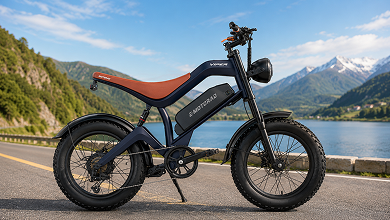
The EMotorad Viper is priced at INR 66,999, with a 70-85 km range. Widely considered one of the best all-round premium electric cycles currently sold in India, balancing range, build quality, and features.
INR 70,000+ Best High-Performance Electric Cycles
Voltebyk Runner Pro A fat-tyre electric cycle is positioned as a top pick for off-road and adventure riding, built for buyers wanting a more rugged, high-torque option beyond standard city commuting.
Best Electric Cycles by Use Case
- Best for daily office commutes (20-40 km): Voltebyk Laux Premium 9 Ah or EMotorad Ranger has enough range for a round trip without daily charging anxiety.
- Best for students on a tight budget: Voltebyk Eco Lit or Essel Energy GET sub-INR 30,000 options with dependable range for short campus commutes.
- Best for women and first-time riders: Voltebyk Volt Shine, built with a low step-through frame for easier mounting and a controlled 25 km/h top speed.
- Best for long-range riders (40+ km a day): Motovolt Urbn e-Bike or Voltebyk Laux Premium 13Ah, both offering 75-105 km range on a single charge.
- Best for off-road and adventure riding: Voltebyk Runner Pro, built with fat tyres and higher torque for uneven terrain.
- Best for delivery and gig work: EMotorad G1 Cargo E-Cycle, purpose-built for carrying loads on daily delivery routes.
How to Choose the Right Electric Cycle
- Daily distance: Under 20 km, a budget e-cycle with a 35-40 km range comfortably covers a round trip. Beyond 30-40 km daily, prioritise models with a 70+ km range to avoid mid-week charging stress.
- Terrain: Flat city commutes work fine with standard mid-frame e-cycles. Hilly routes or unpaved roads call for higher-torque, fat-tyre options.
- Battery type: Detachable batteries are more convenient for apartment dwellers who can't leave the cycle plugged in overnight near parking.
- Frame type: Step-through frames suit riders who value easy mounting; standard diamond frames suit riders prioritising a sportier riding position.
- Budget vs total cost: Factor in battery replacement cost after 2-3 years (typically INR 5,000-12,000), not just the upfront price.
Step-by-Step Guide to Buying Your First E-Cycle
- Track your actual daily distance for a week to size the right battery range.
- Decide your primary use: pure commuting, fitness, off-road, or cargo, since this narrows the field quickly.
- Shortlist 2-3 models within budget, prioritising real-world range over marketed maximum figures.
- Check after-sales support in your city, since spare parts and service centre access vary significantly by brand.
- Test ride if possible, especially for frame fit and comfort over a realistic distance, not just a quick lap.
- Compare warranty terms on the battery specifically, since it's the most expensive component to eventually replace.
- Ask about EMI or no-cost EMI options, which several e-cycle brands now offer to lower the upfront cost.
Benefits of Electric Cycles
- Extremely low running cost, roughly INR 0.15 per km compared to INR 2.50 per km for a petrol scooter.
- No registration, licence, or insurance is required, provided the motor stays under 250 W and speed under 25 km/h.
- Built-in fitness benefit: you're still pedalling, just with reduced strain, unlike a fully throttle-based electric scooter.
- Minimal maintenance: no fuel system, no engine oil, and far fewer components than even an electric scooter.
- Easier parking and lower theft risk profile in many cases, compared to registered two-wheelers.
Key Features to Check Before Buying
- Motor power and pedal-assist levels: Most models offer 3-5 levels of pedal assistance, letting you dial in effort versus speed.
- Battery capacity (Ah) and detachability: higher Ah generally means longer range, and detachable batteries simplify charging.
- Brake type: Dual disc brakes are strongly preferred over rim brakes for reliable stopping, especially in wet conditions.
- IP water resistance rating matters significantly for riders in monsoon-prone cities.
- Display and connectivity: an LED or LCD display showing battery level, speed, and assist mode makes daily use noticeably easier.
Real-World Examples
A Pune-based college student switched from a shared auto-rickshaw commute to a Voltebyk Eco Lit for a 12 km daily round trip to campus, cutting daily commute spending to near zero while getting light daily exercise as a side benefit.
A Hyderabad-based delivery gig worker adopted the EMotorad G1 Cargo E-Cycle for local parcel deliveries, finding the combination of cargo capacity and low running cost meaningfully improved daily earnings compared to a fuel-dependent two-wheeler.
Comparison Table
| Model |
Price |
Range |
Best For |
| Essel Energy GET A |
INR 26,499 |
Short urban range |
Budget-conscious students |
| Voltebyk Eco Lit |
~INR 27,990 |
35-40 km |
First-time buyers, short commutes |
| Voltebyk HashTag 21 (13 Ah) |
INR 34,990 |
75 km |
Mid-range daily commuters |
| Motovolt Urbn e-Bike |
INR49,999 |
105 km |
Long-range daily riders |
| EMotorad G1 Cargo E-Cycle |
INR 49,999 |
Moderate |
Delivery, gig workers |
| EMotorad Ranger |
INR 58,999 |
75 km |
Premium office commuting |
| Aoki Street Ghost |
INR 62,999 |
80-105 km |
Long-range premium commute |
| EMotorad Viper |
INR66,999 |
70-85 km |
Best overall premium pick |
Prices are indicative ex-showroom figures and vary by city, retailer, and ongoing offers. Confirm current pricing directly with the brand before purchase.
Best Practices for New E-Cycle Owners
- Charge the battery fully before the first ride to calibrate accurate range readings.
- Avoid leaving the battery at very low charge for extended periods, since this affects long-term battery health.
- Check tyre pressure monthly, since underinflated tyres reduce both range and ride comfort.
- Use lower pedal-assist levels on flat terrain to extend range and get more physical benefit from the ride.
- Store the cycle in a dry, covered space where possible, even with an IP-rated battery.
Common Mistakes to Avoid
- Buying based on maximum claimed range alone. Real-world range is typically lower once you factor in rider weight, terrain, and assist level used.
- Ignoring after-sales service availability in your city. A cheaper e-cycle from a brand with no local service support can become inconvenient quickly.
- Choosing a frame type without testing fit. Step-through versus diamond frame comfort varies a lot by individual rider height and preference.
- Overlooking battery replacement cost. Factor in the eventual INR 5,000-12,000 battery replacement cost after 2-3 years into your total budget, not just the sticker price.
- Assuming all electric cycles are legally licence-free. Only models under 250W motor power and 25 km/h top speed qualify as bicycles; anything above that legally requires registration as a motor vehicle.
Expert Tips
- If your commute is under 20 km, don't overspend on a long-range model; a budget e-cycle with a 35-40 km range will comfortably serve you with room to spare.
- For monsoon-prone cities, prioritise a higher IP water resistance rating over marginal range differences between models.
- Ask specifically about the battery warranty period, since this varies more between brands than the cycle's frame or motor warranty typically does.
- Consider an electric cycle conversion kit if you already own a good-quality regular bicycle; it's often the most cost-efficient path into electric riding.
Conclusion
The best electric cycles in India for 2026 span a genuinely wide range, from sub-₹30,000 budget commuters like the Voltebyk Eco Lit to premium, long-range options like the EMotorad Viper and Motovolt Urbn e-Bike. The right choice comes down to your actual daily distance and use case. A student commuting 15 km doesn't need the same cycle as a delivery gig worker or a long-distance office commuter. Whatever budget you're working with, prioritise real-world range, dual disc brakes, and local after-sales support over marketing claims, and an electric cycle will comfortably replace a meaningful share of your daily petrol-powered trips.
FAQs
1. What is the best electric cycle in India for daily commuting?
For most daily commuters, the EMotorad Viper (INR 66,999, 70-85 km range) and Motovolt Urbn e-Bike (INR 49,999, 105 km range) are among the best options, offering a strong balance of range, build quality, and reliability.
2. What is the best electric cycle in India for daily commuting?
For most daily commuters, the EMotorad Viper (INR 66,999, 70-85 km range) and Motovolt Urbn e-Bike (INR 49,999, 105 km range) are among the best options, offering a strong balance of range, build quality, and reliability.
3. What is the best electric cycle under INR 50,000 in India?
The Motovolt Urbn e-bike at INR 49,999 offers one of the longest ranges in this bracket at 105 km, while the Voltebyk HashTag 21 (13 Ah) at INR 34,990 is a strong mid-range alternative with a 75 km range.
4. What is the best electric cycle under INR 50,000 in India?
The Motovolt Urbn e-bike at INR 49,999 offers one of the longest ranges in this bracket at 105 km, while the Voltebyk HashTag 21 (13 Ah) at INR 34,990 is a strong mid-range alternative with a 75 km range.
5. Do electric cycles need registration or a licence in India?
No, provided the motor power stays under 250 W and top speed under 25 km/h, which classifies the vehicle as a standard bicycle rather than a motor vehicle under Indian law.
6. Do electric cycles need registration or a licence in India?
No, provided the motor power stays under 250 W and top speed under 25 km/h, which classifies the vehicle as a standard bicycle rather than a motor vehicle under Indian law.
7. How much does it cost to charge an electric cycle?
A full charge typically costs INR 5-10, delivering anywhere from 30 to 105 km of range depending on the model and battery capacity, working out to roughly INR 0.15 per km.
8. How much does it cost to charge an electric cycle?
A full charge typically costs INR 5-10, delivering anywhere from 30 to 105 km of range depending on the model and battery capacity, working out to roughly INR 0.15 per km.
9. What is the cheapest electric cycle in India?
The Elecson Eco is among the cheapest electric cycles currently available in India at INR 13,499, though buyers wanting better build quality and range typically look at the INR 25,000-30,000 bracket instead.
10. What is the cheapest electric cycle in India?
The Elecson Eco is among the cheapest electric cycles currently available in India at INR 13,499, though buyers wanting better build quality and range typically look at the INR 25,000-30,000 bracket instead.
11. How long does an electric cycle battery last?
Most electric cycle batteries last 2-3 years of regular use before needing replacement, with replacement costs typically ranging from INR 5,000 to INR 12,000 depending on battery capacity.
12. How long does an electric cycle battery last?
Most electric cycle batteries last 2-3 years of regular use before needing replacement, with replacement costs typically ranging from INR 5,000 to INR 12,000 depending on battery capacity.
13. Which electric cycle is best for women and first-time riders?
Models with a low step-through frame, such as the Voltebyk Volt Shine, are specifically designed for easier mounting and a more comfortable, controlled ride, making them a popular choice among women and first-time riders.
14. Which electric cycle is best for women and first-time riders?
Models with a low step-through frame, such as the Voltebyk Volt Shine, are specifically designed for easier mounting and a more comfortable, controlled ride, making them a popular choice among women and first-time riders.
15. Can electric cycles handle hilly or off-road terrain in India?
Yes, models like the Voltebyk Runner Pro are built with fat tyres and higher torque motors specifically for off-road and hilly terrain, unlike standard commuter e-cycles designed for flat city riding.
16. Can electric cycles handle hilly or off-road terrain in India?
Yes, models like the Voltebyk Runner Pro are built with fat tyres and higher torque motors specifically for off-road and hilly terrain, unlike standard commuter e-cycles designed for flat city riding.
17. Is an electric cycle better than an electric scooter for short commutes?
For commutes under 20-25 km, electric cycles offer lower running costs, no registration requirement, and a built-in fitness benefit, while electric scooters suit longer distances and less physically demanding travel.
18. Is an electric cycle better than an electric scooter for short commutes?
For commutes under 20-25 km, electric cycles offer lower running costs, no registration requirement, and a built-in fitness benefit, while electric scooters suit longer distances and less physically demanding travel.
19. What should I check before buying my first electric cycle?
Check real-world range for your specific commute, dual disc brakes, IP water resistance rating, battery warranty terms, and after-sales service availability in your city before finalising a purchase.
20. What should I check before buying my first electric cycle?
Check real-world range for your specific commute, dual disc brakes, IP water resistance rating, battery warranty terms, and after-sales service availability in your city before finalising a purchase.