
_1.webp)
One of the most common questions people ask before buying an electric vehicle (EV) is: "How long will the battery last?"
Since the battery is the most expensive and critical component of an electric vehicle, understanding its lifespan is incredibly important for making an informed purchase decision. The great news is that modern EV batteries are engineered to last much longer than most people expect. In fact, many electric vehicle batteries can easily last 8 to 15 years or even more with proper care.
In this comprehensive guide, we'll explain EV battery lifespan, battery degradation curves, replacement costs, warranty coverage, and practical tips to maximize your vehicle's battery health in 2026.
Most modern EV batteries last between 8 and 15 years (or approximately 1,500,000 to 3,000,000 kilometers) before significant degradation occurs. Because most Indian manufacturers back their vehicles with robust warranties ranging up to 8 years or 1,600,000 km, the battery will likely outlast your standard ownership period.
Unlike older cell tech, modern electric powertrains do not just rely on raw chemistry; they are governed by sophisticated management software. The ultimate lifespan of your pack depends on a mix of daily habits and engineering:
Battery Chemistry: The use of advanced compositions like Lithium Iron Phosphate (LFP) or Nickel Manganese Cobalt (NMC).
Charging Habits: Balancing slow AC home charging with high-voltage DC fast charging.
Climate & Temperature: Extreme tropical heat can accelerate internal wear.
Battery Cooling Systems: Liquid-cooled packs manage thermal stress far better than air-cooled units.
Unlike petrol engines that wear down mechanically over time, EV batteries gradually lose their chemical capacity to store energy. This process is known as battery degradation.
When a battery degrades, it doesn't mean your vehicle suddenly stops working. Instead, its maximum chemical ceiling reduces slightly.
Degradation Example:
Brand New EV: 100% capacity rightarrow Gives full advertised range.
After 5 Years: 92% capacity rightarrow The car drives identically but holds slightly less maximum charge, dropping your total range buffer marginally.
On average, EV batteries lose capacity at a very slow, predictable rate. Below is a look at average battery health retention under standard driving conditions:
| Vehicle Age | Expected Battery Health (State of Health - SoH) |
| New | 100% |
| 3 Years | 95% – 98% |
| 5 Years | 90% – 95% |
| 8 Years | 85% – 90% |
| 10+ Years | 80% – 85% |
Even after a decade of continuous usage, a typical EV retains more than enough battery capacity to power your everyday urban commutes smoothly.
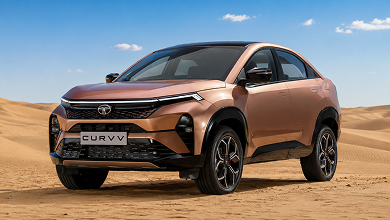
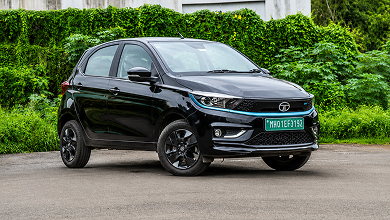
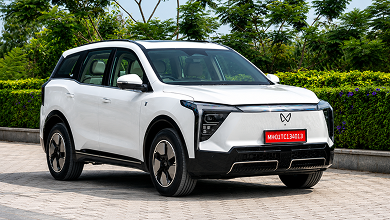
Popular Examples: Tata Nexon EV, Tata Punch EV, MG Windsor EV, Tata Curvv EV
Expected Lifespan: 8–15 years | 200,000–300,000 km
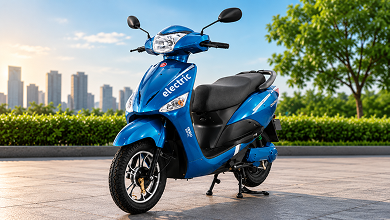
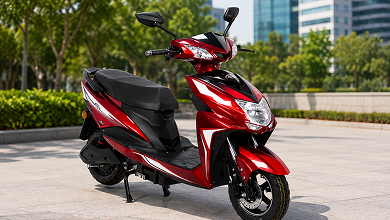
Popular Examples: TVS iQube, Bajaj Chetak, Ather Rizta, Ola S1 Pro
Expected Lifespan: 5–10 years | 50,000–100,000 km
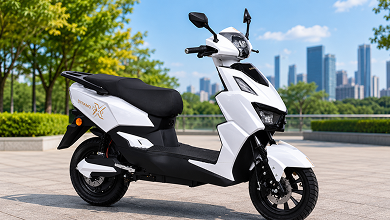
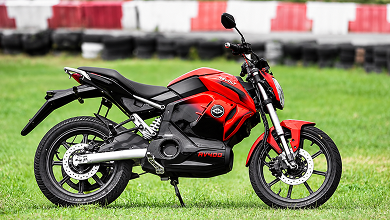
Popular Examples: Revolt RV400, Oben Rorr
Expected Lifespan: 5–10 years | 60,000–120,000 km
To give consumers peace of mind, automobile manufacturers bundle heavy, long-term warranty protection specifically covering the battery pack and electric motor.
| Vehicle Type | Typical Warranty Coverage |
| Electric Cars | 8 Years / 160,000 km (Guarantees minimum 70-80% SoH) |
| Electric Scooters | 3 to 8 Years (Often extendable via special packs) |
| Electric Bikes | 3 to 8 Years (Varies by brand and battery architecture) |
If you want to prevent premature battery aging, avoid these common high-stress triggers:
Constant Fast Charging: Heavy, daily exposure to high-voltage DC fast chargers creates excessive thermal spikes within the cells.
Leaving the Vehicle at 100% Charge: Keeping your battery sitting at an absolute maximum charge for weeks at a time increases internal chemical strain.
Deep Discharges (0% drops): Regularly letting your EV drop down to an absolute dead 0% state strains the voltage thresholds of the cells.
Extreme Heat Exposure: Parking out in direct, unshaded Indian-summer sunlight continuously forces battery management systems to work overtime.
Follow the 20-80% Rule: For your normal daily driving routine, try to keep the battery charged between 20% and 80%. Top up to 100% only when planning long weekend road trips.
Prioritize Home AC Charging: Use your slow overnight home charger as your primary power source. Reserve commercial DC fast chargers for long-distance highway travels.
Park in the Shade: Keeping your vehicle out of harsh, direct sunlight significantly helps manage resting battery temperatures.
Utilize Regenerative Braking: Smooth driving with active regen reduces sudden high-current discharges, protecting the overall health of the pack.
Though battery replacement prices continue to decline globally due to localized manufacturing and raw material optimization, replacing a full pack out of warranty remains a notable investment.
Electric Scooter: INR 30,000 – INR 80,000
Electric Bike: INR 50,000 – INR 120,000
Electric Car: INR 300,000 – INR 800,000+
Note: The vast majority of buyers will transition out of or sell their vehicle long before a total battery replacement ever becomes necessary.
Yes! An EV battery is far from useless once it drops below automotive standards. When a battery reaches roughly 70-80% capacity, it enters a "Second Life" phase, where it is repurposed for stationary energy grids, home solar power storage, or backup commercial generators.
Once it fully degrades, specialized recycling plants extract valuable raw minerals, including lithium, cobalt, nickel, and copper, to manufacture brand-new cells, creating a highly sustainable circular economy in India.
Myth 1: EV batteries need to be replaced every 3 years.
Reality: Completely false. Modern automotive-grade lithium cells are explicitly designed, thermal-managed, and chemically optimized to survive 8 to 15 years easily.
Myth 2: Fast charging instantly destroys your battery.
Reality: False. Occasional fast charging on road trips is perfectly safe. Modern smart vehicles actively throttle incoming power speeds as the battery fills up to protect the cells.
Most modern EV batteries comfortably last between 8 and 15 years, depending heavily on your charging habits and underlying thermal cooling architecture.
On average, most well-maintained electric vehicles retain about 80% to 90% of their original baseline factory range after 8 years of regular ownership.
While a brand-new battery pack represents a major financial cost, continuous engineering breakthroughs and localized Indian manufacturing facilities are driving cell costs down rapidly year over year.
At eVehicals, we break past the marketing brochures to provide completely transparent data. We evaluate two-wheelers and passenger vehicles on true battery degradation curves, real-world highway ranges, structural charging safety, maintenance overheads, and practical driving physics. Our goal is to simplify your transition to clean mobility with honest, consumer-first insights.
Modern EV batteries are far more durable and resilient than many people realize. Whether you are eyeing a family electric scooter or a high-performance electric SUV, today's battery systems are engineered to provide a decade or more of cost-effective, dependable, and efficient transportation. By practicing a few smart charging habits, you can confidently drive electric without a single worry.


Manage reminders, payment status, and renewal dates from one simple app.


Trusted by policyholders to track every renewal.