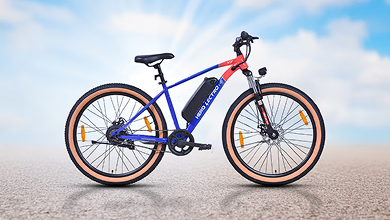
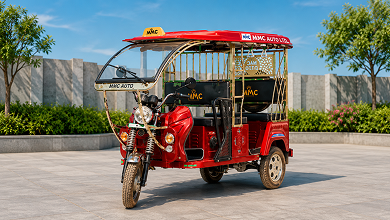
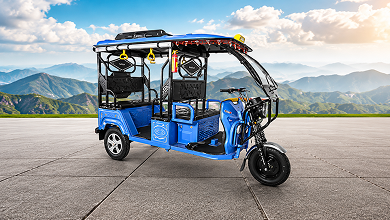
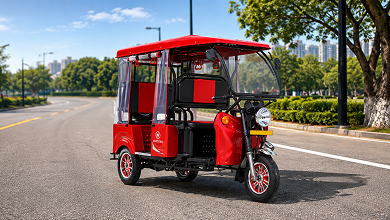
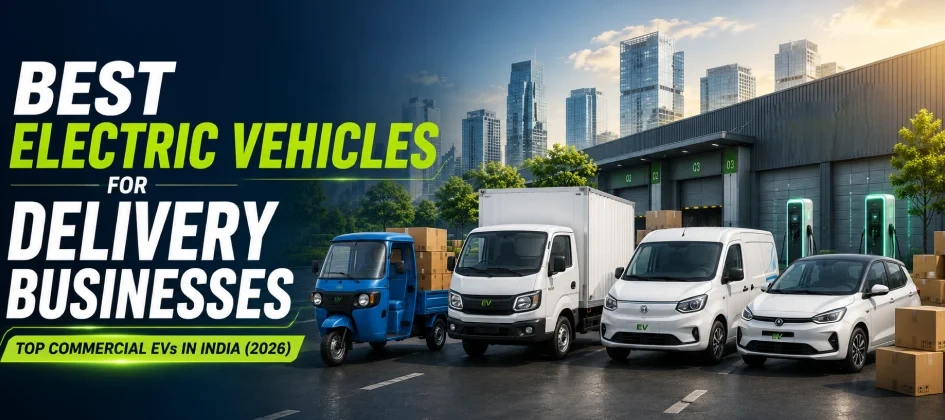
Ask any small courier operator in Bengaluru or a grocery delivery startup in Pune what eats into their margins the fastest, and diesel or petrol bills will come up within the first minute. Fuel is the one cost that never sits still. It climbs during festival season, spikes with global crude prices, and quietly chips away at every rupee a delivery business earns per order.
That's the practical reason so many fleet owners, MSMEs, and e-commerce sellers across India have started shifting to electric vehicles for their delivery operations. Not because it's trendy, but because the maths works: lower running costs, fewer moving parts to break down, and a growing charging and service network that finally makes EVs usable for daily commercial routes.
This guide walks through the best electric vehicles for delivery businesses in India right now, based on real specifications, current pricing, and how different vehicle categories actually perform on the ground from congested city lanes to intercity cargo runs.
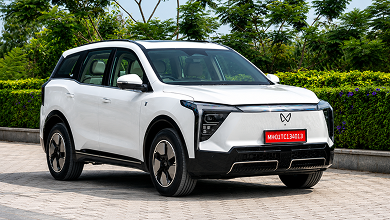
The best electric vehicles for delivery businesses in India in 2026 include the Tata Ace EV (mini truck, up to 750–1,000 kg payload), the Mahindra Treo Zor (cargo three-wheeler, 550 kg payload), Euler Motors Turbo EV 1000 (1-tonne mini truck), and Piaggio Ape E-Xtra FX (three-wheeler cargo). Choice depends on payload needs, daily route length, and budget.
India's last-mile delivery sector is growing fast, driven by e-commerce, quick commerce, and food delivery. That growth comes with pressure: more orders, tighter delivery windows, and rising fuel costs on diesel and petrol-powered fleets.
Electric commercial vehicles solve a specific, recurring problem: the cost per kilometre. A diesel mini truck can cost roughly Rs 6–8 per km to run once you factor in fuel, while an equivalent electric mini truck often runs at Rs 1–2 per km on electricity, depending on local power tariffs. Over a fleet doing 100+ km a day, that difference adds up to real monthly savings.
There's also a policy push behind this shift. The government's FAME (Faster Adoption and Manufacturing of Hybrid and Electric Vehicles) scheme, along with several state-level EV subsidies, has made commercial EVs more affordable to purchase, even though subsidy amounts and eligibility vary by state and change periodically, so it's worth checking your state transport department's current EV policy before buying.
Not every delivery business needs the same vehicle. The right category depends on what you're moving, how far, and how often.
Electric cargo three-wheelers These are the workhorses of India's last-mile delivery economy: compact, easy to manoeuvre in narrow lanes, and cheaper to buy than four-wheelers. Ideal for parcels, groceries, and short intra-city routes.
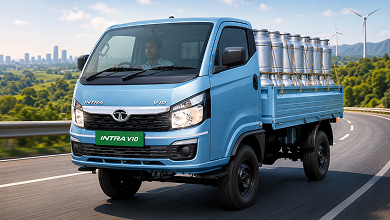
Electric mini trucks (SCVs) Small commercial vehicles like the Tata Ace EV sit a notch above three-wheelers in payload and range. These suit e-commerce warehouses, FMCG distributors, and businesses moving heavier or bulkier loads across a city.
Electric cargo vans offer enclosed, weatherproof cargo space useful for grocery delivery, pharmacy logistics, and businesses that need to protect goods from rain or dust.
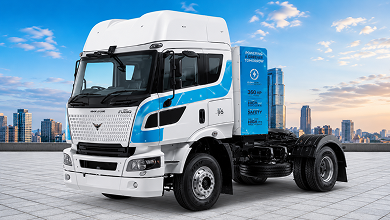
Electric light and medium commercial vehicles (LCVs/LMDVs) For businesses doing intercity or high-volume distribution, models like the Eicher Pro 2049 EV and Tata Ultra T.7 Electric offer higher payload capacity and longer range, suited to hub-to-hub logistics rather than pure last-mile work.
Here's a practical shortlist based on current market offerings, payload capacity, and how well each model fits real delivery use cases.
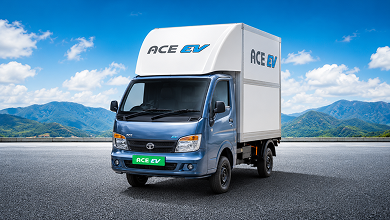
The Tata Ace EV builds on India's most recognisable mini-truck badge. It runs a 21.3 kWh battery pack with an ARAI-certified range of around 154 km and a payload capacity between 600 and 1,000 kg depending on the variant. Its leaf-spring suspension is built for repeated loading and unloading, which matters if your business handles heavier cartons or crates daily.
Best for: E-commerce sellers, distributors, and small businesses needing dependable daily cargo runs with strong after-sales support.
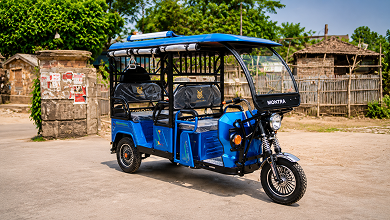
Priced roughly between Rs 3–3.5 lakh, the Treo Zor carries up to 550 kg, hits a top speed of 50 km/h, and delivers around 125 km per charge. It's a gearless three-wheeler, which cuts down on mechanical maintenance – a real advantage for first-time EV fleet operators who don't want to manage complex servicing.
Best for: Courier businesses, grocery delivery, and intra-city parcel runs.
Built specifically for India's last-mile delivery boom, the Turbo EV 1000 offers a 1,000 kg payload with fast-charging support that reduces vehicle idle time between shifts. It's widely used by e-commerce companies, FMCG distributors, and courier operators running multiple trips a day.
Best for: High-volume operators who need quick turnaround between charging cycles.
With a 550 kg payload and a real-world range of around 115 km, the Ape E-Xtra FX is a practical, no-frills option for businesses that need reliable daily performance without a large upfront investment.
Best for: MSMEs and entrepreneurs starting their first delivery route.
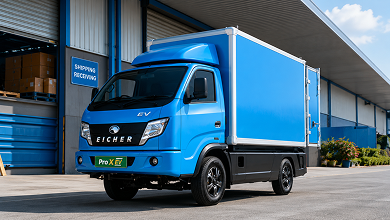
Stepping up from mini trucks, the Pro 2049 EV runs a 64 kWh battery with a range of about 174 km, aimed at businesses distributing higher volumes across a city rather than a single neighbourhood.
Best for: Warehouse and distribution companies, FMCG logistics, larger fleet operators.
The Treo offers Eco and Boost driving modes, an ARAI-certified range of 141 km, and a compact footprint that's easy to park and manoeuvre. Its versatility makes it a sensible pick for businesses that occasionally need both passenger and light cargo movement.
Best for: Small business owners running mixed logistics operations.
Choosing the right EV isn't about picking the vehicle with the longest range on paper. It's about matching the vehicle to your actual delivery pattern.
A Delhi-based grocery delivery startup switched its short-haul fleet from petrol two-wheelers with trailers to Piaggio Ape E-Xtra FX three-wheelers and reported meaningfully lower daily fuel spend within the first few months, alongside less downtime for repairs.
Amazon India has been expanding its delivery network using electric trucks supplied through VE Commercial Vehicles and Eicher Trucks & Buses, reflecting how even large-scale logistics operators are building electrification into last-mile and mid-mile delivery plans rather than treating it as a pilot project.
Courier and FMCG distribution businesses using the Euler Motors Turbo EV 1000 have reported annual savings running into six figures compared to diesel mini trucks, largely from lower per-kilometre energy costs across high-frequency routes.
| Vehicle | Type | Payload | Range (per charge) | Approx. Price (Ex-showroom) | Best For |
|---|---|---|---|---|---|
| Tata Ace EV | Mini Truck | 600–1,000 kg | ~154 km | INR 8–9.5 lakh | E-commerce, distribution |
| Mahindra Treo Zor | Cargo 3-Wheeler | 550 kg | ~125 km | INR 3–3.5 lakh | Courier, grocery delivery |
| Euler Motors Turbo EV 1000 | Mini Truck | 1,000 kg | 130–140 km | INR 6–7 lakh (est.) | High-frequency dispatch |
| Piaggio Ape E-Xtra FX | Cargo 3-Wheeler | 550 kg | ~115 km | INR 3–3.5 lakh | Budget-conscious MSMEs |
| Eicher Pro 2049 EV | LCV | Higher tonnage | ~174 km | Higher segment pricing | Intra-city bulk distribution |
Prices are ex-showroom estimates and vary by state, variant, and dealer. Always confirm current pricing directly with the manufacturer or an authorised dealer before purchase.
Choosing the best electric vehicles for delivery businesses in India isn't a one-size-fits-all decision. A courier startup running short city routes will get more value from a compact cargo three-wheeler like the Mahindra Treo Zor, while an e-commerce distributor moving heavier daily loads will lean towards a mini truck like the Tata Ace EV or Euler Motors Turbo EV 1000. What matters most is matching payload, range, and charging access to your actual delivery pattern, not chasing the vehicle with the flashiest spec sheet. Do that homework upfront, and the switch to electric usually pays for itself within a couple of years through lower running and maintenance costs.
1. What is the best electric vehicle for a small delivery business in India?
For most small delivery businesses handling parcels or groceries, an electric cargo three-wheeler like the Mahindra Treo Zor or Piaggio Ape E-Xtra FX offers a good balance of payload, price, and running cost.
2. How much does an electric delivery vehicle cost in India?
Prices range widely; electric cargo three-wheelers start around Rs 3 lakh, while electric mini trucks like the Tata Ace EV typically cost between Rs 8 and 9.5 lakh ex-showroom, depending on variant and state.
3. What is the running cost of an electric delivery vehicle compared to diesel?
Electric commercial vehicles typically cost Rs 1–2 per km to run on electricity, compared to Rs 6–8 per km for diesel equivalents, though actual costs depend on local electricity tariffs and vehicle efficiency.
4. How far can an electric cargo vehicle travel on a single charge?
Most electric cargo three-wheelers and mini trucks offer a real-world range of 100–175 km per charge, depending on load, driving conditions, and battery capacity.
5. Are electric commercial vehicles eligible for subsidies in India?
Yes, many electric commercial vehicles are eligible under the FAME scheme and various state-level EV policies, though eligibility and subsidy amounts vary by state and change periodically. Check current rules before purchasing.
6. Which electric vehicle is best for e-commerce and courier delivery?
The Tata Ace EV and Euler Motors Turbo EV 1000 are popular choices among e-commerce and courier operators due to their higher payload capacity and reliability for frequent dispatch cycles.
7. Do electric delivery vehicles require more maintenance than diesel vehicles?
No, electric vehicles generally require less maintenance since they have fewer moving parts, no engine oil changes, and simpler drivetrains compared to diesel or petrol vehicles.
8. How long does it take to charge an electric delivery vehicle?
Charging time varies by model and charger type. Standard AC charging can take 4–8 hours, while some models support fast charging that reduces this significantly for high-frequency operations.
9. Can electric vehicles handle heavy cargo loads for logistics businesses?
Yes, models like the Eicher Pro 2049 EV and Tata Ultra T.7 Electric are designed for higher tonnage and intra-city distribution, while mini trucks and three-wheelers suit lighter last-mile loads.
10. Is it worth switching to electric vehicles for a logistics or fleet business in 2026?
For most urban and semi-urban delivery operations, yes lower running costs, reduced maintenance, and improving charging infrastructure make electric vehicles increasingly practical for daily commercial use, provided route length and charging access are planned properly.


Manage reminders, payment status, and renewal dates from one simple app.


Trusted by policyholders to track every renewal.