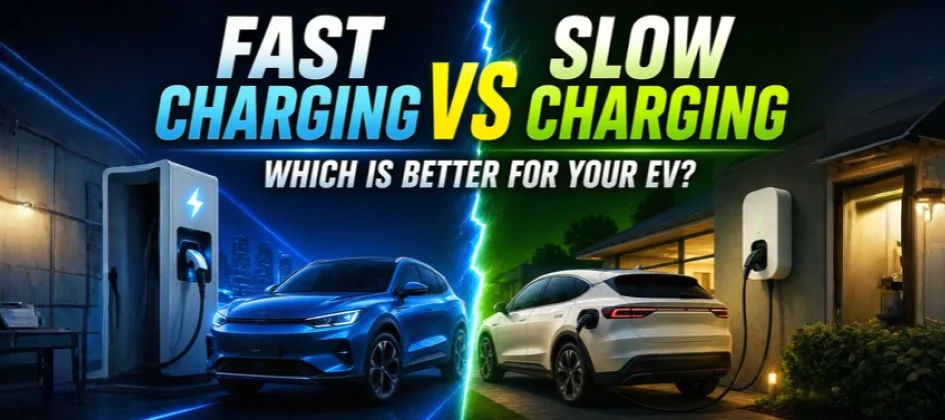
As electric vehicles become a mainstream sight across Indian roads, one foundational question almost every new EV owner asks is: "Should I use fast charging or slow charging?"
Both charging methods serve distinct purposes, but your choice dramatically impacts your overall charging costs, day-to-day convenience, long-term battery health, and general ownership experience.
In this comprehensive guide, we will break down the mechanics of fast charging vs. slow charging, analyze their direct effects on your battery pack, and help you build the optimal charging routine for your electric car, scooter, or bike.
Slow charging (AC charging) is the undisputed gold standard for everyday use. It is highly affordable, convenient for overnight routines, and far gentler on your EV battery's internal chemistry.
Fast charging (DC charging) is your ultimate highway tool, ideal for long-distance road trips, commercial fleet vehicles, and unexpected emergencies when you need to replenish your range immediately.
For the healthiest ownership cycle, use slow charging as your primary fuel source (80–90% of the time) and reserve fast charging for occasional long journeys.
Slow charging, widely referred to as AC (alternating current) charging, is the standard power delivery method utilized by home wall boxes, portable travel chargers, and public neighborhood parking points.
When you plug into an AC source, grid power passes directly into your vehicle's built-in onboard charger. This internal component converts the alternating current from the grid into the direct current (DC) your battery requires to store energy.
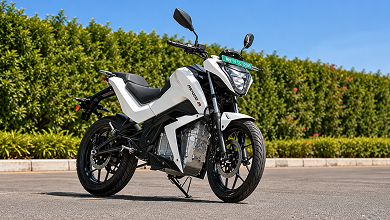
Electric Scooters (e.g., TVS iQube, Ather): 3 to 5 hours
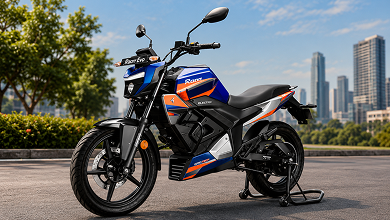
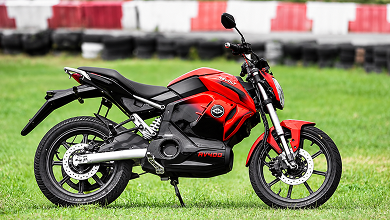
Electric Motorcycles (e.g., Revolt RV400): 3 to 6 hours
Electric Passenger Cars (e.g., Tata Nexon EV): 6 to 10 hours
Overnight charging in your dedicated garage or parking bay.
Workplace parking lots where the vehicle sits idle for 8+ hours.
Minimizing long-term battery cell stress.
Fast charging utilizes dedicated DC (Direct Current) chargers. Unlike home sockets, these heavy-duty commercial stations convert AC power from the grid into DC power externally within the station itself.
By bypassing the vehicle's restrictive onboard charger, they feed high-voltage electricity directly into the battery pack, exponentially slashing your downtime.
0% to 80% Top-up: Approximately 30 to 60 minutes (dependent entirely on the station’s kW output capacity, vehicle architecture, and battery size).
Inter-state highway travel and long family road trips.
Quick midday top-ups when running back-to-back urban errands.
Commercial fleets, cabs, and delivery networks requiring rapid turnaround times.
| Feature | Slow Charging (AC) | Fast Charging (DC) |
| Average Charging Time | 4 – 10 Hours | 30 – 60 Minutes |
| Impact on Battery Health | Maximum Longevity (Gentle) | Higher Thermal Stress (Aggressive) |
| Operational Cost | Significantly Lower (Domestic Tariffs) | Premium (Commercial Station Tariffs) |
| Primary Infrastructure Location | Homes, Apartments, Offices | Highways, Fuel Stations, Hubs |
| Optimal Use Case | Daily Routine Overnights | Road Trips & Emergencies |
This remains the biggest area of concern for prospective EV buyers.
Slow AC Charging: Because the incoming current flow is low and steady, it generates minimal internal heat. Keeping the battery cells cool during a charging cycle is the absolute best way to preserve your State of Health (SoH) over a decade.
Fast DC Charging: Shoving immense amounts of electrical current into chemical cells rapidly creates a massive thermal spike. While modern EVs are equipped with active liquid cooling lines to mitigate this, repetitive, exclusive daily fast charging can accelerate the degradation curve of the cell chemistry over a multi-year period.
Winner: Slow Charging. It keeps your thermal footprint flat and ensures your battery easily reaches its target 10 to 15-year operational lifespan.
The economic difference between fueling at home versus relying on public networks is substantial.
Home AC Charging: You pay standard localized residential electricity tariffs. At an average Indian domestic rate of INR 6 to INR 10 per kWh, fully topping up a standard 40k Which electric car battery costs a mere INR 240 to INR 400?
Public DC Fast Charging: Commercial stations must factor in massive grid infrastructure costs, demand charges, and service margins. This pushes public fast charging rates to INR 15 to INR 25 per kWh. Topping up that identical 40 kWh battery here jumps your expense to INR 600 to INR 1,000.
Winner: Slow Charging. Charging your vehicle at home overnight remains vastly cheaper than visiting commercial public fast-charging points.
Not immediately. A common myth is that parking at a DC fast charger will fry your battery cells. This is entirely false.
Modern electric vehicles are built around highly advanced, intelligent software systems called Battery Management Systems (BMS). The BMS acts as a digital gatekeeper continuously monitoring internal cell temperatures, balancing voltages, and dynamically throttling incoming power. This is exactly why your EV charges incredibly fast from 10% up to 80% but dramatically slows down its charging rate past 80% to protect the battery from overheating.
Occasional fast charging during a long trip is completely safe and fully accounted for by automotive engineers.
To guarantee that your electric car, scooter, or bike maintains peak range capabilities well beyond its factory warranty period, practice these simple rules of thumb:
Stick to the 80/20 Rule: Try to keep your daily battery capacity resting between 20% and 80%. Only charge to a full 100% when you are preparing for a long journey.
Make AC Your Default: Treat your home AC charger as your vehicle's primary kitchen, and think of public DC fast chargers as a highway fast-food stop.
Avoid the "Hot Plug": After a long, spirited highway drive or severe stop-and-go city commute in peak summer, let your vehicle rest for 15–20 minutes to cool down its internal components before immediately plugging it into a fast charger.
Seek the Shade: Whenever possible, park your vehicle in shaded areas or covered basements during blistering summer months to keep resting thermal baselines low.
For daily vehicle maintenance and maximizing the absolute lifespan of your battery chemistry, yes. Slow AC charging generates far less internal resistance and thermal load.
While your vehicle's BMS will protect it from catastrophic failure, relying exclusively on high-output DC charging daily will cause your battery pack to degrade faster over a 5-to-8-year horizon compared to an EV charged primarily at home.
As lithium-ion cells fill up, internal chemical resistance increases. The vehicle’s smart BMS deliberately cuts incoming power speeds down to prevent thermal runaway and protect individual cell health.
At eVehicals, we cut through the engineering jargon to bring you practical, real-world ownership insights. Our guides are built on field data, exact grid tariff structures, tested thermal management performance, and verified battery degradation metrics across Indian driving conditions. We aim to make your transition to electric mobility smooth, safe, and highly cost-effective.
Both fast and slow charging are vital pillars of a seamless electric vehicle ecosystem.
For the vast majority of Indian EV owners, your primary routine should center squarely around slow AC home charging. It is highly economical, incredibly convenient, and acts as a preservation shield for your battery pack's long-term health.
Save DC fast charging for what it was engineered for: long weekend getaways, cross-country highway runs, and those rare mornings when you are in an absolute rush. By pairing these two methods intelligently, you will unlock ultra-low running costs and a flawless driving experience for years to come.


Manage reminders, payment status, and renewal dates from one simple app.


Trusted by policyholders to track every renewal.