Standing in a showroom with an EV brochure in one hand and a hybrid brochure in the other is a genuinely confusing place to be, because both salespeople are right about their own products. The EV really will save you more on fuel. The hybrid really won't leave you stranded looking for a charger. Neither pitch is dishonest; they're just each telling you half the story.
The part that actually resolves the electric car vs hybrid decision isn't more marketing. It's looking at specific models in each category, at real 2026 prices, and matching them against how you actually drive. So instead of another abstract cost comparison, this guide puts real electric cars and real hybrids side by side, the Tata Nexon EV against the Maruti Grand Vitara and the MG ZS EV against the Toyota Hyryder, so you can see exactly what you'd be choosing between.
Choose an electric car if you have home charging access and drive under 100-150 km daily. Models like the Tata Nexon EV and MG ZS EV offer strong value. Choose a hybrid if you drive long, unpredictable distances or lack charging access. The Maruti Grand Vitara and Toyota Urban Cruiser Hyryder, both now starting near INR 10.5-11.3 lakh after 2025's GST reform, are the segment's strongest picks.
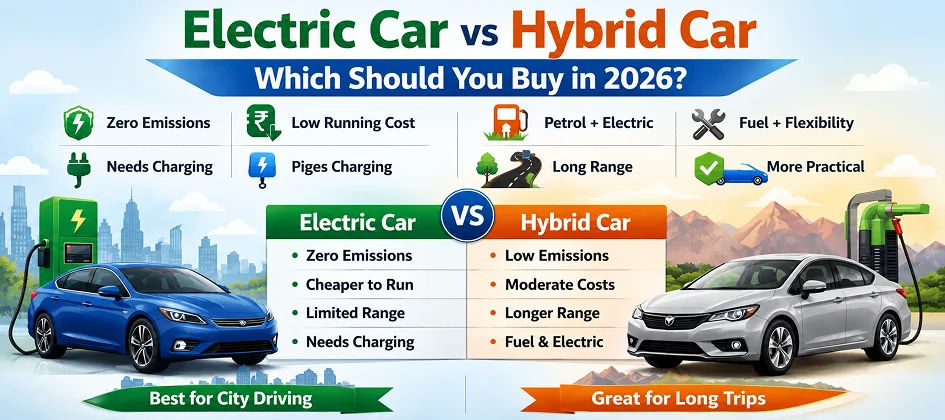
An electric car runs purely on a battery and electric motor – no engine, no fuel tank, no exhaust. A hybrid pairs a petrol engine with an electric motor and a smaller battery that charges itself through the engine and regenerative braking, without ever needing to be plugged in (plug-in hybrids are the exception, offering a short electric-only range on top of the petrol backup).
The trade-off in one sentence: an EV asks you to plan around charging but rewards you with dramatically lower running costs. A hybrid asks nothing of your refuelling routine but delivers smaller efficiency gains than a full EV. Which one wins depends entirely on which of those two things matters more in your specific life.
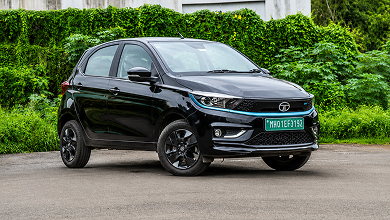
The Tata Nexon EV, India's best-selling electric SUV, offers a well-rounded mix of range, safety (5-star Bharat NCAP rating), and Tata's extensive service network. A safe, practical starting point for first-time EV buyers.
MG Windsor EV Notable for its battery-as-a-service model, which separates the vehicle and battery cost, lowering the effective upfront price. Strong for buyers wanting EV ownership without the full battery cost hitting day one.
The Tata Punch EV compact SUV has a real-world range approaching 300 km on higher variants and is priced competitively against petrol SUVs in the same segment.
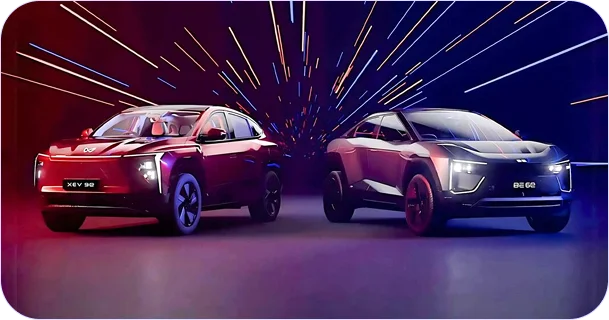
Mahindra BE 6 / XEV 9e Built on Mahindra's dedicated INGLO EV platform, offering genuinely long real-world range and strong performance credentials for buyers wanting the newest EV-native engineering rather than an adapted platform.
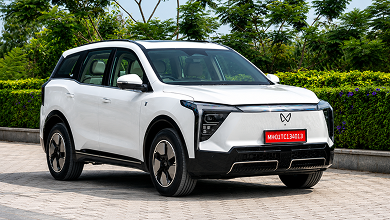
The Maruti e-Vitara, India's largest carmaker's first EV entry, leans on Maruti's enormous dealer network and reputation for reliability, which matters a lot to buyers wary of newer EV-focused brands.
Hybrid pricing shifted meaningfully after the September 2025 GST reform brought small hybrid taxation down from 28% to 18%, and current listings reflect that change.
The Maruti Suzuki Grand Vitara is India's most popular and most affordable strong hybrid, starting around INR 10.77 lakh and delivering roughly 27-28 km/l. Built on Maruti's collaboration with Toyota, it combines Maruti's service reach with Toyota's proven hybrid system.
The Maruti Suzuki Vitara, starting around INR 10.50 lakh with roughly 28.65 km/l, is currently the most fuel-efficient hybrid in its price bracket.
Toyota Urban Cruiser Hyryder Starting around INR 11.31 lakh, it's essentially a design-differentiated sibling to the Grand Vitara, delivering similar efficiency with Toyota's badge and reliability reputation.
Honda City e:HEV: Starting around INR 20-21 lakh, Honda's hybrid sedan offers roughly 27 kmpl with a more premium cabin experience than the SUV-focused competition.
Toyota Innova Hycross: Starting around INR 19.5 lakh, it's a hybrid MPV combining Toyota's long-standing reliability reputation with genuinely strong fuel efficiency for a vehicle this size, popular with larger families.
City driving is where EVs have the clearest advantage. Stop-start traffic is exactly the condition electric motors handle best: instant torque, no idling fuel waste, and regenerative braking recovering energy every time you slow down. A Tata Nexon EV or Tata Punch EV commuting daily within a city, charged overnight at home, will almost always cost less to run per kilometre than any hybrid covering the same routine.
Hybrids still perform better in city traffic than pure petrol cars; the electric motor handles low-speed driving efficiently, which is exactly why the Grand Vitara and Hyryder post such strong km/l figures. But they don't match a full EV's near-zero running cost for pure city use.
This is where the calculus flips. A hybrid's total range regularly exceeds 700-900 km on a single tank, refuelling in minutes at any petrol pump along the way. An EV's real-world range typically runs 250-450 km, and even fast charging takes 30+ minutes, on top of needing to plan your route around charger availability.
For buyers who regularly drive between cities, especially through regions with patchy charging infrastructure, a hybrid like the Toyota Innova Hycross or Grand Vitara removes the planning burden entirely. For buyers whose "long trips" are occasional rather than routine, an EV's charging stops are a manageable inconvenience a few times a year, not a daily obstacle.
| Segment | Electric Option | Price | Hybrid Option | Price |
|---|---|---|---|---|
| Compact SUV | Tata Punch EV | INR 8.09-12.79 Lakh | Maruti Grand Vitara | INR 10.77-19.72 Lakh |
| Compact SUV (Value) | MG Windsor EV | INR 10-13 Lakh (BaaS) | Toyota Urban Cruiser Hyryder | INR 11.31-20.19 Lakh |
| Mid-size SUV | Tata Nexon EV | Segment-competitive | — | — |
| Premium Sedan | — | — | Honda City e:HEV | INR 20-21 Lakh |
| MPV | — | — | Toyota Innova Hycross | INR 19.53 Lakh |
Prices are ex-showroom estimates as of 2026 and vary by variant, state, and dealer offers. The GST reform of September 2025 significantly lowered small hybrid pricing; confirm current figures before purchase.
A Bengaluru-based family cross-shopped the Tata Punch EV against the Maruti Grand Vitara for their second car, ultimately choosing the EV after confirming reliable apartment charging access and realising their combined driving rarely exceeded 60 km daily.
A Jaipur-based sales professional covering 150-200 km daily across a mix of highway and rural roads chose the Toyota Urban Cruiser Hyryder over an EV, citing consistent access to fuel stations along unpredictable routes as the deciding factor over any running-cost savings an EV might have offered.
| Factor | Electric Car | Hybrid Car |
|---|---|---|
| GST Rate (2026) | 5% flat | 18% (small) / 40% (large) |
| Running Cost per km | INR 1-2 | INR 4-5 |
| Real-World Range | 250-450 km | 700-900+ km |
| Refuelling Time | 30 min (fast charge) to 6-8 hrs (home) | A few minutes at any pump |
| Best Entry Price | ~INR 5.84 Lakh (Tata Tiago EV) | ~INR 10.50 Lakh (Maruti Victors) |
| Best For | Predictable commutes, home charging | Long, unpredictable routes |
Figures reflect general Indian market conditions as of 2026 and vary by model, city, and driving pattern.
The electric car vs hybrid decision comes down to matching a specific model to your specific routine, not picking a category in the abstract. If you have home charging and mostly drive within your city, the Tata Nexon EV, Tata Punch EV, or MG Windsor EV will save you more money than any hybrid can match. If your driving includes regular long, unpredictable distances, or you simply don't have consistent charging access, the Maruti Grand Vitara, Maruti Vitara, or Toyota Urban Cruiser Hyryder delivers genuine fuel savings without asking you to change a single habit. Look at the actual models, not just the category labels, and the right choice usually becomes obvious.


Manage reminders, payment status, and renewal dates from one simple app.


Trusted by policyholders to track every renewal.