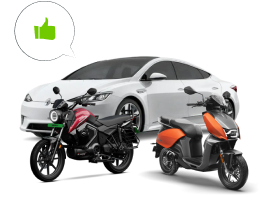
If you've read anything about EV fleets in India over the last couple of years, BluSmart probably came up as the poster child, India's biggest all-electric cab company, with thousands of Tata Xpres-T sedans on the road and millions of clean kilometres covered. It's worth knowing that story doesn't end the way most articles about it were written. BluSmart suspended operations in April 2025 after a financial scandal involving its co-founders and their sister company, Gensol Engineering, triggered a SEBI investigation and pushed the business into insolvency proceedings. As of 2026, its remaining assets are being absorbed into Lithium Urban Technologies through a restructuring led by Eversource Capital.
That's not a reason to write off fleet electrification; quite the opposite. Uber has continued expanding its EV footprint through operators like Lithium Urban Technologies, Everest Fleet, and Moove, targeting 25,000 EVs deployed in India by 2026. The lesson from BluSmart isn't "EVs don't work for fleets." It's that fleet electrification succeeds when the underlying business fundamentals – financing, maintenance planning, and charging infrastructure – are solid, regardless of how green the mission statement sounds.
This guide covers the best fleet electric vehicles for Indian businesses in 2026, across taxi operations, corporate transport, and delivery fleets, along with the practical fleet management lessons worth taking from both the successes and the failures in this space.
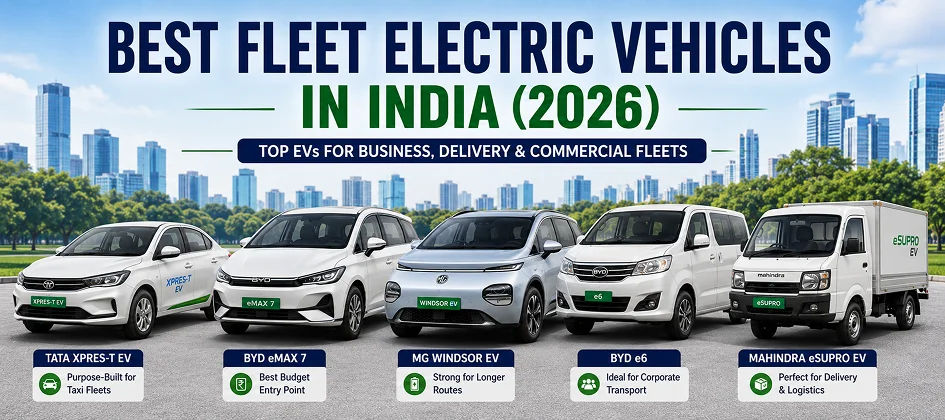
The best fleet electric vehicles in India for 2026 include the Tata Xpres-T EV (purpose-built for taxi fleets, 165-213 km range); the MG Windsor EV (strong for corporate transport with battery-as-a-service flexibility); the BYD eMax 7 (budget-friendly entry for new cab operators); and Mahindra electric models for mixed passenger and logistics fleets. The right choice depends on route type, daily distance, and charging infrastructure access.
What Fleet Electrification Actually Requires
Buying a handful of electric vehicles for personal use and running a fleet of them for a business are two very different undertakings. Fleet electrification needs three things working together, not just a good vehicle.
Charging infrastructure at scale. A single depot or hub charging setup that can service dozens or hundreds of vehicles overnight is a different engineering problem than a single home charger.
Predictable maintenance planning. Fleet vehicles run far more daily kilometres than personal cars, so battery health monitoring and service scheduling need to be systematic, not reactive.
Financing that matches the vehicle lifecycle. Many successful fleet operators lease rather than own outright, structuring costs around vehicle depreciation and battery replacement cycles rather than a single upfront purchase.
Get any one of these wrong at scale, and the business model can unravel even with genuinely good vehicles on the road, which is closer to what happened with BluSmart's underlying financing structure than any flaw in the Tata Xpres-T EV itself.
Best Electric Vehicles for Taxi and Ride-Hailing Fleets
Tata Xpres-T EV: Purpose-Built for Fleet Use
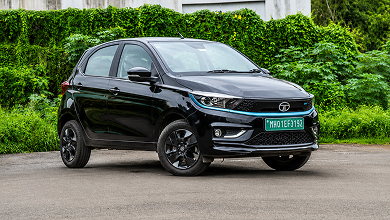
Launched specifically under Tata's XPRES brand for fleet customers, the Xpres-T EV remains one of the most fleet-optimised electric vehicles in India. It offers two battery options – a 21.5 kWh pack with a 165 km range and a larger option reaching 213 km (ARAI certified) – and can charge to 80% in 90-110 minutes depending on the variant. Its single-speed automatic transmission, dual airbags, and ABS with EBD come standard across variants, and Tata's service network remains a major advantage for fleet operators needing consistent uptime.
Best for: New and established cab fleets prioritising low maintenance risk and manufacturer support.
Offering one of the lowest entry costs among current fleet-viable EVs, the eMax 7 benefits from BYD's in-house Blade Battery technology, known for reliability. It's positioned well for solo or couple-focused ride routes rather than high-passenger-volume operations.
Best for: New EV cab operators entering the market with a tighter capital budget.
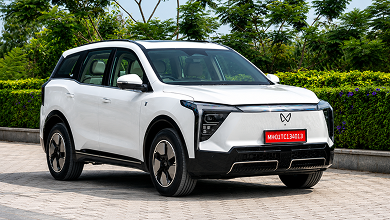
The Windsor EV's Battery-as-a-Service model, which separates vehicle and battery ownership costs, can work well for fleet operators looking to reduce upfront capital deployment while maintaining flexibility on battery capacity per vehicle.
Best for: Fleet operators wanting lower upfront costs with flexible battery ownership structures.
Best Electric Vehicles for Corporate Employee Transport
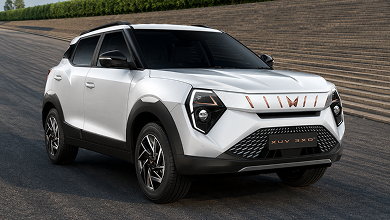
Long used by employee transport fleets like those run by Lithium Urban Technologies, Mahindra's electric offerings have built a track record specifically in the corporate commute segment, where predictable, repeated routes suit EV range profiles well.
Both have seen use in India's premium ride-hailing and corporate transport fleets, offering longer range and a more premium cabin experience suited to executive transport contracts.
Best for: Businesses running scheduled daily employee transport with predictable route lengths.
Best Electric Vehicles for Delivery and Logistics Fleets
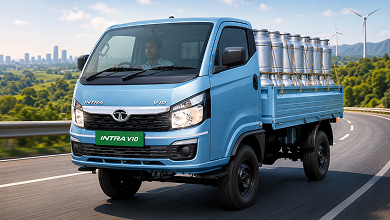
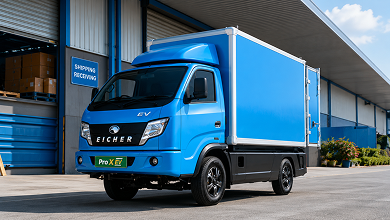
For fleets focused on cargo rather than passengers, the calculus shifts toward payload and route flexibility rather than passenger comfort.
Best for: E-commerce, courier, and FMCG distribution fleets running daily multi-stop routes.
What BluSmart's Collapse Teaches Fleet Buyers
BluSmart's failure wasn't caused by the vehicles underperforming; the Xpres-T EV continues to be used successfully by other fleet operators. The collapse stemmed from a financial scandal at Gensol Engineering, the company's primary EV lessor, which shared co-founders with BluSmart, followed by a SEBI investigation into alleged fund diversion.
The practical lesson for any business considering fleet electrification: separate your vehicle financing structure from single points of organisational risk. Whether you lease through a dedicated NBFC, a manufacturer-backed programme, or purchase outright, make sure your financing arrangement doesn't create a fragile dependency on a single related entity's financial health. Diversify your leasing or financing partners where scale allows, and maintain transparent, auditable maintenance and asset records regardless of company size.
How to Choose the Right Fleet EV
- Route predictability: Fixed, repeated routes (corporate shuttles, scheduled cab bookings) suit EVs better than highly variable, on-demand long-distance trips.
- Daily distance per vehicle: Match battery range to your fleet's actual daily kilometre requirements, with a buffer for peak demand days.
- Charging infrastructure feasibility: Depot charging works well for fleets returning to a central hub nightly; distributed fleets need a public or partner charging network plan.
- Total cost of ownership over lease vs. buy: Compare financing structures carefully, since fleet-scale EV ownership models vary significantly in risk and flexibility.
- Manufacturer fleet support: Brands with dedicated fleet programmes, like Tata's XPRES brand, often offer better bulk pricing, service support, and charging partnerships than standard retail purchases.
Step-by-Step Guide to Electrifying Your Fleet
- Audit your current fleet's routes and daily distances to establish realistic EV range requirements.
- Start with a small pilot batch rather than converting the entire fleet at once.
- Confirm charging infrastructure feasibility at your primary depot or hub before scaling.
- Compare financing structures: outright purchase, leasing, and manufacturer fleet programmes based on your business's cash flow profile.
- Negotiate bulk service and maintenance contracts with your chosen manufacturer or an authorised network.
- Train drivers on EV-specific habits, including charging routines and regenerative braking use.
- Monitor battery health and route data systematically from day one to catch issues before they scale.
- Review and adjust based on pilot performance before committing to full fleet conversion.
Benefits of Fleet Electrification
- Significantly lower running costs per vehicle, roughly INR 1-2 per km versus INR 5-9 per km for petrol, compounding quickly across a large fleet.
- Reduced fleet-wide maintenance costs: fewer moving parts per vehicle means lower aggregate servicing spend.
- Improved employee and passenger experience: quieter, smoother rides for corporate and ride-hailing use cases.
- Sustainability credentials are increasingly relevant for corporate clients with their own emissions targets and procurement requirements.
- Government incentive eligibility (FAME scheme and state-level EV subsidies) can meaningfully reduce fleet acquisition costs, though eligibility varies by state and vehicle category.
Key Features to Look For in Fleet EVs
- Fast-charging support critical for high-utilisation fleet vehicles that can't afford long overnight-only charging windows.
- Battery warranty terms: fleet vehicles accumulate kilometres faster than personal vehicles, so warranty coverage measured in both years and kilometres matters.
- Telematics and fleet management integration: GPS tracking, battery health monitoring, and route optimisation tools are increasingly standard on fleet-orientated models.
- Manufacturer fleet support programmes for dedicated fleet brands like Tata's XPRES line often include bulk service agreements and charging partnerships.
- Driver comfort for extended shifts relevant for taxi and ride-hailing fleets where drivers spend long hours in the vehicle daily.
Real-World Examples
Lithium Urban Technologies signed an agreement with Tata Motors to deploy 5,000 Xpres-T electric sedans for employee transportation, reflecting how corporate commute fleets have found genuine, sustained value in EV adoption independent of the ride-hailing sector's more public struggles.
Uber has partnered with commercial EV fleet operators including Lithium Urban Technologies, Everest Fleet, and Moove, targeting 25,000 EVs deployed across India by 2026, a sign that fleet electrification in ride-hailing is continuing to scale through operator partnerships rather than a single vertically integrated company.
Comparison Table
| Vehicle |
Fleet Use Case |
Range |
Best For |
| Tata Xpres-T EV |
Taxi / Ride-hailing |
165-213 km |
New and established cab fleets |
| BYD eMax 7 |
Taxi / Ride-hailing |
Compact, entry-level |
Budget-conscious new operators |
| MG Windsor EV |
Corporate / Taxi |
Segment-competitive |
Flexible battery ownership needs |
| Mahindra e-Verito / newer EVs |
Corporate employee transport |
Segment-typical |
Scheduled daily commute routes |
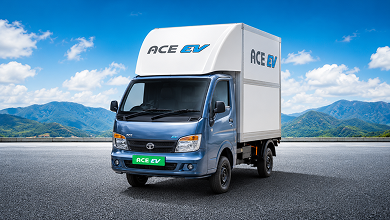
| Tata Ace EV |
Delivery / Logistics |
~154 km |
E-commerce, FMCG delivery fleets |
| Euler Turbo EV 1000 |
Delivery / Logistics |
Segment-typical |
High-frequency dispatch |
Range and pricing figures are approximate and vary by variant, city, and current manufacturer offers. Confirm exact specifications with the manufacturer or an authorised fleet sales representative before purchase.
Best Practices for EV Fleet Management
- Run a pilot phase with a small batch of vehicles before committing to full fleet conversion.
- Diversify financing and leasing partners rather than concentrating fleet ownership risk in a single related entity.
- Build systematic battery health monitoring into your maintenance schedule from the start.
- Negotiate fleet-level service agreements directly with manufacturers for better bulk pricing and support.
- Track real-world range and charging patterns closely during the first few months to refine route planning.
Common Mistakes to Avoid
- Assuming vehicle performance issues when the real problem is financing structure. BluSmart's collapse was a financial and governance failure, not a vehicle performance failure. Don't let one narrative obscure the other when evaluating fleet EV viability.
- Skipping a pilot phase. Converting an entire fleet at once without testing real-world range and charging patterns first increases operational risk significantly.
- Underestimating depot charging infrastructure needs. A fleet of 50+ vehicles needs meaningfully more charging capacity planning than a handful of personal EVs.
- Ignoring driver training on EV-specific habits. Charging routines and regenerative braking use affect both efficiency and vehicle longevity at fleet scale.
- Concentrating financing risk in a single related-party lessor. Diversify your leasing and financing arrangements where fleet scale allows.
Expert Tips
- Treat your first EV fleet batch as a genuine pilot with defined success metrics, not just a symbolic sustainability gesture.
- Ask manufacturers specifically about their fleet support programmes, since dedicated fleet brands often include service and charging partnerships that standard retail purchases don't.
- Build financial resilience into your fleet financing structure by working with more than one leasing or lending partner at scale.
- Monitor industry developments around fleet operators like Lithium Urban Technologies and Everest Fleet, since their operating models offer a more currently stable reference point than BluSmart's now-defunct structure.
Conclusion
The best fleet electric vehicles in India for 2026 span taxi operations, corporate transport, and delivery logistics, with models like the Tata Xpres-T EV, MG Windsor EV, and Tata Ace EV each suited to specific fleet use cases. BluSmart's collapse is a genuinely important cautionary tale, but the right lesson isn't that fleet EVs don't work; it's that fleet electrification succeeds when vehicle choice is backed by sound financing structure, systematic maintenance planning, and adequate charging infrastructure, not when it depends on a single fragile corporate relationship. Businesses like Lithium Urban Technologies and Everest Fleet continue proving the underlying model works when those fundamentals are in place.
FAQs
1. What is the best electric vehicle for a taxi fleet in India?
The Tata Xpres-T EV remains one of the strongest choices for taxi fleets, purpose-built for fleet use with fast-charging support, dual airbags standard, and a well-established service network across India.
2. What happened to BluSmart, India's largest EV cab company?
BluSmart suspended operations in April 2025 following a financial scandal involving its co-founders and sister company, Gensol Engineering, which triggered a SEBI investigation. The company entered insolvency proceedings, and its assets are being absorbed into Lithium Urban Technologies through a 2026 restructuring led by Eversource Capital.
3. Is fleet electrification still viable in India after BluSmart's collapse?
Yes. BluSmart's failure stemmed from financial and governance issues at its related lessor entity, not from vehicle performance problems. Other operators like Lithium Urban Technologies and Everest Fleet continue successfully running electric fleets in India.
4. What is the best electric vehicle for corporate employee transport?
Mahindra's electric models and the Tata Xpres-T EV have both been widely used for corporate employee transport fleets, particularly for predictable, scheduled daily commute routes.
5. How much can a business save by electrifying its delivery fleet?
Electric delivery vehicles typically cost INR 1-2 per km to run compared to INR 4-5 per km for diesel equivalents, with savings compounding significantly across a fleet running multiple vehicles daily.
6. What should a business consider before electrifying its fleet?
Businesses should audit route predictability and daily distance requirements, confirm charging infrastructure feasibility, compare financing structures, and start with a small pilot batch before committing to full fleet conversion.
7. Are there government subsidies for fleet electric vehicles in India?
Yes, many fleet electric vehicles are eligible under the FAME scheme and various state-level EV policies, though eligibility and subsidy amounts vary by state and vehicle category and change periodically.
8. What is the biggest risk in fleet electrification based on India's experience so far?
Based on BluSmart's collapse, the biggest risk isn't vehicle performance but financing structure. Concentrating fleet financing risk in a single related-party lessor without diversification can create fragility even with otherwise sound vehicles on the road.
9. Which companies currently run large electric fleets in India?
Lithium Urban Technologies and Everest Fleet are among the prominent current operators, with Uber partnering with both, alongside Moove, to deploy a combined 25,000 EVs across India by 2026.
10. Should a small business start with a full EV fleet conversion or a pilot batch?
A pilot batch is strongly recommended. Testing real-world range, charging patterns, and driver adaptation with a small number of vehicles first reduces operational risk before scaling to a full fleet conversion.