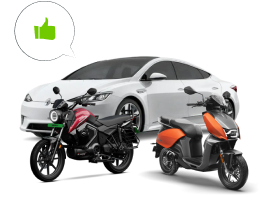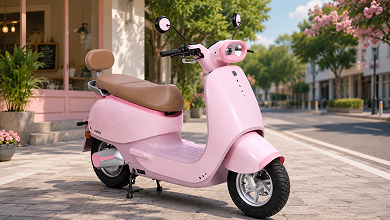
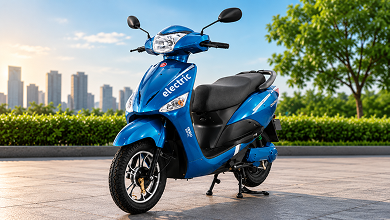
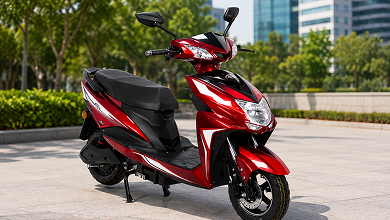
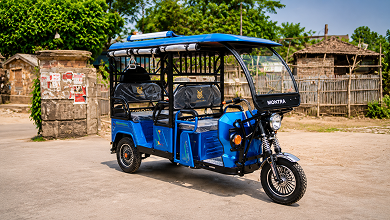

If you travel around 50 km every day for office or city travel, is an electric scooter, electric bike, or electric car the right choice?
As fuel prices remain a major monthly expense for Indian households, switching to an electric vehicle (EV) for daily commuting has shifted from an eco-friendly experiment to a financially smart decision. However, selecting the best EVs for a 50 km daily commute needs careful consideration beyond high-speed numbers or maximum claimed ranges.
A practical daily commuter must evaluate real-world usable range, purchase price, home charging access, daily running cost, seating comfort, traffic conditions, passenger/boot capacity, and local service support. Furthermore, buyers must consider occasional weekend trips or highway detours before committing to a purchase.
Before choosing a vehicle category, it is vital to clarify what a "50-km daily commute" actually means for your schedule:
50 km Total Daily Travel: A 25 km ride/drive to work and 25 km back home.
50 km Each Way (100 km Total Daily Travel): A 50 km ride/drive to work and 50 km back, totaling 100 km daily.
These two scenarios require completely different battery capacities and range buffers. A scooter with an 80 km real-world range handles a 50 km total round trip comfortably, but it will fail a 100 km daily commute unless workplace charging is available. Keep this distinction in mind throughout this guide.
Choosing an EV for daily commuting involves looking at how the vehicle fits into your daily routine. Here are the ten core factors every Indian commuter should analyse:
Claimed figures (ARAI/MIDC/IDC) are measured under ideal laboratory conditions. Real-world range is typically 20% to 30% lower because of stop-and-go traffic, pillion/passenger weight, ambient temperatures, and air conditioning use.
Battery capacity, measured in kilowatt-hours (kWh), dictates how much energy your EV stores. A larger battery size offers higher real-world mileage and reduces how often you need to recharge, though it also increases the upfront purchase price.
For a 50 km daily travel requirement, home charging via a standard 15A socket is usually sufficient. Understanding full charging time helps you plan overnight charging without relying on expensive public fast chargers.
Calculate the per-kilometre cost by looking at energy consumption. Electric two-wheelers consume roughly 1.2 to 2 kWh per 50 km, while electric cars consume around 6 to 8 kWh for the same distance.
Determine your budget limit. Electric scooters and motorcycles generally range between INR 1.10 Lakh and INR 1.90 Lakh, whereas practical urban electric cars start from INR 7 Lakh and go up to INR 18 Lakh.
A 50 km trip means spending 1.5 to 3 hours in traffic every day. Comfortable seat cushioning, upright riding posture (for two-wheelers), and suspension tuning over broken roads are essential.
Daily commuters carry laptop bags, raincoats, lunches, and groceries. Electric scooters offer flat floorboards and under-seat storage, whereas electric motorcycles offer minimal onboard storage without aftermarket top boxes.
Check if the manufacturer has active service centers, mobile service vans, and readily available spare parts in your city (e.g., Bengaluru, Mumbai, Delhi-NCR, Ahmedabad, Pune, or Rajkot).
Look for essential safety equipment like Combined Braking System (CBS) or ABS on two-wheelers, and minimum 6 airbags, Electronic Stability Control (ESC), and ISOFIX mounts on cars.
If your commuter vehicle doubles as the primary household vehicle for weekend getaways, you must factor in fast-charging capabilities (DC fast charging) and trunk space.
To avoid range anxiety, never buy an EV whose real-world range exactly matches your daily mileage. You must maintain a charging buffer for unexpected detours, heavy traffic jams, battery degradation over time, and weather impact.
Formula: Required Certified Range = (Daily Total Distance + 30% Buffer) ÷ 0.75
For 50 km Total Daily Commute: You need a vehicle with a real-world range of at least 70–80 km. This translates to an official claimed range of 100–120 km.
For 100 km Daily Commute (50 km each way): You need a vehicle with a real-world range of at least 130–140 km, requiring an official claimed range of 160–200 km (or reliable workplace charging).
Summer heat & AC use: Running a car's AC on high can reduce real-world range by 15%–20%.
Monsoon & Rain: Waterlogged roads and lower tyre traction increase rolling resistance.
Highway Speeds: Electric motors are less efficient at continuous speeds above 70 km/h compared to stop-and-go city traffic where regenerative braking helps recharge the battery.
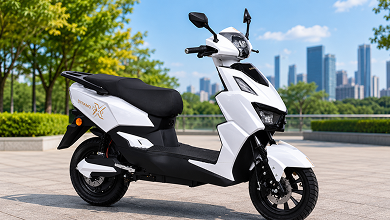
Electric scooters are the most popular choice for urban Indian commuters due to low purchase costs, ease of handling in traffic, and built-in storage. Below is a comparison of reliable electric scooters available in India in 2026.
| Electric Scooter | Ex-Showroom Price* | Claimed Range* | Battery Capacity | Home Charging Time | Best Suited For |
| Ather 450X (3.5 kWh) | INR 1.51 Lakh | 161 km (IDC) | 3.5 kWh | ~5.25 hours | Performance-focused daily urban commuters |
| TVS iQube ST (3.4 kWh) | INR 1.58 Lakh | 150 km | 3.4 kWh | ~4.5 hours | Comfort-seeking family office commuters |
| Ather Rizta Z (3.7 kWh) | INR 1.45 Lakh | 159 km (IDC) | 3.7 kWh | ~5.75 hours | Families needing maximum storage & comfort |
| Bajaj Chetak 3201 | INR 1.40 Lakh | 136 km | 3.2 kWh | ~4.5 hours | Metal-body classic urban commuters |
*Prices and figures are approximate ex-showroom rates as of late 2026 and may vary by state subsidies and city.
Ex-Showroom Price: INR 1.51 Lakh
Battery Capacity: 3.5 kWh Lithium-ion (IP67)
Claimed Range: 161 km (IDC) | Real-World Range: ~105–110 km (SmartEco/Ride Mode)
Charging Time: 0–80% in ~3 hrs 12 mins via Home Charger
Performance: 6.4 kW peak motor power, top speed 90 km/h
Storage & Comfort: 22-litre under-seat storage; sportier, firm suspension setup
Key Features: 7-inch touchscreen dashboard, Google Maps navigation, AutoHold, traction control
Advantages: Exceptional build quality, responsive handling, reliable software, fast-charging Grid network.
Limitations: Stiffer ride over potholes; smaller seat compared to family scooters.
Best Suited For: Solo professionals who prioritize sharp handling and swift traffic overtaking.
Ex-Showroom Price: INR 1.58 Lakh
Battery Capacity: 3.4 kWh Lithium-ion
Claimed Range: 150 km | Real-World Range: ~100–105 km in Eco Mode
Charging Time: 0–80% in ~4 hours 30 mins
Performance: 4.4 kW peak BLDC hub motor, top speed 78 km/h
Storage & Comfort: 32-litre large under-seat boot; ultra-comfortable wide plush seat
Key Features: 7-inch TFT screen, joystick control, turn-by-turn navigation, TPMS, music controls
Advantages: Exceptionally smooth ride quality, traditional scooter ergonomics, spacious footboard.
Limitations: Hub motor lacks the rapid acceleration of mid-drive setups; conservative top speed.
Best Suited For: Daily commuters seeking high comfort and shared family usage.
Ex-Showroom Price: INR 1.45 Lakh
Battery Capacity: 3.7 kWh
Claimed Range: 159 km (IDC) | Real-World Range: ~110–115 km
Charging Time: 0–80% in ~4 hrs 30 mins
Performance: 4.3 kW peak power, top speed 80 km/h
Storage & Comfort: Massive 34-litre under-seat storage + optional 22L Frunk; longest seat in category
Key Features: SkidControl (Traction Control), Auto-Hold, Emergency Stop Signal, WhatsApp on dash
Advantages: Outstanding practicality, huge carrying capacity, comfortable two-up seating.
Limitations: Larger dimensions make filtering through tight traffic slightly wider.
Best Suited For: Commuters carrying daily luggage, laptop bags, or taking family members along.
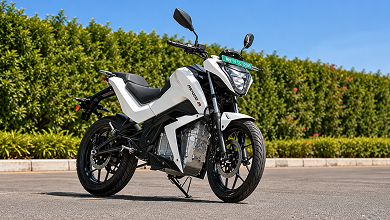
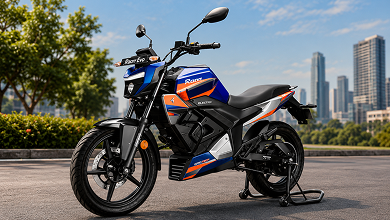
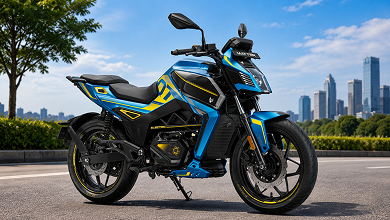
Electric motorcycles offer a better riding posture, larger 17-inch wheels for rough roads, and better high-speed stability over long distances than scooters.
| Electric Motorcycle | Ex-Showroom Price* | Claimed Range* | Battery Capacity | Home Charging Time | Best Suited For |
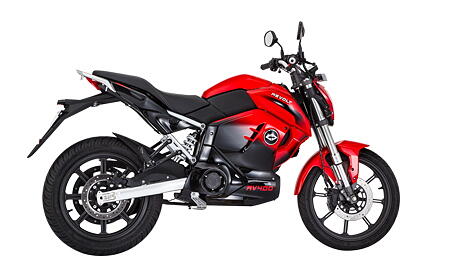
| Revolt RV400 | INR 1.40 Lakh | 150 km (Eco) | 3.24 kWh | ~4.5 hours | Daily office commuters wanting a sporty bike |
| Matter Aera 5000 | INR 1.83 Lakh | 125 km | 5.0 kWh | ~5.0 hours | Tech enthusiasts needing geared performance |
| Tork Kratos R | INR 1.68 Lakh | 180 km (IDC) | 4.0 kWh | ~4.0 hours | Highway + city mixed commuters |
*Prices are ex-showroom and subject to regional variations.
Ex-Showroom Price: INR 1.40 Lakh
Battery Capacity: 3.24 kWh Lithium-ion (Removable)
Claimed Range: 150 km (Eco Mode), 100 km (Normal), 80 km (Sports)
Real-World Range: ~90–100 km in Normal city riding
Charging Time: 0–100% in ~4.5 hours (15A socket)
Performance: 4.1 kW mid-drive motor, 85 km/h top speed
Riding Comfort & Stability: Upright commuter ergonomics, telescopic front forks, adjustable rear monoshock, 17-inch wheels
Advantages: Swappable/removable battery pack (easy for apartment dwellers), lightweight, low running costs.
Limitations: Limited onboard storage space; fit and finish lags behind premium scooters.
Ideal User: Commuters who prefer a motorcycle stance and require a removable battery for home/office charging.
Ex-Showroom Price: INR 1.83 Lakh
Battery Capacity: 5.0 kWh (Liquid-cooled)
Claimed Range: 125 km | Real-World Range: ~100–105 km
Charging Time: ~5 hours (Standard)
Performance: 10 kW peak power, 4-speed manual gearbox setup
Riding Comfort & Stability: Liquid-cooled battery and motor prevent overheating on long 50 km summer commutes; firm highway stability
Advantages: First Indian EV bike with a 4-speed manual gearbox, hyper-responsive acceleration, liquid cooling for thermal stability.
Limitations: Higher initial purchase cost; heavier kerb weight.
Ideal User: Motorcycle purists who commute 50 km daily across highways and desire geared riding dynamics.
Electric cars offer complete weather protection, air conditioning, superior safety, and multi-passenger utility for daily office routes.
| Electric Car | Ex-Showroom Price* | Claimed Range* | Battery Pack | Charging Setup | Best Suited For |
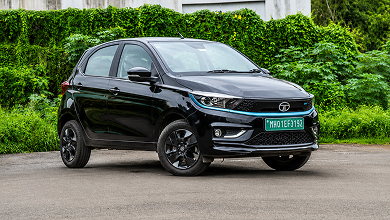
| Tata Tiago EV (24 kWh) | INR 8.64 Lakh | 285 km (MIDC) | 24 kWh | 15A Home / 3.3 kW AC / DC Fast | Budget-conscious urban car commuters |
| Tata Punch EV (30 kWh) | INR 9.79 Lakh | 355 km (C75) | 30 kWh | 15A Home / 3.3 kW / 7.2 kW / DC Fast | Compact SUV lovers facing rough roads |
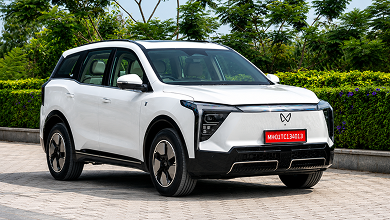
| MG Windsor EV (38 kWh) | INR 14.00 Lakh | 332 km (MIDC) | 38 kWh | 3.3 kW / 7.4 kW / DC Fast | Maximum backseat comfort & space |
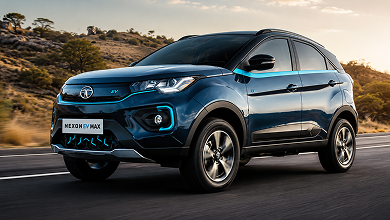
| Tata Nexon EV (45 kWh) | INR 14.14 Lakh | 489 km | 45 kWh | 15A Home / 7.2 kW / DC Fast | Mixed city and long highway commuters |
*Prices listed are ex-showroom base-to-mid variant starting prices in late 2026.
Ex-Showroom Price: INR 8.64 Lakh – INR 10.09 Lakh
Battery Capacity: 24 kWh Lithium-ion
Claimed Range: 285 km (MIDC) | Real-World Range: ~180–200 km (with AC in city traffic)
Charging Setup: 15A Plug (0–100% in ~8.7 hours); 3.3 kW AC wallbox; DC Fast Charging (10–80% in ~57 mins)
Cabin & Boot Space: 5-seater hatchback, 240-litre boot capacity
Safety Features: 4-Star GNCAP rating, dual airbags, ABS with EBD, iTPMS, rear camera
Advantages: Highly compact for easy city parking, nimble handling, very low running cost for a car.
Limitations: Rear seat knee-room is tight for tall passengers; slow standard 15A charging time for full charge.
Ideal User: First-time car buyers looking for an affordable, compact daily office driver.
Ex-Showroom Price: INR 9.79 Lakh – INR 11.94 Lakh
Battery Capacity: 30 kWh (gen-2 acti.ev architecture)
Claimed Range: 355 km | Real-World Range: ~220–240 km
Charging Setup: 15A socket (~9.4 hours); 50 kW DC Fast Charger (10–80% in ~56 mins)
Cabin & Boot Space: 366-litre boot space, 190 mm ground clearance, elevated SUV seating stance
Safety Features: 5-Star Bharat NCAP rating, 6 airbags standard, ESC, Hill Hold Assist
Advantages: High ground clearance tackles flooded monsoon roads easily; plush ride quality over potholes.
Limitations: Touch-based HVAC controls can be distracting while driving.
Ideal User: Commuters navigating broken city roads, waterlogged patches, and heavy urban traffic.
Ex-Showroom Price: INR 14.00 Lakh – INR 15.53 Lakh (Note: BaaS battery rental options available lower)
Battery Capacity: 38 kWh LFP battery
Claimed Range: 332 km | Real-World Range: ~250–260 km
Charging Setup: 7.4 kW AC Charger (~6.5 hours); 50 kW DC Fast Charging (0–80% in ~55 mins)
Cabin & Boot Space: Massive lounge-like cabin, 135-degree reclining Aero Lounge rear seats, 579-litre boot
Safety Features: 6 airbags, 360-degree camera, ESC, disc brakes on all four wheels
Advantages: Class-leading rear-seat luxury, ultra-spacious, premium interior tech with 15.6-inch display.
Limitations: Large footprint requires wider parking spots; fixed glass roof on top variants can let in heat.
Ideal User: Executives and families who want chauffeur-driven or maximum lounge comfort during a daily 50 km commute.
Here is a side-by-side comparison of how these three vehicle types perform for a 50 km daily commute:
| Factor | Electric Scooter | Electric Bike | Electric Car |
| Purchase Cost | Lowest (INR 1.10L – INR 1.60L) | Moderate (INR 1.40L – INR 1.85L) | Higher (INR 7.00L – INR 15.00L+) |
| Running Cost | Ultra-low (~INR 0.20 – INR 0.30/km) | Ultra-low (~INR 0.25 – INR 0.35/km) | Low (~INR 1.00 – INR 1.40/km) |
| Passenger Capacity | 2 Adults | 2 Adults | 4 to 5 Adults |
| Storage Capacity | Excellent (22L–34L under-seat + floorboard) | Very Limited (Requires aftermarket top box) | Generous (240L–579L boot) |
| Commute Comfort | Good for short/medium rides; weather exposed | Ergonomic seating; better over big bumps | High (Weatherproof, AC, noise isolation) |
| Parking Ease | Very Easy (Squeezes in tight city spaces) | Easy (Standard motorcycle parking) | Moderate to Difficult in crowded downtowns |
| Charging Ease | Plugs into any standard 5A/15A socket | Plugs into 15A socket / Some removable batteries | Requires dedicated 15A/7.2kW AC home unit |
| Highway Suitability | Limited (Top speed capped at 80–90 km/h) | Fair (Stable up to 85–100 km/h) | High (Cruises smoothly at 100+ km/h) |
| Family Use | Local errands & 2-person city rides | Personal commute & solo/pillion rides | Complete family transport for all weather |
To calculate exact running costs, use the standard formula:
Electricity Cost = Energy Consumed (kWh) × Electricity Tariff (INR per kWh)
Electricity Tariff: Assumed average home residential slab rate of INR 8.00 per kWh (unit). (Note: State tariffs across India range from INR 5 to INR 10/unit).
Charging Efficiency: Includes ~10% transmission/charging losses from the grid to the battery.
Monthly Commute: 26 working days × 50 km = 1,300 km/month.
Electric Scooter (Consumes ~1.5 kWh per 50 km):
Daily Cost: 1.5 kWh × INR 8 = INR 12.00
Cost per km: INR 12 ÷ 50 km = INR 0.24/km
Monthly Cost (26 days): INR 312
Annual Cost (15,600 km): INR 3,744
Electric Bike (Consumes ~1.8 kWh per 50 km):
Daily Cost: 1.8 kWh × INR 8 = INR 14.40
Cost per km: INR 14.40 ÷ 50 km = INR 0.29/km
Monthly Cost (26 days): INR 374.40
Annual Cost (15,600 km): INR 4,492.80
Electric Car (Consumes ~7.0 kWh per 50 km):
Daily Cost: 7.0 kWh × INR 8 = INR 56.00
Cost per km: INR 56 ÷ 50 km = INR 1.12/km
Monthly Cost (26 days): INR 1,456
Annual Cost (15,600 km): INR 17,472
Comparison with Petrol Scooter (45 km/l @ INR 100/L petrol):
Cost per km: INR 2.22/km | Daily 50 km Cost: INR 111 | Monthly Cost: INR 2,886
Annual Savings switching to Electric Scooter: ~INR 25,000+
Disclaimer: Public DC fast chargers charge higher commercial rates (typically INR 18–INR 24 per kWh), raising running costs when charging outside home.
Understanding your energy draw helps prevent circuit overloading and accurately reads your electricity bill.
Kilowatt-hour (kWh): A measure of total battery capacity or energy consumed over time (1 kWh = 1 unit of electricity).
Kilowatt (kW): A measure of motor power output or charger speed.
Electric Scooter (3.5 kWh Battery): Consumes ~30% of its battery capacity (~1.1 to 1.4 kWh drawn from wall).
Electric Bike (4.0 kWh Battery): Consumes ~35% of its battery capacity (~1.5 to 1.8 kWh drawn from wall).
Electric Car (30 kWh Battery): Consumes ~20% to 25% of its battery capacity (~6.5 to 7.5 kWh drawn from wall).
Charging frequency depends on whether your 50 km commute is total or one-way.
Electric Scooter (100 km real-world range): Charge every 2nd night (leaving a 20 km safety buffer).
Electric Bike (100 km real-world range): Charge every 2nd night.
Electric Car (220 km real-world range): Charge every 3rd or 4th night.
Electric Scooter (100 km real-world range): Charge every night (or top up at work).
Electric Bike (100 km real-world range): Charge every night plus workplace top-up.
Electric Car (220 km real-world range): Charge every 2nd night.
Home charging provides maximum convenience for daily EV commuters. Plugging in overnight ensures your vehicle is topped up every morning without visiting public stations.
Dedicated Parking Spot: Ensure you have an assigned parking slot in your independent house or apartment complex.
Standard 15A Heavy-Duty Socket: Most electric scooters, bikes, and entry-level EVs charge safely via a grounded 15A socket (similar to an air conditioner or refrigerator plug).
Earthing & Load Sanction: Verify proper electrical earthing (grounding) to protect charger electronics. Ensure your house's sanctioned load handles the additional 1.5 kW to 3.3 kW draw.
If you live in an apartment complex without dedicated charging infrastructure, you can still maintain a 50 km daily commute using alternative strategies:
Removable Battery Two-Wheelers: Options like the Revolt RV400 allow you to carry the battery pack inside your apartment or office to charge via standard wall sockets.
Workplace Charging: Negotiate access to a standard 15A socket in your office parking space during work hours.
Public Fast Chargers: Charge an electric car once a week at a commercial DC fast charging station for 45 minutes while buying groceries or eating lunch.
Energy efficiency varies significantly between city roads and open highways.
Characteristics: Frequent stop-and-go traffic, lower average speeds (25–45 km/h).
EV Efficiency: Higher. Regenerative braking recovers kinetic energy during frequent slow-downs, extending real-world range.
Characteristics: Sustained high speeds (75–100 km/h), continuous aerodynamic drag.
EV Efficiency: Lower. Electric motors work harder against wind resistance without regenerative braking opportunities, reducing range by 15% to 25%.
Be mindful of these operational factors that drain battery reserves faster:
High Speeds: Driving an electric car over 90 km/h or riding a scooter continuously at full throttle.
Cabin Climate Control: Setting car AC to maximum cooling in 42°C Indian summers.
Under-inflated Tyres: Low tyre pressure increases rolling resistance and reduces range by up to 10%.
Extra Payload: Riding with heavy pillions or carrying full cargo loads.
Steep Incline Navigation: Daily commutes across hilly terrains consume significantly more power during ascents.
If your weekend schedule involves 150 km family trips or inter-city highway runs (e.g., Mumbai to Pune, Bengaluru to Mysuru, or Ahmedabad to Rajkot), select your EV carefully:
Electric Cars with 30 kWh–45 kWh battery packs (e.g., Punch EV or Nexon EV) handle long weekend drives smoothly via public CCS2 fast-charging corridors.
Electric Two-Wheelers are designed primarily for urban boundaries. Attempting 150+ km highway journeys on a scooter requires multiple 4-hour slow-charging stops, making an electric car or long-range EV better suited for dual-use needs.
| Commuter Profile | Recommended EV Type | Main Selection Factors | Top Vehicle Options |
| Solo City Office Commuter | Electric Scooter | High agility, low price, under-seat laptop storage | Ather 450X, TVS iQube |
| Motorcycle Enthusiast | Electric Bike | Upright posture, large wheels for rough roads | Revolt RV400, Tork Kratos R |
| Family / All-Weather Commuter | Compact Electric Car | Passenger seating, climate control, safety | Tata Tiago EV, Tata Punch EV |
| Apartment Resident (No Socket) | Removable Battery EV / Long-range Car | Easy indoor charging or weekly fast charging | Revolt RV400, MG Windsor EV |
| Mixed Highway + City Commuter | Mid-size Electric Car | Thermal battery management, cruising stability | Tata Punch EV, Tata Nexon EV |
| Budget-Strict Commuter | Value Electric Scooter | Upfront purchase cost & minimum running expenses | Ather Rizta, TVS iQube |
Use this practical buyer checklist before visiting the dealership:
[ ] Confirm Exact Daily Distance: Is your commute 50 km total round-trip or 50 km each way?
[ ] Verify Real-World Range: Ask for real-world user feedback in your city rather than relying only on brochure figures.
[ ] Inspect Home Parking & Socket Access: Ensure a 15A socket is within reach of your parking spot.
[ ] Calculate Grid Tariff: Check your local residential unit rate (INR/kWh) to estimate monthly costs accurately.
[ ] Test Drive with Full Load: Test the vehicle with a pillion or full passenger load on rough inclines.
[ ] Check Warranty Terms: Confirm battery and motor warranty coverage (e.g., 3 years/50,000 km or 8 years/1,600,000 km).
[ ] Locate Nearest Service Station: Ensure an authorized service facility operates within reasonable distance.
[ ] Evaluate Resale & Brand History: Choose established manufacturers with reliable software updates and parts supply.


Manage reminders, payment status, and renewal dates from one simple app.


Trusted by policyholders to track every renewal.