

If you travel around 100 km every day for work, intercity travel, or personal errands, can an electric vehicle (EV) handle your commute comfortably without constant range anxiety?
Traveling 100 km daily adds up to over 2,500 km per month and 30,000 km per year. At this distance, fuel costs for petrol or diesel cars can quickly exceed INR 15,000 to INR 22,000 every month. Switching to an electric vehicle can dramatically reduce running costs by up to 80%, saving over INR 1.5 Lakh to INR 2 Lakh annually.
However, a 100-km daily commute requires much more careful vehicle selection than a short 20-km city drive. You must evaluate real-world range under highway conditions, battery thermal management, charging speed, home charging infrastructure, traffic bottlenecks, and long-term seating comfort.
Before selecting a vehicle, it is essential to clarify your actual commuting pattern:
100 km Total Daily Travel: A 50 km commute to work and 50 km back home (100 km total round-trip).
100 km Each Way (200 km Total Daily Travel): A 100 km drive to work and 100 km back, totaling 200 km daily.
These two scenarios require completely different battery sizes and charging setups. A vehicle with a real-world range of 140 km handles a 100 km total daily commute with ease, but it will require fast charging at work if your trip is 100 km each way. This guide focuses primarily on a 100 km total daily round trip, with a dedicated section on the 200 km daily scenario.
Never buy an EV whose certified or claimed range is exactly 100 km. Certified figures (ARAI, MIDC, or C75) are measured under ideal laboratory conditions without accounting for real-world driving variables.
To comfortably cover 100 km daily, aim for an EV with a certified claimed range of at least 150 km for two-wheelers and 250 km to 300 km for four-wheelers.
Range Calculation Formula: Required Certified Range = (Daily Distance [100 km] + 30% Buffer) ÷ 0.70
High Highway Speeds: Continuous driving above 80 km/h increases aerodynamic drag exponentially, reducing efficiency.
Air Conditioning: Running cabin cooling during peak 40°C+ Indian summers drains 15% to 20% extra battery power.
Stop-and-Go Traffic: Bumper-to-bumper traffic during peak hours increases operating time, though regenerative braking helps recover some energy.
Passenger & Luggage Load: Driving with a full passenger cabin or heavy cargo increases rolling resistance.
Tyre Pressure: Under-inflated tyres increase road resistance and lower efficiency by up to 8%.
When evaluating vehicles for a 100 km daily trip, look beyond brand marketing and examine these 12 core criteria:
Real-World Range: Must comfortably deliver 125 km to 140 km of actual range under mixed conditions.
Battery Capacity: Higher kWh capacity (3 kWh+ for two-wheelers; 24 kWh+ for cars) ensures longevity and reduced depth of discharge.
Charging Time: Ability to fully charge overnight within 6 to 8 hours using home AC power.
Home Charging Access: Dedicated parking with a grounded 15A socket or AC wall-box charger.
Workplace Charging: Access to an emergency socket at the office provides a convenient safety net.
Public Charging Availability: Proximity to CCS2 DC fast chargers along major highway corridors.
Running Cost: Energy consumption rate per kilometer.
Purchase Price: Balancing initial acquisition cost against long-term fuel savings.
Ergonomics & Comfort: Supportive seating and well-tuned suspension for spending 2 to 4 hours on the road daily.
Service Network: Access to authorized service centers with ready spare parts availability across cities like Bengaluru, Mumbai, Delhi-NCR, Pune, Ahmedabad, or Surat.
Battery Warranty: Minimum 3-year warranty for two-wheelers and 8-year/1,600,000-km warranty for cars.
Highway Stability: Adequate motor power and chassis weight for high-speed stability.
Electric cars are the ideal choice for a 100 km daily commute. They offer air-conditioned cabin comfort, full weather protection during monsoon and summer, high-speed highway stability, and multi-passenger space.
| Electric Car | Ex-Showroom Price* | Claimed Range* | Battery Capacity | Charging Time (Home AC) | Running Cost / 100 km* | Best For |
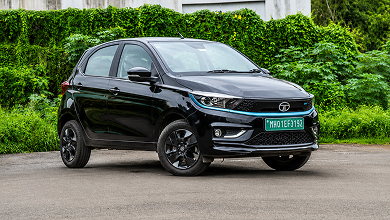
| Tata Tiago EV (24 kWh) | INR 8.64 Lakh | 285 km (MIDC) | 24 kWh | ~8.7 hrs (15A Plug) | ~INR 112 | Budget-conscious city & suburban commuters |
| Tata Punch EV (30 kWh) | INR 9.79 Lakh | 355 km (C75) | 30 kWh | ~9.4 hrs (15A) / 3.3 kW | ~INR 120 | Rough roads, high ground clearance & city drive |
| MG Windsor EV (38 kWh) | INR 14.00 Lakh | 332 km (MIDC) | 38 kWh | ~6.5 hrs (7.4 kW AC) | ~INR 128 | Maximum rear-seat lounge comfort & space |
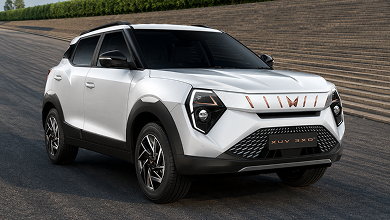
| Tata Nexon EV (45 kWh) | INR 14.14 Lakh | 489 km (C75) | 45 kWh | ~6.0 hrs (7.2 kW AC) | ~INR 136 | Highway speed, long range & mixed travel |
*Ex-showroom prices as of 2026. Running costs are estimated based on home tariff of INR 8/unit.
Ex-Showroom Price: INR 8.64 Lakh – INR 10.09 Lakh
Variant Recommended: XT / XZ+ Long Range (24 kWh)
Battery: 24 kWh LFP Battery Pack (IP67 rated)
Claimed Range: 285 km (MIDC) | Real-World Range: ~170–190 km (with AC)
Charging: 15A Socket (10–100% in ~8.7 hours); DC Fast Charging 10–80% in 57 mins
Performance: 55 kW peak power, 114 Nm torque
Comfort & Safety: 4-Star GNCAP safety rating, dual airbags, ABS with EBD, automatic climate control, 7-inch touchscreen
City & Highway Use: Highly nimble in dense urban traffic; cruises comfortably at 80–90 km/h on expressways
Running Cost for 100 km: Approx. INR 112 (consumes ~14 kWh per 100 km)
Advantages: Affordable purchase price, compact parking footprint, proven long-term reliability.
Limitations: Rear legroom is tight for tall adults; 15A slow home charging takes nearly 9 hours.
Ideal Buyer: Daily office commuters wanting a budget-friendly electric car for 100 km round-trips.
Ex-Showroom Price: INR 9.79 Lakh – INR 11.94 Lakh
Variant Recommended: Smart Plus / Empowered 30 kWh
Battery: 30 kWh LFP Pack (gen-2 acti.ev platform)
Claimed Range: 355 km (C75) | Real-World Range: ~220–240 km
Charging: 15A Socket (~9.4 hours); 7.2 kW AC Wallbox (~4.5 hours); 50 kW DC Fast Charging (10–80% in 56 mins)
Performance: 90 kW peak motor power, 190 Nm torque, 0–100 km/h in 9.5 secs
Comfort & Safety: 5-Star Bharat NCAP rating, 6 airbags standard, ESC, 190 mm ground clearance, 366L boot space
City & Highway Use: High seating position offers great visibility; high ground clearance tackles flooded roads easily
Running Cost for 100 km: Approx. INR 120 (consumes ~15 kWh per 100 km)
Advantages: Outstanding ride comfort over potholes, 5-star safety rating, multi-mode regenerative braking paddle shifters.
Limitations: Touch-panel climate controls require taking eyes off the road.
Ideal Buyer: Commuters driving on broken suburban roads, waterlogged patches, or rough highway segments.
Ex-Showroom Price: INR 14.00 Lakh – INR 15.53 Lakh (Battery-as-a-Service pricing options available lower)
Variant Recommended: Excite / Exclusive 38 kWh
Battery: 38 kWh LFP Prismatic Cells
Claimed Range: 332 km (MIDC) | Real-World Range: ~240–250 km
Charging: 7.4 kW AC Charger (~6.5 hours); 50 kW DC Fast Charging (0–80% in 55 mins)
Performance: 100 kW peak power, 200 Nm torque
Comfort & Safety: 135-degree reclining Aero Lounge rear seats, 15.6-inch touchscreen, 6 airbags, 360-degree camera, 579L boot
City & Highway Use: Ultra-smooth suspension absorbs road undulations; spacious cabin reduces commute fatigue
Running Cost for 100 km: Approx. INR 128 (consumes ~16 kWh per 100 km)
Advantages: Class-leading backseat luxury, massive boot, whisper-quiet cabin insulation.
Limitations: Large exterior footprint requires wider parking spots; glass roof on top variant can let in cabin heat.
Ideal Buyer: Executives and commuters who want chauffeur-driven lounge comfort during long daily commutes.
Electric motorcycles offer upright riding ergonomics, large 17-inch wheels for handling rough roads, and high-speed stability over long distances.
| Electric Bike | Ex-Showroom Price* | Claimed Range* | Battery Capacity | Charging Time | Best For |
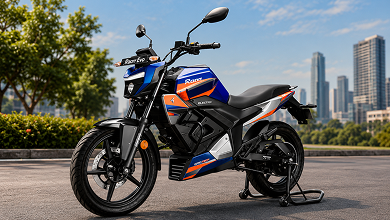
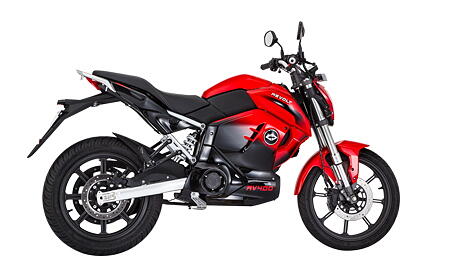
| Revolt RV400 | INR 1.40 Lakh | 150 km (Eco) | 3.24 kWh | ~4.5 hours | Swappable battery & daily office riding |
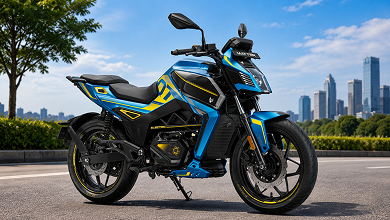
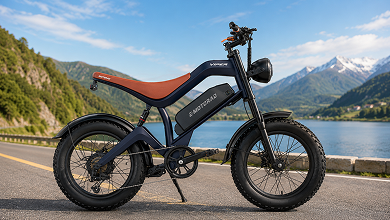
| Matter Aera 5000 | INR 1.83 Lakh | 125 km | 5.0 kWh | ~5.0 hours | Geared performance & liquid-cooled thermal stability |
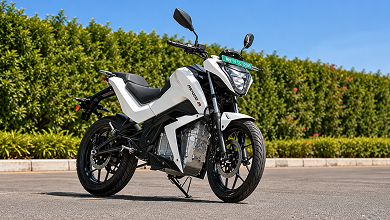
| Tork Kratos R | INR 1.68 Lakh | 180 km (IDC) | 4.0 kWh | ~4.0 hours | High-speed highway commuting |
*Ex-showroom prices as of 2026.
Ex-Showroom Price: INR 1.40 Lakh
Battery: 3.24 kWh Lithium-ion (Removable)
Claimed Range: 150 km (Eco Mode), 100 km (Normal), 80 km (Sports)
Real-World Range: ~90–100 km in Normal Mode (Requires smooth throttle control for 100 km daily)
Charging: 0–100% in ~4.5 hours via 15A socket
Performance: 4.1 kW mid-drive motor, top speed 85 km/h
Riding Comfort: Upright seating, 17-inch alloy wheels, USD front forks, rear monoshock
Running Cost for 100 km: Approx. INR 28 (consumes ~3.5 kWh per 100 km)
Advantages: Removable battery pack allows apartment charging; lightweight frame; low maintenance costs.
Limitations: Range drops to 75–80 km if ridden continuously in Sports mode at 85 km/h.
Ideal Buyer: Solo motorcycle enthusiasts who can top up the removable battery at the office or home.
Ex-Showroom Price: INR 1.83 Lakh
Battery: 5.0 kWh (Liquid-Cooled Battery & Powertrain)
Claimed Range: 125 km | Real-World Range: ~100–105 km
Charging: 0–100% in ~5.0 hours (Onboard charger plugs into any 5A/15A socket)
Performance: 10 kW peak power, 4-speed manual sequential gearbox, 0–60 km/h in 6 secs
Riding Comfort: Liquid cooling prevents thermal throttling during long summer rides; progressive disc brakes with ABS
Running Cost for 100 km: Approx. INR 32 (consumes ~4.0 kWh per 100 km)
Advantages: 4-speed manual gearbox offers engaging ride dynamics; liquid cooling handles long highway runs reliably.
Limitations: Higher initial purchase price; heavier kerb weight.
Ideal Buyer: Highway riders wanting motorcycle-style gear shifting and superior thermal reliability over 100 km trips.
While electric scooters are built primarily for city use, long-range models featuring 3.5 kWh to 5 kWh batteries can handle a 100 km daily commute when ridden efficiently.
| Electric Scooter | Ex-Showroom Price* | Claimed Range* | Battery Capacity | Charging Time | Best For |
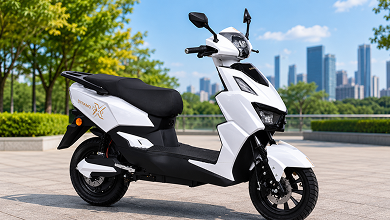
| Ather 450X (3.7 kWh) | INR 1.55 Lakh | 150 km (IDC) | 3.7 kWh | ~5.75 hours | High-speed agility & tech features |
| TVS iQube ST (5.1 kWh) | INR 1.85 Lakh | 150 km (Real-World) | 5.1 kWh | ~4.25 hours (950W) | Ultimate range, plush ride & comfort |
| Ather Rizta Z (3.7 kWh) | INR 1.45 Lakh | 159 km (IDC) | 3.7 kWh | ~5.75 hours | Maximum storage, long seat & family utility |
*Ex-showroom prices as of 2026.
Ex-Showroom Price: INR 1.85 Lakh
Battery: 5.1 kWh Lithium-ion
Claimed Range: 150 km real-world range
Real-World Range: ~135–145 km in Eco Mode (Comfortably covers 100 km with 35+ km buffer)
Charging: 0–80% in 4 hours 15 mins via 950W fast home charger
Performance: 4.4 kW peak hub motor, top speed 82 km/h
Storage & Comfort: 32-litre under-seat boot, ultra-wide plush dual seat, 7-inch TFT screen with Alexa integration
Running Cost for 100 km: Approx. INR 30 (consumes ~3.8 kWh per 100 km)
Advantages: Exceptional real-world range, extremely comfortable suspension, dependable build quality.
Limitations: Higher price tag for a scooter; hub motor lacks mid-drive punch.
Ideal Buyer: Scooter loyalists needing true 130+ km real-world range without mid-day top-ups.
Comparing how these three vehicle formats manage a 100 km daily journey:
| Factor | Electric Scooter | Electric Bike | Electric Car |
| Purchase Cost | Lowest (INR 1.45L – INR 1.85L) | Moderate (INR 1.40L – INR 1.85L) | Higher (INR 8.64L – INR 15.53L) |
| Running Cost / 100 km | INR 25 – INR 32 | INR 28 – INR 35 | INR 110 – INR 140 |
| Weather Protection | None (Exposed to rain & summer heat) | None (Exposed to rain & summer heat) | Complete (Air conditioned, fully sealed) |
| Passenger & Cargo | 2 Adults + Under-seat storage | 2 Adults + Minimal storage | 4–5 Adults + Large luggage boot |
| Physical Fatigue | High over 100 km daily | Moderate over 100 km daily | Low (Comfortable seating, quiet cabin) |
| 100-Km Range Margin | Tight (Requires 3.7 kWh+ battery) | Moderate (Requires 3.2 kWh+ battery) | Generous (Easily handles 180–250 km) |
| Highway Suitability | Low (Top speed 80–90 km/h) | Fair (Stable up to 85–100 km/h) | High (Cruises at 100+ km/h with ABS/ESP) |
| Home Charging | Standard 5A/15A Socket | Standard 15A / Removable Battery | Standard 15A / 3.3 kW / 7.2 kW AC Wallbox |
Calculating the exact energy cost for a 100 km daily commute relies on this basic formula:
Electricity Cost = Energy Consumed (kWh) × Electricity Tariff (INR per kWh)
Electricity Tariff: Average domestic slab rate of INR 8.00 per kWh (unit).
Grid Efficiency: Includes ~10% conversion and charging thermal losses.
Monthly Commute: 26 working days × 100 km = 2,600 km/month.
Annual Commute: 2,600 km × 12 months = 31,200 km/year.
Electric Scooter (5.1 kWh battery, consumes ~3.8 kWh per 100 km): Daily Cost (100 km): INR 30.40 | Cost per km: INR 0.30/km | Monthly Cost (2,600 km): INR 790 | Annual Cost (31,200 km): INR 9,484
Electric Motorcycle (3.24 kWh battery, consumes ~3.5 kWh per 100 km): Daily Cost (100 km): INR 28.00 | Cost per km: INR 0.28/km | Monthly Cost (2,600 km): INR 728 | Annual Cost (31,200 km): INR 8,736
Electric Car (30 kWh battery, consumes ~15 kWh per 100 km): Daily Cost (100 km): INR 120.00 | Cost per km: INR 1.20/km | Monthly Cost (2,600 km): INR 3,120 | Annual Cost (31,200 km): INR 37,440
Energy metrics help you monitor consumption and plan home electrical capacity:
Kilowatt-hour (kWh): Represents total energy capacity or consumption (1 kWh = 1 Unit on your electricity meter).
Kilowatt (kW): Represents motor power or charging speed.
Electric Scooter: Draws ~3.5 to 4.2 kWh (units) from the wall socket per 100 km.
Electric Motorcycle: Draws ~3.5 to 4.5 kWh (units) from the wall socket per 100 km.
Electric Car: Draws ~14 to 17 kWh (units) from the wall socket per 100 km.
When traveling 100 km every single day, charging frequency depends on battery capacity:
Electric Scooters (3.7 kWh – 5.1 kWh): Must be charged every single night.
Electric Motorcycles (3.2 kWh – 5.0 kWh): Must be charged every single night (or topped up at work).
Compact Electric Cars (24 kWh – 30 kWh): Charge every night (arriving home with 35%–40% reserve).
Long-Range Electric Cars (38 kWh – 45 kWh): Charge every 2nd night (comfortably covers 2 days of 100 km commuting on a single charge).
Home charging is the most convenient and cost-effective way to power a 100 km daily commute. Plugging in overnight ensures your vehicle is fully charged every morning.
Dedicated Parking Space: An assigned parking bay in your independent home or apartment building.
Grounded 15A Socket: A heavy-duty, weather-protected 15A industrial socket handles 3.3 kW slow AC charging easily overnight.
7.2 kW AC Wallbox (for Cars): Recharges a 30 kWh–45 kWh battery pack fully in just 4.5 to 6 hours.
Proper Electrical Earthing: Ensures safe charging and protects sensitive onboard battery management electronics.
Managing a 100 km daily commute without home charging requires alternative options:
Workplace Charging: Connect your vehicle to an approved 15A socket in your office parking lot during your 8-hour workday.
Removable Battery Two-Wheelers: Carry the battery pack indoors to charge at your desk or apartment.
Public Fast Chargers: Use commercial CCS2 DC fast chargers twice a week for 40 minutes while eating dinner or running errands. Note that public fast charging rates (INR 18–INR 24/kWh) increase running costs to roughly INR 2.80–INR 3.50/km for cars.
If your daily route is 100 km each way (200 km total round-trip), vehicle requirements change significantly:
Electric Two-Wheelers Are Unsuitable: Very few two-wheelers can reliably cover 200 km daily without multiple mid-day charging stops, causing severe fatigue and time loss.
Choose a 38 kWh+ Electric Car: Vehicles like the MG Windsor EV (38 kWh) or Tata Nexon EV (45 kWh) offer 240 km to 300 km of real-world highway range, covering a 200 km round-trip on a single charge.
Mandatory Workplace or Mid-Day Charging: If driving a 24 kWh to 30 kWh EV (e.g., Tiago EV or Punch EV), you must plug into a 15A socket at work for 6 hours or stop at a DC fast charger during lunch.
Below is a cost comparison between an electric car, a petrol hatchback, an electric scooter, and a petrol scooter traveling 100 km daily (2,600 km/month):
| Vehicle Type | Energy/Fuel Efficiency | Energy/Fuel Price | Cost per 100 km | Monthly Cost (2,600 km) | Annual Fuel/Energy Cost |
| Electric Scooter | 3.8 kWh / 100 km | INR 8.00 / kWh | INR 30 | INR 790 | INR 9,484 |
| Petrol Scooter | 45 km / Litre | INR 100 / Litre | INR 222 | INR 5,772 | INR 69,264 |
| Electric Car | 15 kWh / 100 km | INR 8.00 / kWh | INR 120 | INR 3,120 | INR 37,440 |
| Petrol City Car | 15 km / Litre | INR 100 / Litre | INR 666 | INR 17,316 | INR 2,07,792 |
| Diesel Compact SUV | 18 km / Litre | INR 90 / Litre | INR 500 | INR 13,000 | INR 1,56,000 |
Annual savings switching from a petrol car to an electric car over 31,200 km: ~INR 1,70,000 per year.
Be mindful of these operational factors during a 100 km daily commute:
High Highway Speeds: Cruising above 90–100 km/h increases aerodynamic drag, reducing battery efficiency by up to 25%.
Continuous AC Cooling: Running cabin air conditioning on high power during peak Indian summer afternoons drains extra battery power.
Under-Inflated Tyres: Low tyre pressure increases rolling resistance and reduces range by 5% to 8%.
Full Vehicle Payload: Carrying 4 to 5 adults plus luggage increases overall weight and energy draw.
Steep Mountain Routes: Driving uphill consumes significantly more power during ascents.
| Commuter Profile | Recommended EV Category | Primary Selection Factors | Top Vehicle Examples |
| Solo City/Suburban Commuter | Premium Electric Scooter | High agility, low price, under-seat storage | TVS iQube ST (5.1 kWh), Ather 450X |
| Long-Distance Bike Rider | Electric Motorcycle | Ergonomic seating, large wheels, liquid cooling | Matter Aera 5000, Tork Kratos R |
| All-Weather Family Commuter | Compact Electric SUV | Climate control, high safety, 200+ km range | Tata Punch EV (30 kWh), Tata Tiago EV |
| Highway & Executive Commuter | Lounge-Style Electric MPV/SUV | Rear-seat luxury, 250+ km range, silent cabin | MG Windsor EV (38 kWh), Tata Nexon EV |
| Apartment Resident (No Charger) | Long-Range Car or Swappable Bike | Weekly DC fast charging or indoor battery charging | Revolt RV400, MG Windsor EV |
| 200-Km Daily Round-Tripper | Long-Range EV (45 kWh+) | High battery capacity, DC fast charging speed | Tata Nexon EV (45 kWh) |
Use this pre-purchase checklist before choosing an EV for a 100 km daily route:
[ ] Confirm Exact Distance: Is your commute 100 km total round-trip or 100 km each way?
[ ] Verify Real-World Highway Range: Check real-world owner reviews in your region rather than relying solely on brochure claims.
[ ] Inspect Home Electrical Setup: Ensure a grounded 15A socket or AC wallbox is installed near your parking spot.
[ ] Check Sanctioned Load: Confirm your home electrical connection handles the additional 3.3 kW to 7.2 kW charging draw.
[ ] Test Drive on Highways: Test the vehicle at 80–90 km/h with full AC and passengers.
[ ] Verify Battery Warranty: Confirm warranty terms (e.g., 8 years/1,60,000 km for cars; 3 years for two-wheelers).
[ ] Locate Local Service Centers: Ensure an authorized service outlet operates near your route.
[ ] Calculate Total Cost Savings: Compare your monthly fuel expenses against prospective EV loan EMIs.



Manage reminders, payment status, and renewal dates from one simple app.


Trusted by policyholders to track every renewal.