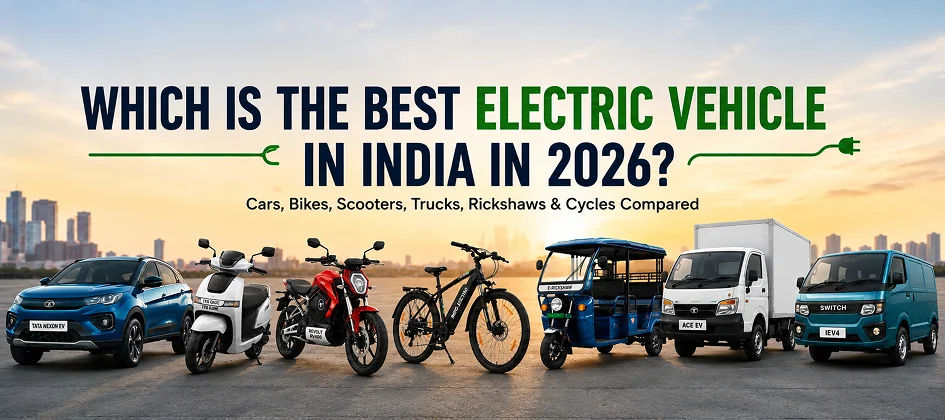
The Indian electric vehicle market has reached a major turning point in 2026. From budget-friendly electric cycles and high-tech electric scooters to long-range electric cars and heavy-duty electric trucks, electric mobility is no longer just an eco-conscious experiment; it is a smart, cost-effective daily reality.
If you are asking, “Which is the best electric vehicle in India in 2026?”, the short answer is there is no single EV that is best for everyone.
The ideal electric vehicle depends entirely on your specific needs:
Your total budget (upfront purchase price vs. long-term savings)
Daily driving distance (city commutes vs. highway travel)
Passenger and cargo requirements (solo riding vs. family trips vs. commercial payload)
Charging availability (home socket vs. public fast charger access)
Primary vehicle purpose (personal commuting, fitness, logistics, or passenger transport)
Operating environment (urban city traffic vs. rural roads and farming)
This comprehensive EV buying guide compares every major vehicle category in India for 2026 to help you identify the best electric vehicle for your budget, business, and lifestyle.
To help you get started, here is a quick breakdown comparing the primary EV categories available in India:
| EV Category | Best For | Main Advantage | Ideal User Profile |
| Electric Car | Family mobility & intercity trips | All-weather comfort, high safety, large boot space | Families, highway drivers & corporate executives |
| Electric Scooter | Daily city commuting & family errands | Ease of riding, under-seat storage, low running cost | Office commuters, students & urban families |
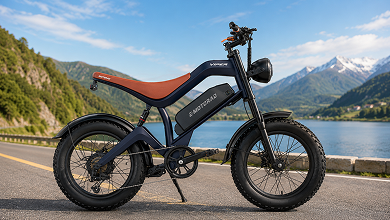
| Electric Bike | Performance riding & longer two-wheeler trips | Riding dynamics, fast acceleration, high top speed | Enthusiasts, young professionals & highway riders |
| Electric Cycle | Micro-commuting & fitness | Ultra-low running cost, zero paperwork, health benefits | Students, local errand runners & short commuters |
| Electric Rickshaw | Short-distance passenger transport | High daily earning potential, low maintenance | Commercial drivers, fleet owners & first/last-mile operators |
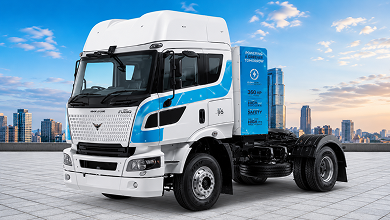
| Electric Truck | Logistics, cargo & intra-city transport | High payload capacity, massive fuel savings for fleets | Logistics operators, FMCG distributors & fleet managers |
| Electric Van | E-commerce & last-mile deliveries | Enclosed cargo protection, low cost per parcel delivery | Couriers, grocery delivery apps & small business owners |
Who Should Choose an Electric Car?
An electric car is ideal if you prioritise family comfort, all-weather cabin protection, high safety standards, and low cost per kilometre over long distances.
Price Range: Entry-level hatchbacks start around INR 7.00 lakh, mid-size SUVs range between INR 10.00 lakh and INR 22.00 lakh, and premium crossover EVs cost INR 25.00 lakh to INR 50.00+ lakh (ex-showroom).
Real-World Range: Modern electric cars deliver between 200 km and 500+ km on a single charge depending on battery size and driving conditions.
Charging: Home AC charging takes 6 to 10 hours overnight, while DC fast chargers can replenish 10% to 80% in 30 to 60 minutes along major Indian highways.
Running Cost: While petrol and diesel cars cost between INR 6.00 and INR 9.00 per km, an electric car averages INR 1.00 to INR 1.50 per km using home charging.
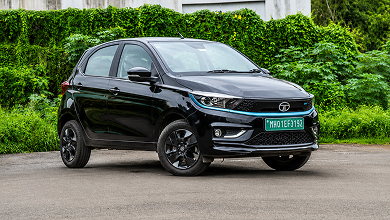
Ex-Showroom Price: ~INR 6.99 Lakh – INR 9.99 Lakh
Battery Capacity: 19.2 kWh / 24 kWh options
Claimed vs Real-World Range: 226 km – 285 km claimed; 160 km – 210 km real-world
Best Use Case: Urban commuting & short city travel
Main Advantage: Most affordable proven electric hatchback in India
Main Limitation: Compact rear seat and limited high-speed highway range
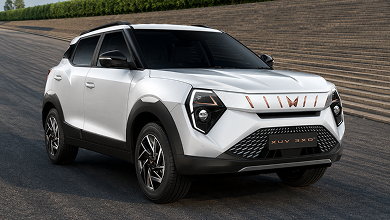
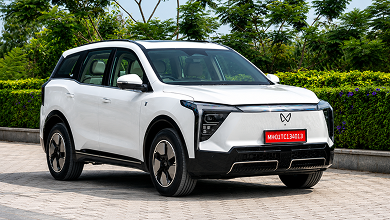
Ex-Showroom Price: ~INR 9.69 Lakh – INR 12.79 Lakh
Battery Capacity: 30 kWh / 40 kWh options
Claimed vs Real-World Range: 275 km – 350 km claimed; 200 km – 270 km real-world
Best Use Case: Compact family SUV for mixed city & regional driving
Main Advantage: Dedicated active platform, 5-star safety rating, high ground clearance
Main Limitation: Moderate boot space for long multi-day road trips
Ex-Showroom Price: ~INR 19.45 Lakh – INR 26.95 Lakh
Battery Capacity: 59 kWh / 79 kWh options
Claimed vs Real-World Range: 548 km – 683 km claimed; 420 km – 520 km real-world
Best Use Case: Long-distance highway travel & tech-focused buyers
Main Advantage: Ultra-long battery range, futuristic design, high performance
Main Limitation: Higher entry price point compared to sub-compact EVs
Ex-Showroom Price: ~INR 45.95 Lakh
Battery Capacity: 72.6 kWh
Claimed vs Real-World Range: 631 km claimed; 450 km – 500 km real-world
Best Use Case: Executive long-range luxury travel
Main Advantage: 800V ultra-fast charging architecture (10-80% in ~18 minutes), spacious interior
Main Limitation: Premium pricing category
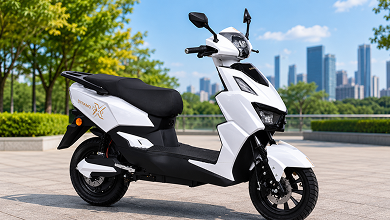
Electric scooters dominate India's two-wheeler EV market due to their practical under-seat storage, automatic drive, and low operating costs.
| Model | Ex-Showroom Price | Battery Capacity | Real-World Range |
| TVS iQube | ~INR 1.15L - 1.35L | 2.2 kWh - 5.1 kWh | 75 km - 140 km |
| Ather Rizta | ~INR 1.21L - 1.45L | 2.9 kWh - 3.7 kWh | 100 km - 125 km |
| Bajaj Chetak | ~INR 1.05L - 1.25L | 2.5 kWh - 3.5 kWh | 90 km - 120 km |
| Ola S1 X / Pro | ~INR 0.85L - 1.30L | 2.0 kWh - 4.0 kWh | 85 km - 150 km |
(Prices vary by state subsidies, variant, and dealer offers).
TVS iQube: The best overall family electric scooter. It offers a familiar, traditional scooter design, smooth power delivery, comfortable seating for two, and high build quality backed by an extensive dealer network.
Ather Rizta: Purpose-built for practical family commuting. Features the largest seat in the category, a wide floorboard, massive 34L+ under-seat storage, and advanced SkidControl safety software.
Bajaj Chetak: Premium metal-body construction designed for durability. Ideal for city professionals who want a refined, elegant scooter with solid real-world reliability.
Ola S1 Series: Offers top-tier tech features (touchscreen navigation, party mode, cruise control) and high top speeds. Best suited for tech-savvy young commuters looking for high performance.
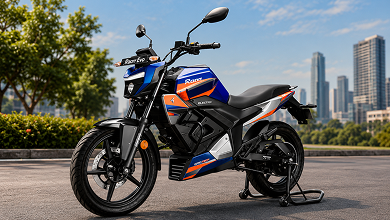
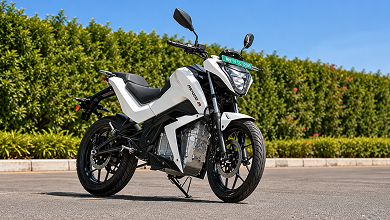
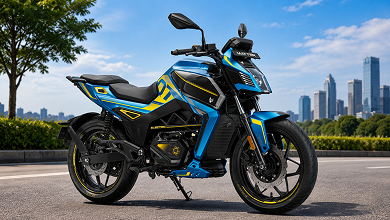
For commuters and motorcycle enthusiasts who prefer a traditional riding posture, tank grip, and higher performance, an electric bike provides a sportier alternative to scooters.
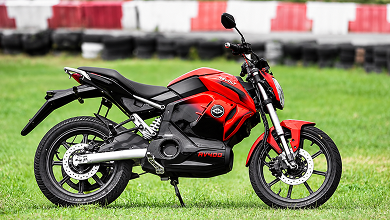
Revolt RV400 / RV1: Best budget commuter electric motorcycle. Offers a removable battery pack, a 120–150 km range, an upright riding position, and accessible pricing starting under INR 1.00 lakh to INR 1.40 lakh.
Oben Rorr Evo: Best balance of city commuting and performance. Features an LFP battery chemistry suited for hot Indian climates, quick acceleration (0-40 km/h in 3 seconds), and a real-world range of ~120 km.
Ola Roadster Series: High-performance commuter bike delivering strong top speeds (up to 126 km/h) and large battery options for riders covering longer intercity distances.
Ultraviolette F77 Mach 2: Best high-performance electric motorcycle. Offers a 10.3 kWh battery pack, up to 323 km claimed range, 0-100 km/h in under 8 seconds, and advanced safety features like traction control and ABS—priced from ~INR 3.09 lakh.
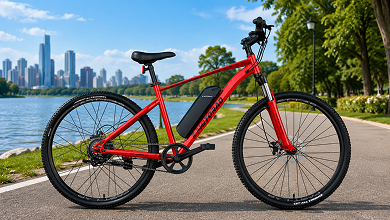
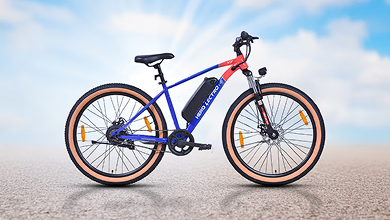
An electric cycle (e-cycle) is the most affordable motorised transport option in India. Combining pedal power with an electric motor and lithium-ion battery, it provides an eco-friendly option for short trips.
Why Choose an Electric Cycle?
Zero Licence or Registration: Vehicles restricted to a 25 km/h top speed and 250 W motor power do not require an RTO licence, registration, or road tax.
Ultra-Low Running Cost: Operating expenses average just INR 0.07 to INR 0.10 per km.
Dual Purpose: Use full throttle for effortless travel, or pedal-assist modes for daily exercise.
Top Models in 2026:
Hero Lectro H7 Pro / C Series: Reliable city e-cycles with integrated battery frames, 7-speed Shimano gears, and 25–30 km range per charge. Priced between INR 28,000 and INR 40,000.
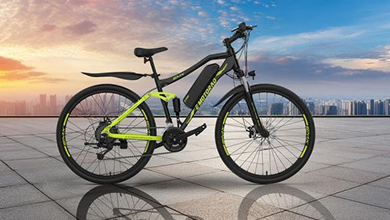
EMotorad EMX / X3: Heavy-duty electric cycles with front suspension, dual disc brakes, and removable batteries, offering up to a 45 km pedal-assist range. Priced between INR 25,000 and INR 50,000.
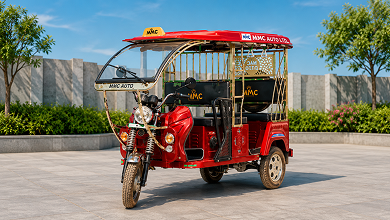
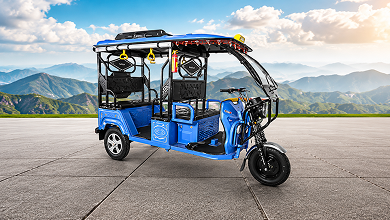
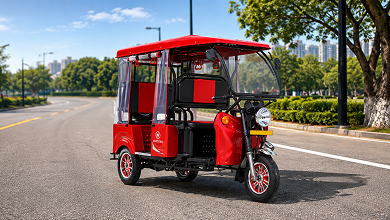
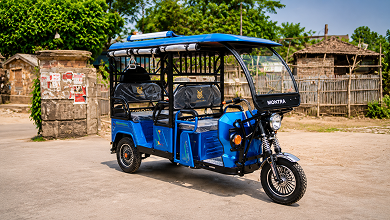
Electric rickshaws (E-Rickshaws and E-Autos) serve as a primary mode of first- and last-mile public transport across Indian cities, tier-2/3 towns, and rural hubs.
Key Commercial Advantages:
High Profit Margin: Operating costs are around INR 0.30–INR 0.50 per km, compared to CNG/LPG autos costing INR 2.00–INR 2.50 per km.
Low Maintenance: Fewer moving parts mean higher uptime and lower repair bills.
Leading Models in 2026:
Mahindra Treo / Treo Yaari: High-efficiency L5M-category electric auto with a lithium-ion battery, IP67 motor protection, 120+ km real-world range, and seating for 4 passengers plus a driver. Priced around INR 2.00 lakh – INR 3.00 lakh.
Piaggio Ape E-City: A heavy-duty electric passenger auto featuring swappable or fixed battery options, strong hill-climb ability, and a comfortable passenger cabin.
YC Electric / Mayuri E-Rickshaws: Popular budget E-three-wheeler rickshaws used for local station connections in North and East India, priced from INR 1.20 lakh to INR 1.80 lakh.
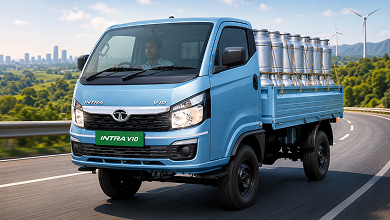
Commercial fleet operators are rapidly transitioning to electric trucks due to strict urban emission guidelines and lower total cost of ownership (TCO).
| Model | Price (Ex-Showroom) | Payload Capacity | Real Range |
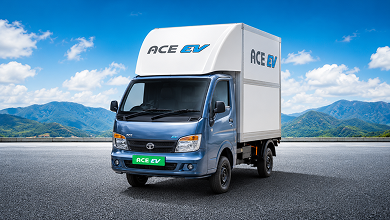
| Tata Ace EV / Ace EV 1000 | ~INR 6.50L - 11.40L | 600 kg - 1000 kg | 100 km - 120 km |
| Mahindra ZEO | ~INR 7.88L - 8.37L | 750 kg - 1000 kg | 100 km - 125 km |
| Euler Motors Storm EV T1500 | ~INR 9.00L | 1500 kg | 120 km - 140 km |
| Montra Electric Aviator | ~INR 16.00L - 16.39L | Heavy Intra-city | 150 km+ |
| Montra Electric Rhino 5538 EV | ~INR 1.15 Cr - 1.18 Cr | Heavy Tractor | Swappable/300km |
(Source: Market data 2026)
Tata Ace EV 1000: The most trusted 1-tonne mini-truck in India. Features Tata’s Evogen powertrain, liquid-cooled battery thermal management, and advanced telematics for fleet management.
Mahindra ZEO: Built specifically as a direct electric replacement for small diesel commercial vehicles (SCVs). Offers fast charging (100 km in 60 mins), strong low-end torque (114 Nm), and low operating expenses.
Euler Motors Storm EV T1500: Designed for high-payload last-mile and mid-mile cargo logistics. Offers an impressive 1,500 kg payload capacity and fast DC charging support.
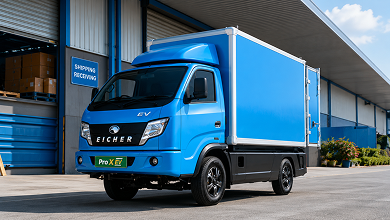
For e-commerce delivery networks, quick-commerce platforms (grocery apps), and FMCG logistics, enclosed electric vans and cargo vehicles provide weather-protected goods transport.
Switch Mobility IeV3 / IeV4: Designed for modular urban logistics. Built on a 300V architecture, offering payload options between 1.2 and 1.7 tonnes with an operational range of 120–150 km per charge.
Euler Turbo EV 1000: Popular choice for high-volume city courier delivery and grocery distribution fleets.
Cargo E-3 Wheelers (Mahindra Zor Grand / Omega Seiki Rage+): Compact 3-wheel cargo vehicles ideal for navigating narrow city lanes and high-density residential hubs, featuring covered delivery boxes and a payload capacity of up to 500–600 kg.
To help narrow down your search, here are top vehicle recommendations categorised by specific ownership needs:
Best EV for Daily City Commuting: Electric Scooter (e.g., TVS iQube, Ather Rizta) — Easy to ride in traffic, low running costs, and simple home charging.
Best EV for Families: Electric SUV / Car (e.g., Tata Punch EV, Tata Nexon EV) — Full air conditioning, 5-star crash safety, and comfortable seating for 5 passengers.
Best EV for Students: Electric Cycle / Entry Electric Scooter (e.g., Hero Lectro H7 Pro, Ola S1 X) — Minimal running costs, low maintenance, and no driving licence needed for low-speed cycles.
Best EV for Rural Areas: Rugged Electric Scooter / E-Auto (e.g., TVS iQube, Mahindra Treo) — Strong suspension, high ground clearance, and reliable build quality for unpaved roads.
Best EV for Long-Distance Travel: Long-Range Electric SUV (e.g., Mahindra BE 6, Hyundai IONIQ 5) — 400 km+ real-world range with ultra-fast DC charging support.
Best EV for Small Businesses & Retailers: Cargo E-3 Wheeler / Mini Truck (e.g., Mahindra Zor Grand, Tata Ace EV) — Low operating costs that maximise profit margins on daily deliveries.
Best EV for Delivery Businesses & E-Commerce: Electric Van / High-Payload Truck (e.g., Euler Storm EV T1500, Switch IeV3) — Weatherproof cargo area, large volume capacity, and integrated fleet tracking.
Best EV for Farmers: Electric Utility Cycle / Commercial 3-Wheeler — Excellent for transporting produce, seeds, and supplies across farmlands and rural markets.
Best EV for Fleet Owners: Tata Ace EV 1000 / Mahindra ZEO — Backed by nationwide service networks, predictable battery warranties, and robust telematics.
Best EV for Passenger Transport Business: Mahindra Treo / Piaggio Ape E-City — High daily revenue potential with lower operating expenses than diesel or CNG autos.
(Note: Prices mentioned are approximate ex-showroom figures in India as of 2026. Final on-road prices vary based on state taxes, insurance, registration fees, and dealer offers.
Electric Cycles: Hero Lectro H7 Pro / EMotorad series (INR 25,000 – INR 45,000).
Low-Speed / Entry Electric Scooters: Ola S1 X (2 kWh variant), Ampere Reo, or Revolt RV1 bike.
High-Speed Family Electric Scooters: TVS iQube, Ather Rizta, and Bajaj Chetak (INR 1.05 Lakh – INR 1.45 Lakh).
Performance Electric Bikes: Oben Rorr Evo, Revolt RV400 (INR 1.25 Lakh – INR 1.50 Lakh).
Passenger & Cargo E-3 Wheelers: Mahindra Treo, Piaggio Ape E-City, and Mahindra Zor Grand (INR 2.00 Lakh – INR 3.50 Lakh).
Micro Electric Cars: MG Comet EV (INR 7.80 lakh+ range).
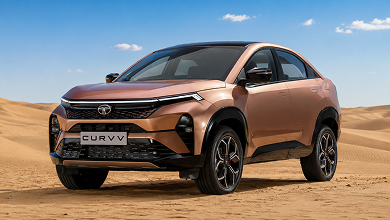
Mid-Size & Executive Electric Cars: Mahindra BE 6, Tata Curvv EV, Hyundai IONIQ 5, and BYD Atto 3 (INR 17.00 Lakh – INR 45.00+ Lakh).
Commercial Fleets: Montra Electric Rhino 5538 Heavy Truck.
When buying an electric vehicle, it is important to distinguish between upfront purchase price and daily running costs. While an EV may have a higher initial purchase price than an internal combustion engine (ICE) vehicle, its operational savings balance out the investment over time.
Lowest Overall Running Cost: The Electric Cycle is the undisputed winner at ~INR 0.08 per km.
Lowest Commercial Running Cost: The electric rickshaw delivers passenger transport at roughly 1/5th the cost of a CNG auto.
Lowest Personal Family Transport Cost: The electric scooter allows city commuting for ~INR 15 to INR 20 per 100 km, compared to ~INR 220 per 100 km on a petrol scooter.
Range anxiety remains a top concern for first-time EV buyers. Understanding the difference between manufacturer estimates and real-world performance is key.
Claimed Range (ARAI / MIDC Test Cycles): Measured under ideal laboratory conditions at moderate, steady speeds on flat chassis dynamometers.
Real-World Range: The actual distance you achieve on open roads. Factors like high-speed highway driving, heavy air-conditioning usage, steep inclines, under-inflated tyres, and aggressive acceleration can reduce claimed range by 20% to 35%.
Large Battery Pack Capacity: (e.g., 60 kWh to 80+ kWh in cars; 3.7 kWh to 5 kWh in two-wheelers).
Efficient Thermal Management: Liquid-cooled battery packs maintain optimal operating temperatures during hot Indian summers.
High DC Fast-Charging Speeds: The ability to accept 50 kW to 150+ kW DC fast charging allows drivers to add 200 km of range during a 20-minute coffee break.
Rural Indian operating conditions differ significantly from urban metros. Rural EV buyers must evaluate specific structural requirements:
Key Needs for Rural EVs:
High Ground Clearance: To clear unpaved roads, monsoon potholes, and high speed breakers.
Durable Mechanicals: Metal bodies or high-impact plastics that withstand rough daily use.
Universal 15A Charging: Ability to charge reliably from standard 15A household/farm sockets without requiring specialised wallbox chargers.
Robust Suspension: Dual rear shock absorbers for carrying heavy agricultural produce or multiple passengers.
Scooters: TVS iQube / Bajaj Chetak — Solid build quality, durable suspension, and comfortable double seats.
Cars/SUVs: Tata Punch.ev — High ground clearance (190 mm), robust underbody battery protection, and compact width for narrow village roads.
Commercial: Mahindra Treo / Tata Ace EV — Reliable haulers for local produce markets and regional passenger transport.
(Note: The figures below are representative estimates based on average Indian residential electricity rates of ~INR 8.00/unit and current petrol/diesel prices. Actual costs vary based on driving style, local electricity tariffs, and terrain.
| Vehicle Type | Approx. Energy Cost per KM | Annual Maintenance Estimate | Primary Ideal Use Case |
| Electric Cycle | INR 0.07 – INR 0.10 | INR 500 – INR 1,000 | Very short city commutes & fitness |
| Electric Scooter | INR 0.20 – INR 0.30 | INR 1,000 – INR 2,000 | Daily city commuting & family errands |
| Electric Bike | INR 0.25 – INR 0.35 | INR 1,500 – INR 3,000 | Sporty commuting & longer 2-wheeler trips |
| Electric Rickshaw | INR 0.35 – INR 0.50 | INR 3,000 – INR 6,000 | Last-mile passenger transport business |
| Electric Car | INR 1.00 – INR 1.50 | INR 3,000 – INR 7,000 | Family travel, intercity highway driving |
| Electric Truck | INR 1.50 – INR 2.50 | INR 8,000 – INR 15,000 | Intra-city cargo, logistics & FMCG fleet |
To choose the right electric vehicle for your needs, follow this step-by-step checklist:
1. Decide Your Total Budget: Factorial purchase price vs. long-term fuel savings.
Set a clear upper limit for your upfront purchase or loan EMI. Remember that higher upfront EV costs are offset by daily fuel savings.
2. Calculate Your Daily Kilometres: Be realistic about your routine usage.
Track your daily driving distance over a typical week. If you drive 30 km per day, a 100 km range EV only needs charging every 3 days.
3. Determine Passenger & Cargo Requirements: Match vehicle body to your lifestyle.
Decide whether you need a solo commuter (cycle/bike), a family hauler (scooter/car), or a business cargo carrier (rickshaw/truck).
4. Check Home & Work Charging Access: Confirm availability.
Ensure you have access to a grounded 5A or 15A electrical socket at your home parking spot or workplace before buying.
5. Compare Real-World Range (Not Just Claimed Range): Deduct from laboratory figures.
Always check real-world owner reviews to ensure the vehicle covers your daily route comfortably on a single charge.
6. Evaluatee Total Ownership & Running Costs: Calculate operational expenditure.
Multiply your monthly driving distance by the EV's per-km cost to see your exact monthly savings compared to petrol/diesel.
7. Verify Battery Warranty & Dealer Support: Protecting a long-term investment.
Choose brands offering at least 3 to 8 years of battery warranty backed by accessible local service centres.
8. Book an Extended Test Drive: Test real-world conditions.
Drive the vehicle on your actual daily route with full passenger weight to test comfort, suspension, and braking performance.
Relying Entirely on Laboratory Range Claims: Buying an EV expecting to get 100% of its ARAI-certified range on highways at 90 km/h.
Ignoring Home Charging Setup: Purchasing an electric car without checking if your apartment complex or home parking allows installing a dedicated AC wall box charger.
Choosing solely on the Lowest Price Tag: Buying unbranded low-speed imported EVs that lack long-term spare parts, software support, or reliable battery management systems (BMS).
Overlooking Payload Limits on Commercial EVs: Loading an electric mini-truck beyond its certified payload capacity, which drastically reduces range and strains the electric motor.
Not Checking Battery Warranty Terms: Failing to read the fine print regarding battery degradation coverage (e.g., guaranteed 70% capacity retention over 8 years).
Ignoring Service Centre Proximity: Buying from an EV startup that has no authorised physical service centre in your city or town.
When choosing the best electric vehicle in India in 2026, there is no one-size-fits-all answer. The optimal choice depends on matching your specific requirements with the right vehicle category:
Best for City Commuting: Electric Scooter (Top Pick: TVS iQube / Ather Rizta)
Best for Budget Short Commutes: Electric Cycle (Top Pick: Hero Lectro H7 Pro / EMotorad)
Best for Two-Wheeler Performance: Electric Bike (Top Pick: Oben Rorr Evo / Revolt RV400)
Best for Families: Electric Car / SUV (Top Pick: Tata Punch.ev / Mahindra BE 6)
Best for Passenger Business: Electric Rickshaw (Top Pick: Mahindra Treo)
Best for Cargo & Logistics: Electric Truck (Top Pick: Tata Ace EV 1000 / Euler Storm EV T1500)


Manage reminders, payment status, and renewal dates from one simple app.


Trusted by policyholders to track every renewal.