




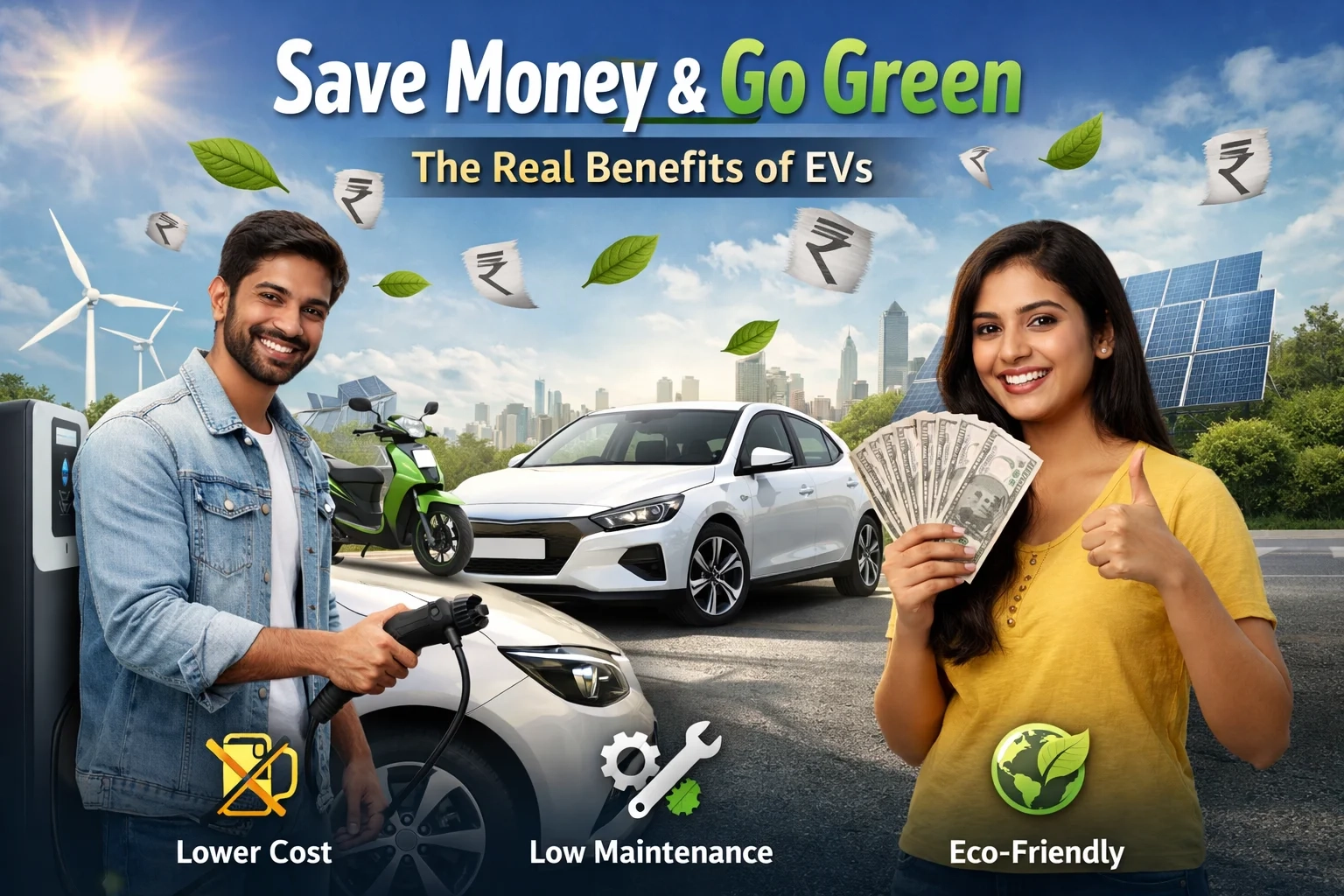
Somewhere between "EVs are the future" and "EVs are just a trend", most people lose the plot on what actually changes the day you switch. It's not abstract. It's the ₹100-a-litre pump you stop visiting, the oil change you never book again, and the quiet hum instead of engine noise on your morning commute.
India's numbers back this up in a way that's hard to argue with. Electric passenger vehicle sales jumped 75% in April 2026 alone compared to the year before, according to FADA data, and that's not happening because of marketing; it's happening because the running-cost math has genuinely flipped in the EV's favour.
This piece walks through the real benefits of electric vehicles, backed by current Indian data rather than vague sustainability talking points, so you can see exactly what you'd be gaining, not just what you'd be giving up.
The top benefits of electric vehicles include lower running costs (roughly INR 1-2 per km versus INR 5-9 for petrol), reduced maintenance, zero road tax in several states, quieter driving, instant torque, and significantly lower lifetime emissions. Over five years, Indian EV owners commonly save ₹3 lakh or more on fuel and maintenance compared to an equivalent petrol vehicle.
This is the benefit that shows up first, every single month. Home charging typically costs INR 1-1.5 per km in most Indian cities, against roughly INR 5.5-9 per km for a petrol car depending on mileage and current fuel prices. For a driver covering 40+ km daily, that gap alone represents the fastest visible return on switching.
Electric vehicles attract a flat 5% GST in India, significantly lower than the tax burden on petrol and diesel vehicles, which can run considerably higher depending on engine size and vehicle category.
Several major states, including Maharashtra, Delhi, Gujarat, Tamil Nadu, and Karnataka, continue to offer full road tax exemptions for electric vehicles in 2026. Since states typically charge 8-15% of a vehicle's value in road tax and registration fees, this waiver alone can save buyers a meaningful sum on day one.
With no engine oil, no spark plugs, and no exhaust system to service, EV owners commonly save INR 25,000-40,000 over five years just on routine servicing compared to a petrol vehicle.
Once you combine running costs, maintenance savings, and available tax incentives, many Indian EV owners report saving upward of INR 3 lakh over five years compared to owning an equivalent petrol vehicle, a figure that grows the more you drive.
Fully electric vehicles produce no exhaust emissions at the point of use, directly reducing the pollution load in the specific streets and neighbourhoods where they're driven.
Even accounting for battery manufacturing and grid-based electricity generation, petrol and diesel vehicles emit roughly three times more carbon dioxide than the average EV across a typical ownership period, according to NITI Aayog's e-AMRIT platform.
Electric vehicles convert around 60% of the electrical energy drawn from the grid into actual motion at the wheels. Petrol and diesel engines manage only 17-21% efficiency, wasting roughly 80% of the energy in their fuel as heat.
As India's electricity grid shifts toward renewables, non-fossil fuel capacity is targeted to reach 40% of installed capacity by 2030. Every EV already on the road gets cleaner automatically, without the owner changing a single habit.
Air pollution from vehicles is linked to an estimated 150,000 deaths annually in India, alongside widespread respiratory and cardiovascular health impacts. Every petrol or diesel vehicle replaced by an EV reduces this toxic load on shared urban air.
EVs run nearly silently at low and medium speeds. In India's dense urban traffic, where noise pollution is a documented contributor to stress, sleep disruption, and cardiovascular strain, this is a genuine, underrated public health benefit.
India imports a substantial share of its crude oil requirements. Shifting transport demand toward domestically generated electricity reduces exposure to global fuel price volatility and strengthens energy security at a national level.
Electric motors deliver full torque instantly, without the delay of a combustion engine building revs. This translates to noticeably quicker, smoother acceleration, particularly useful in stop-start city traffic.
Most EVs use a single-speed transmission with no manual gear shifting required, making city driving less physically tiring, especially in heavy traffic.
Charging an EV at home is closer to charging a phone than visiting a petrol station. Plug in overnight, wake up to a full charge, and skip the detour to a fuel pump entirely for most daily driving needs.
A Bengaluru-based daily commuter driving roughly 45 km a day switched from a petrol sedan to an electric car and reported their monthly charging cost running to a fraction of their previous fuel spend, largely because their commute distance made home charging highly cost-effective on a daily basis.
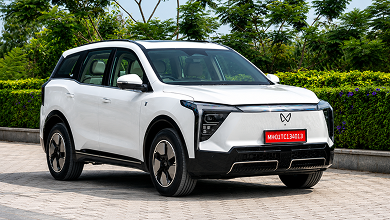
VinFast's India customers have accessed additional charging cost savings through the company's free charging programme at V-GREEN stations, illustrating how manufacturer-backed charging infrastructure can compound the standard running-cost benefits of EV ownership.
| Factor | Electric Vehicle | Petrol Vehicle |
|---|---|---|
| Running Cost per km | INR 1-2 (home charging) | INR 5.5-9 |
| GST Rate | 5% flat | Higher, varies by engine size |
| Road Tax (select states) | Often fully waived | 8-15% of vehicle value |
| Annual Maintenance | Lower (fewer moving parts) | Higher (oil, spark plugs, exhaust) |
| Energy Efficiency | ~60% | 17-21% |
| Tailpipe Emissions | Zero | Present |
| Noise Level | Near-silent at low/medium speed | Audible engine noise |
Figures reflect general Indian market conditions as of 2026 and vary by vehicle, state, and driving pattern. Confirm specific figures for your shortlisted model and state before purchase.
The benefits of electric vehicles go well beyond the environmental pitch most people expect. Yes, EVs cut emissions and reduce the pollution load on Indian cities already struggling with air quality, but the case for switching holds up just as strongly on pure economics. Lower GST, road tax waivers in several states, dramatically reduced running costs, and lower maintenance bills combine to save many Indian owners upward of ₹3 lakh over five years. Add in the quieter, smoother driving experience and the convenience of charging at home overnight, and it's clear why EV adoption in India isn't slowing down; the numbers, not just the sentiment, are doing the convincing.
1. What are the main benefits of electric vehicles?
The main benefits of electric vehicles include lower running costs, reduced maintenance, tax and road tax savings, zero tailpipe emissions, higher energy efficiency, quieter operation, and instant torque for smoother acceleration.
2. How much money can I save by switching to an electric vehicle in India?
Many Indian EV owners save upward of INR 3 lakh over five years on combined fuel, maintenance, and tax costs compared to an equivalent petrol vehicle, though actual savings depend on daily driving distance and state-specific incentives.
3. Are electric vehicles actually better for the environment than petrol vehicles?
Yes. Even accounting for battery manufacturing and electricity generation, petrol and diesel vehicles emit roughly three times more carbon dioxide than the average electric vehicle over a typical ownership period.
4. Do electric vehicles get tax benefits in India?
Yes, electric vehicles attract a flat 5% GST, significantly lower than petrol and diesel vehicles, and several states, including Maharashtra, Delhi, Gujarat, Tamil Nadu, and Karnataka, offer full road tax exemptions on EVs.
5. How much cheaper is it to run an electric vehicle compared to a petrol car?
Home charging typically costs INR 1-1.5 per km, compared to roughly INR 5.5-9 per km for a petrol car, making EVs significantly cheaper to run, especially for drivers covering longer daily distances.
6. Do electric vehicles require less maintenance than petrol cars?
Yes, EVs have far fewer moving parts than petrol vehicles, eliminating the need for oil changes, spark plug replacement, and exhaust system servicing, commonly saving owners INR 25,000-40,000 over five years.
7. What health benefits come from electric vehicle adoption?
Air pollution from vehicles is linked to an estimated 150,000 deaths annually in India. Wider EV adoption reduces this toxic emissions load, alongside cutting traffic noise pollution linked to stress and cardiovascular health issues.
8. Are electric vehicles more energy efficient than petrol vehicles?
Yes, electric vehicles convert around 60% of grid electricity into actual motion, compared to just 17-21% efficiency for petrol and diesel engines, which waste most of their energy as heat.
9. Will electric vehicles get even more environmentally friendly over time?
Yes, as India's electricity grid shifts further toward renewable energy sources, targeting 40% non-fossil fuel installed capacity by 2030, the effective carbon footprint of every EV already on the road will continue to fall automatically.
10. Is charging an electric vehicle at home convenient?
Yes, most EV owners charge overnight at home using a standard setup, similar to charging a phone, avoiding the need for regular petrol station visits for typical daily driving distances.


Manage reminders, payment status, and renewal dates from one simple app.


Trusted by policyholders to track every renewal.