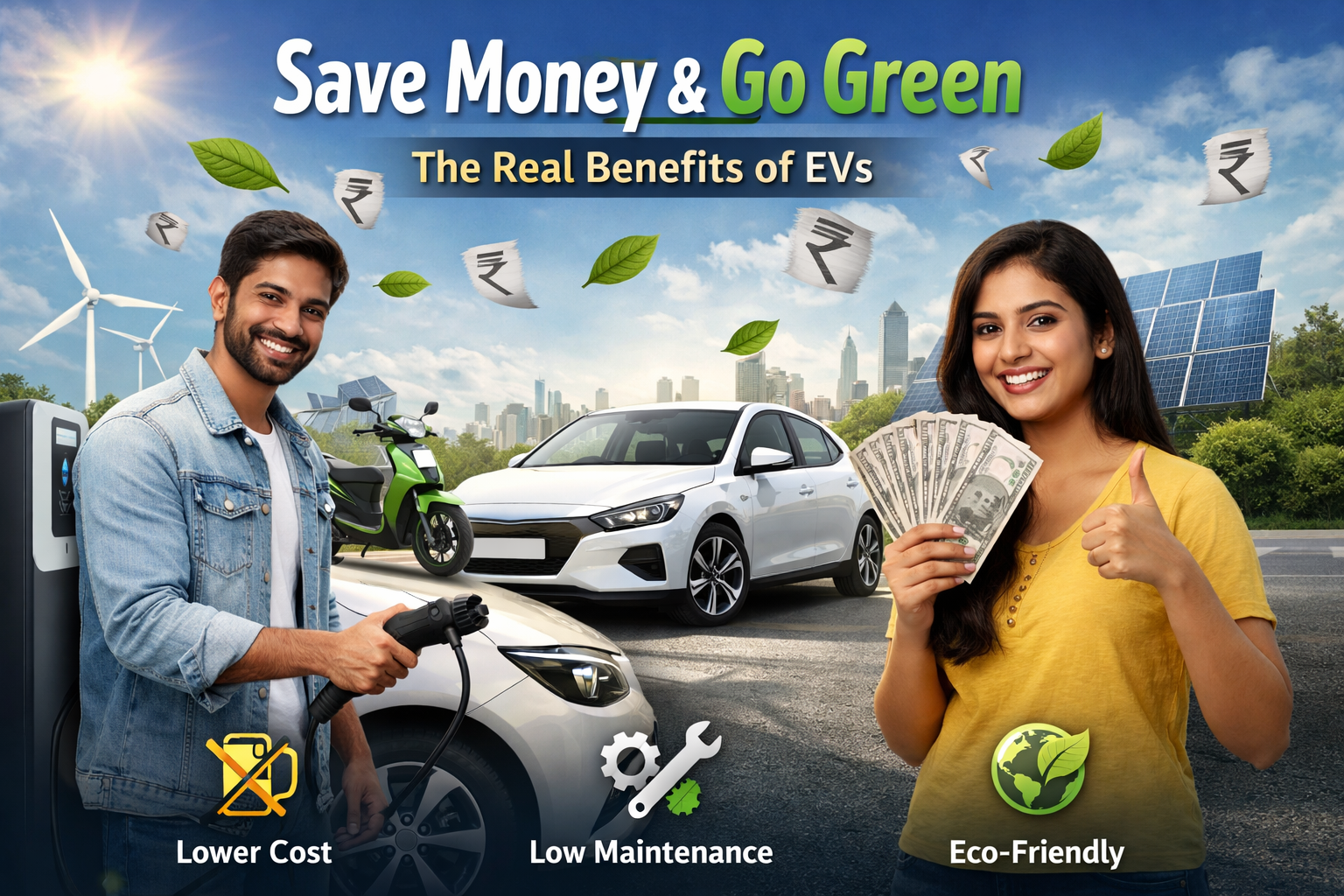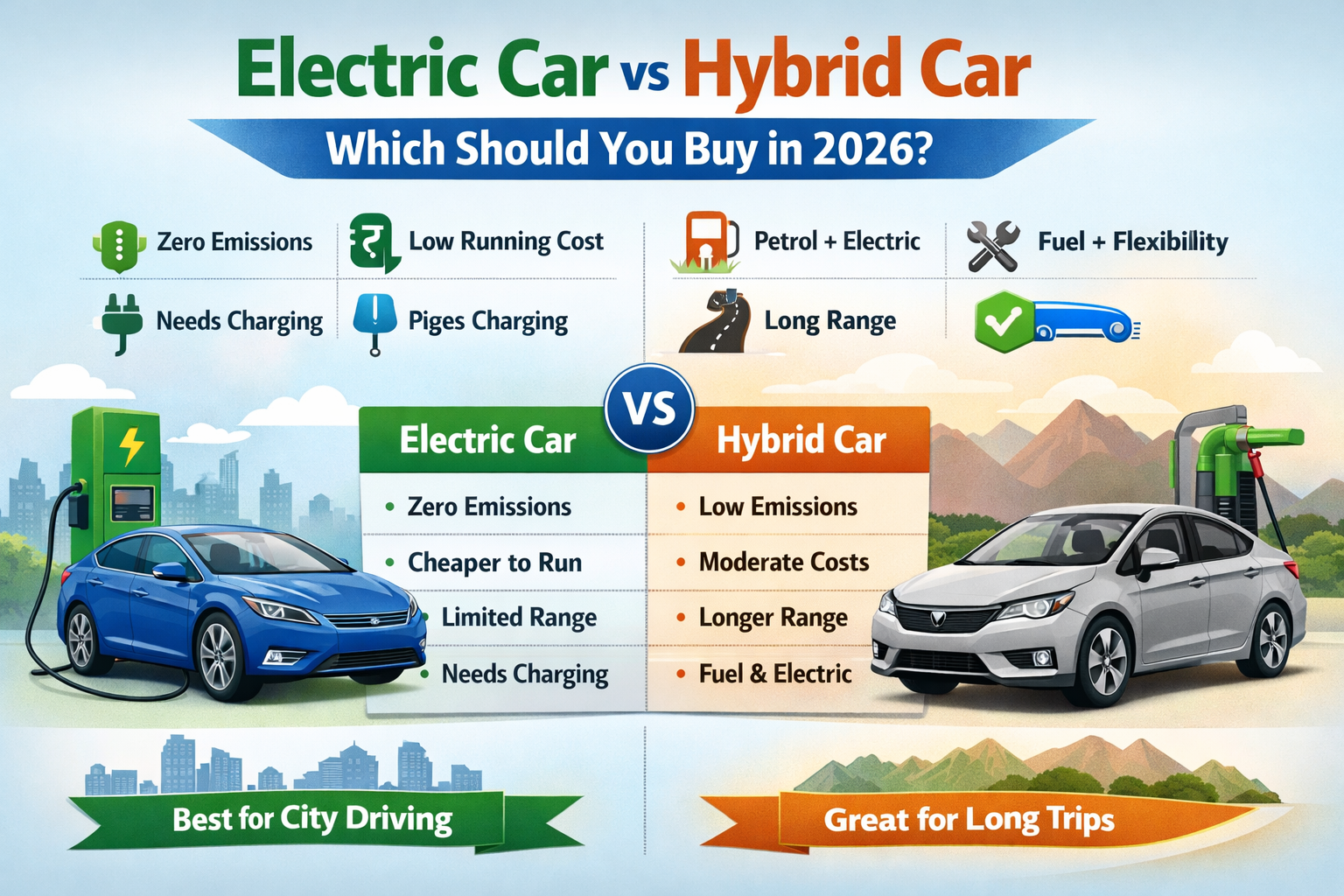
Electric vehicles (EVs) are rapidly gaining popularity in India as more people look for eco-friendly and cost-effective transportation options. Rising fuel prices, government incentives, and increasing environmental awareness are encouraging buyers to shift from petrol and diesel vehicles to electric cars.
Earlier, electric vehicles were considered expensive and limited to premium buyers. However, with advancements in battery technology and increased competition among manufacturers, several budget-friendly electric cars under ₹10 lakhs are now available in the Indian market.
If you are planning to buy an affordable EV, this guide will help you explore the best electric cars under ₹10 lakhs in India, including their price, driving range, battery capacity, and key features.
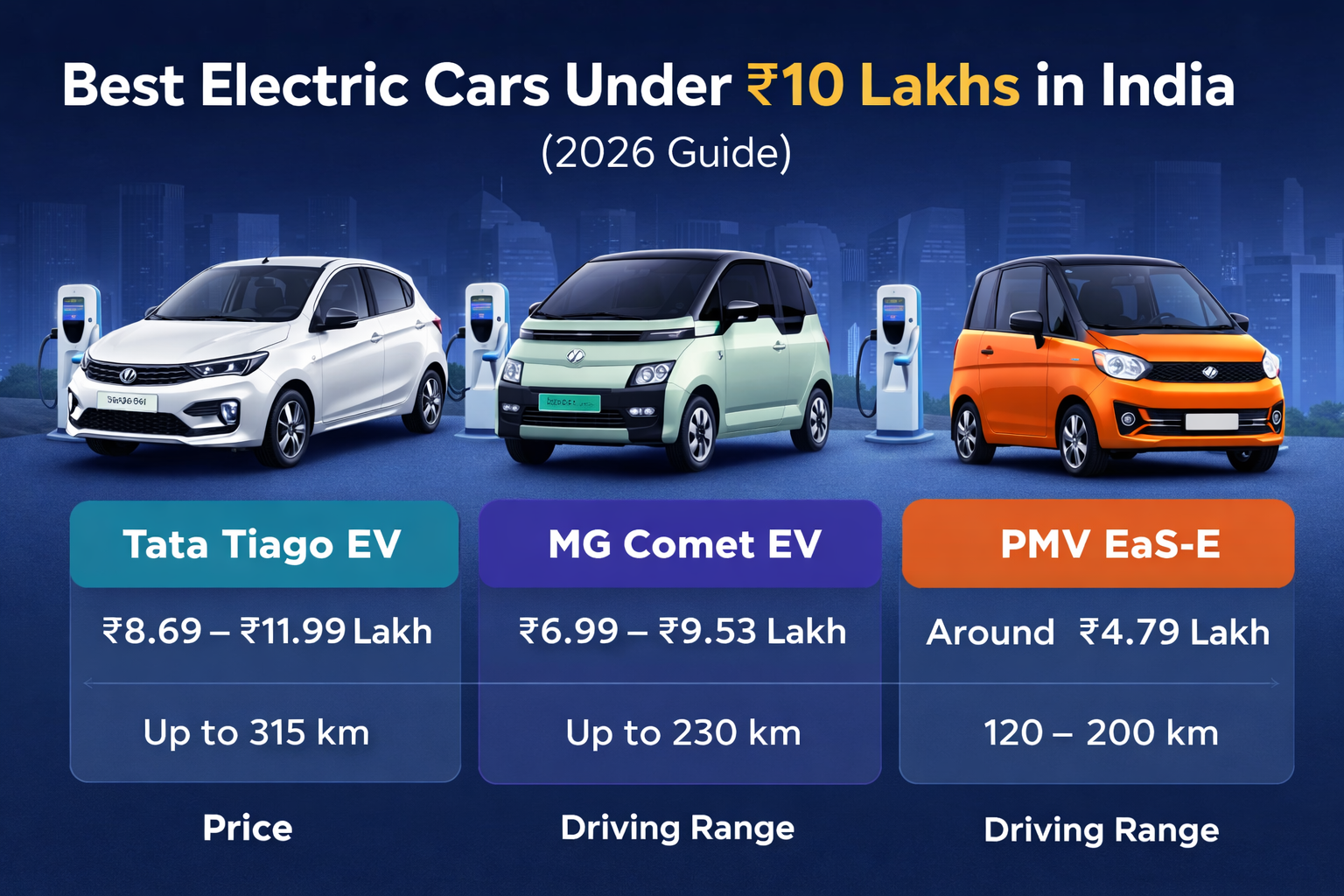
Below is a comparison of some of the most affordable electric cars available in India.
| Electric Car | Price (Ex-Showroom) | Driving Range | Battery Capacity | Charging Time |
|---|---|---|---|---|
| Tata Tiago EV | ₹8.69 – ₹11.99 Lakh | Up to 315 km | 19.2 kWh / 24 kWh | 3.6 hrs (fast charge approx.) |
| MG Comet EV | ₹6.99 – ₹9.53 Lakh | Up to 230 km | 17.3 kWh | Around 7 hours |
| PMV EaS-E | Around ₹4.79 Lakh | 120 – 200 km | 10 kWh | 4 hours |
These vehicles are designed to offer affordable entry into electric mobility while maintaining decent range and modern features.
The Tata Tiago EV is currently one of the most popular electric hatchbacks in India. Tata Motors has been a leader in India’s EV market, and the Tiago EV offers a perfect combination of affordability, reliability, and performance.
Price: ₹8.69 – ₹11.99 lakh
Range: Up to 315 km
Battery Options: 19.2 kWh and 24 kWh
Fast Charging: Yes
Modern touchscreen infotainment system
Regenerative braking technology
Multi-drive modes
Advanced safety features
Fast charging support
The Tiago EV is especially suitable for daily commuting, city driving, and small families who want an affordable electric car with reliable performance.
One of the biggest advantages of this vehicle is its good driving range and strong service network, making it a practical EV choice in India.
The MG Comet EV is a compact electric car designed primarily for urban environments. Its small size makes it extremely easy to drive and park in crowded city areas.
Price: ₹6.99 – ₹9.53 lakh
Range: Up to 230 km
Battery: 17.3 kWh
Top Speed: Around 100 km/h
Futuristic and compact design
Dual 10.25-inch digital displays
Smart connected car technology
Comfortable city driving experience
Low running cost
The MG Comet EV is perfect for people who need a small and stylish electric car for daily city travel. Its design focuses on convenience and efficiency rather than long highway journeys.
Because of its compact structure, it is also ideal for first-time EV buyers and young professionals living in urban areas.
The PMV EaS-E is one of the most affordable electric cars introduced in India. It is categorized as a microelectric vehicle, mainly designed for short city trips and daily commuting.
Expected Price: Around ₹4.79 lakh
Range: 120 – 200 km
Battery: 10 kWh
Top Speed: 70 km/h
Extremely compact size
Very low running cost
Smart digital interface
Ideal for short-distance travel
The PMV EaS-E is best suited for single users or short city commutes. Although it is smaller than traditional cars, it offers an interesting solution for budget EV buyers.
Affordable EVs are becoming increasingly common in India because of several important factors.
Petrol and diesel prices have increased significantly over the past few years. Electric cars offer a much cheaper alternative for daily transportation.
Electric vehicles typically cost ₹1 to ₹1.5 per kilometer, while petrol cars may cost ₹6 to ₹8 per kilometer. This difference makes EVs highly economical for daily commuters.
The Indian government encourages EV adoption through various programs such as FAME II subsidies and state-level incentives, which reduce the overall purchase cost of electric vehicles.
Electric vehicles produce zero tailpipe emissions, helping reduce pollution and promote cleaner air in cities.
Electric vehicles provide several benefits compared to traditional petrol or diesel vehicles.
EVs have fewer moving parts, which means less wear and tear and lower maintenance expenses.
Electric cars operate quietly and provide a smooth driving experience compared to internal combustion engines.
Electric motors convert energy more efficiently than petrol engines, resulting in better overall performance.
Buyers may receive tax benefits, subsidies, and reduced registration charges in some states.
Before purchasing an EV, it is important to evaluate a few important factors.
Always choose a car with enough range for your daily travel needs. Most budget EVs offer 200–300 km range, which is sufficient for city commuting.
Make sure charging stations are available near your home or workplace. Many EV owners also install home charging systems.
Most electric vehicles come with 8 years or 1,60,000 km battery warranty, which provides long-term peace of mind.
Fast charging can significantly reduce charging time, which is important for people who travel frequently.
India’s EV market is expected to grow rapidly over the next decade. Many automobile manufacturers are planning to launch new affordable electric vehicles in the coming years.
With improvements in battery technology, charging infrastructure, and government support, electric vehicles will become even more accessible to Indian consumers.
Experts predict that by 2030, a large percentage of vehicles in India could be electric, especially in urban areas.
Electric vehicles are no longer limited to premium buyers. Today, several affordable electric cars under ₹10 lakhs in India provide a great entry point into electric mobility.
Cars like the Tata Tiago EV, MG Comet EV, and PMV EaS-E offer good driving range, modern features, and extremely low running costs.
If you are looking for a budget-friendly, eco-friendly, and cost-effective vehicle, switching to an electric car could be one of the best decisions you make.
As EV technology continues to evolve, the future of electric mobility in India looks brighter than ever.